Collaborative Robots and AMRs Overview for Automated Material Movement
Collaborative robots and AMRs are changing how materials move through factories, warehouses, and distribution facilities.
Collaborative robots are designed to work near people on controlled tasks, while autonomous mobile robots travel through facilities to transport materials without relying on fixed tracks. Together, these technologies support flexible and automated material movement.
Industrial cobots developed from traditional industrial robotics, with greater attention to human interaction, compact design, and adaptable programming. Autonomous mobile robots developed from earlier automated guided vehicles but use sensors, mapping, and software to navigate changing environments. Modern AMR robotics systems can identify routes, detect obstacles, and adjust movement based on surrounding conditions.
How the Technologies Differ
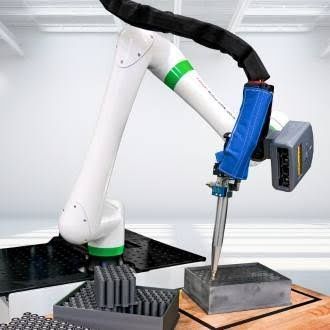
Collaborative robot automation usually focuses on handling, picking, placing, assembly, inspection, or machine interaction. Industrial mobile robots mainly transport containers, components, tools, and other materials between locations.
| Technology | Main Function | Typical Environment | Movement |
|---|---|---|---|
| Collaborative robots | Handling and task assistance | Factories and work cells | Usually fixed or limited |
| Autonomous mobile robots | Material transportation | Warehouses and factories | Mobile and route-based |
| Combined robotic systems | Handling and transportation | Smart production facilities | Integrated movement |
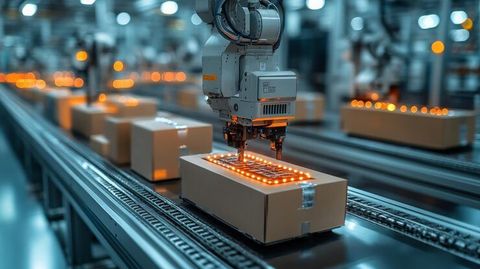
Manufacturing cobot systems and automated material handling robots may also operate together. For example, an AMR can carry a container to a workstation where a cobot transfers items to another process.
Importance
The growth of e-commerce, complex manufacturing, and larger distribution networks has increased the need for efficient material movement. Warehouse autonomous mobile robots can help move goods across large facilities, while collaborative robots can support repetitive handling activities.
These technologies matter because internal material movement can involve long travel distances, repeated lifting, and frequent transfers between work areas. Warehouse robotics automation can organize some of these movements while allowing people to focus on tasks requiring judgment, communication, or detailed decision-making.
Areas Where Robotics Can Help
Common applications include:
- Moving components between production areas
- Transporting containers within warehouses
- Supporting picking and packing activities
- Delivering materials to assembly stations
- Handling repetitive loading and unloading tasks
- Connecting storage areas with production processes
Autonomous warehouse robots can also support facilities where layouts or movement patterns change regularly. Unlike systems that depend entirely on fixed pathways, many industrial mobile robots can update routes using digital maps and sensor information.
Recent Updates
Recent development in collaborative robots and AMRs has focused on artificial intelligence, improved sensors, fleet coordination, and easier system integration. AI powered autonomous mobile robots increasingly use advanced perception technologies to understand obstacles, traffic patterns, and changing facility conditions.
Another trend is the connection of robots with warehouse management and manufacturing software. Enterprise warehouse automation systems can coordinate inventory information, task priorities, and robot movements across different operational areas.
Smart factory robotic automation is also becoming more connected. Instead of operating as isolated machines, advanced robotic automation systems may exchange information with sensors, production equipment, and digital management platforms. This supports more coordinated material movement and improved visibility across facilities.
Laws or Policies
In India, the use of industrial robotics is shaped by workplace safety requirements, machinery rules, electrical standards, and broader industrial regulations. Organizations using collaborative robot integration are generally expected to assess risks associated with machinery, human interaction, emergency controls, and workplace movement.
International standards also influence robotic system design and deployment. Standards relating to industrial robots, collaborative applications, machinery safety, and functional safety provide frameworks for identifying hazards and selecting protective measures.
Safety Considerations
Important areas commonly reviewed include:
- Safe operating zones and travel paths
- Emergency stop functions
- Sensor and obstacle detection performance
- Human interaction with moving equipment
- Equipment inspection and maintenance procedures
- Worker instruction and operating procedures
The exact requirements can vary according to the facility, equipment type, industry, and local regulatory framework. A collaborative robot does not automatically make every application safe; the complete task and surrounding environment require assessment.
Tools and Resources
Several digital tools can help organizations understand and plan robotic automation. Robot simulation platforms allow users to model movement, reach, cycle sequences, and facility layouts before physical deployment.
Fleet management platforms are used to coordinate multiple autonomous mobile robots. These systems can assign tasks, manage traffic, track robot status, and reduce route conflicts.
Other useful resources include:
- Digital factory layout tools for planning robot paths
- Robot simulation software for testing movements
- Fleet dashboards for managing AMR robotics systems
- Safety assessment templates for identifying potential hazards
- Warehouse management platforms for coordinating material flow
- Manufacturer documentation for technical specifications and operating limits
These resources can support planning for collaborative robot automation, warehouse robotics automation, and broader smart factory robotic automation.
FAQs
What are collaborative robots and AMRs?
Collaborative robots are robotic systems designed for controlled interaction near people, while AMRs are mobile robots that navigate facilities to transport materials. They can operate separately or as part of an integrated automation environment.
How do warehouse autonomous mobile robots navigate?
Warehouse autonomous mobile robots commonly use sensors, cameras, laser-based detection, mapping software, and onboard computing. These technologies help them identify their position, detect obstacles, and select suitable travel routes.
What is collaborative robot integration?
Collaborative robot integration is the process of connecting a cobot with equipment, software, sensors, tools, and workplace procedures. The process also includes evaluating how people interact with the robotic application.
Where are industrial cobots commonly used?
Industrial cobots are commonly used for material handling, assembly, inspection, machine interaction, packaging, and repetitive transfer activities. Their application depends on payload, reach, operating environment, and safety requirements.
Can AI powered autonomous mobile robots work with manufacturing cobot systems?
Yes. AI powered autonomous mobile robots can transport materials to locations where manufacturing cobot systems perform handling or production tasks. Coordination usually depends on software integration, task planning, communication protocols, and facility safety controls.
Conclusion
Collaborative robots and AMRs support different but connected roles in automated material movement. Cobots mainly assist with handling and production activities, while AMRs transport materials through factories and warehouses. Their increasing connection with sensors, artificial intelligence, and management software is contributing to more coordinated automation. Safe deployment depends on appropriate planning, system integration, and assessment of the complete operating environment.