Complete Guide to Pipe Extrusion Manufacturing and Technology
Pipe extrusion manufacturing is a continuous high-volume production process used to convert raw plastic polymers into hollow cylindrical tubes.
Thermoplastic materials such as polyvinyl chloride, polyethylene, and polypropylene are fed into a heated barrel where a rotating screw melts and homogenizes the compound. The molten plastic is then forced through a specialized die to shape it into a pipe structure.
The background of pipe extrusion traces back to early rubber processing methods, which evolved significantly with the mid-twentieth-century development of modern synthetic polymers. Today, this manufacturing technique supports fundamental infrastructure systems worldwide, producing pipes for water delivery, drainage, electrical conduit, and gas transportation. The main purpose of this technology is to create uniform, durable, and corrosion-resistant piping efficiently at scale.
Understanding the inner mechanics of an extrusion line provides insight into how raw resin transitions into finished pipe. The process relies on precise thermal control and mechanical pressure to ensure consistent wall thickness and physical structural integrity.
Raw Material Preparation
Raw plastic pellets or powders are loaded into a hopper, where they are pre-dried to eliminate surface moisture. Moisture prevention is essential because excess water causes structural voids, weak spots, and surface defects in the finished plastic pipe.
Melting and Extrusion
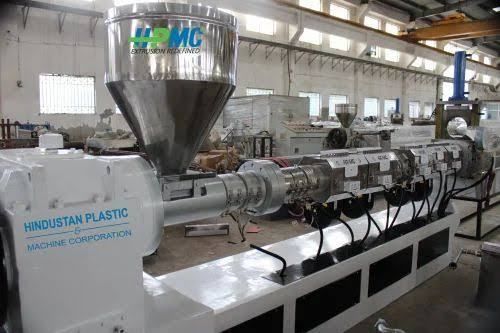
Inside the heated extruder barrel, a rotating screw conveys the plastic forward while friction and external heaters melt the material. The screw design ensures uniform heat distribution and steady pressure build-up before driving the molten polymer through the extrusion die head.
Cooling and Sizing
After emerging from the die, the hot plastic tube enters a vacuum calibration chamber and cooling tank. Vacuum pressure holds the outer diameter against sizing sleeves while chilled water baths solidify the pipe into its final shape and dimensions.
Importance
Pipe extrusion manufacturing matters because modern public sanitation, energy distribution, and telecommunication networks rely on extruded plastic piping. Metal pipes traditionally faced severe degradation over time due to rust and chemical corrosion. Synthetic extruded pipes provide a lightweight, flexible, and chemically inert alternative that extends the operational lifespan of underground municipal networks.
This technology directly affects engineers, urban planners, agricultural managers, and construction personnel. Civil infrastructure projects depend on precise pipe standards to prevent leaks, environmental contamination, and municipal water loss. Agricultural operations utilize specialized extruded tubing for micro-irrigation systems to optimize water distribution in field crop production.
In addition to municipal and agricultural uses, modern residential and commercial building construction relies on extruded conduit for electrical wiring protection. Industrial manufacturing facilities also use specialized fluoropolymer or chemical-resistant piping to transport hazardous liquids safely across processing plants.
Recent Updates
Between 2024 and 2026, the pipe extrusion industry experienced noticeable advancements driven by automation, material science, and sustainability initiatives. Manufacturing lines increasingly integrate artificial intelligence sensors to monitor pipe wall uniformity in real time, reducing material waste and production downtime.
Another major shift involves the integration of post-consumer recycled plastics into non-pressure pipe production. Advanced multi-layer extrusion co-extrudes a core layer of recycled polymer between two outer layers of virgin resin, maintaining structural performance while reducing raw virgin material consumption.
| Development Area | Traditional Practice | Recent Innovation (2024–2026) |
| Quality Control | Manual wall thickness measurements after cooling | Ultrasonic continuous real-time thickness monitoring |
| Material Use | Single-layer virgin polymer processing | Multi-layer co-extrusion incorporating recycled cores |
| Energy Consumption | Standard electrical heater bands | Direct induction heating barrels with smart power grids |
| Process Control | Fixed manual operator adjustments | Machine learning closed-loop temperature tuning |
Energy efficiency improvements have also gained traction across manufacturing facilities. Modern direct-drive extruders and induction heating technologies consume lower electricity levels per kilogram of processed plastic compared to legacy resistance-heated equipment.
Laws or Policies
Pipe extrusion manufacturing operates under strict regulatory frameworks to ensure consumer safety, environmental protection, and structural reliability. In North America and Europe, standards set by organizations such as ASTM International, ISO, and the European Committee for Standardization dictate dimensional tolerances, pressure ratings, and impact resistance requirements.
Potable water pipes must adhere to specific public health regulations, such as NSF/ANSI Standard 61, which limits chemical leaching into drinking water supplies. Pipe manufacturers must undergo regular facility audits and third-party testing to maintain compliance for municipal distribution projects.
Environmental regulations also govern plastic processing facilities. Legislation targeting industrial emissions, industrial wastewater discharge, and plastic waste recycling mandates that extrusion operations implement waste-reduction programs and reuse internal scrap scrap material safely.
Tools and Resources
Engineers and plant operators utilize digital tools, software platforms, and technical reference standards to design, simulate, and operate pipe extrusion machinery effectively.
International Organization for Standardization (ISO) technical documentation for plastic piping specifications and testing methods.
Polymer flow simulation software platforms used to model melt behavior and heat transfer inside extrusion die heads.
Online pipe sizing and pressure drop calculators to determine required wall thickness based on operating fluid pressure.
Plastic resin technical data sheets provided by raw material manufacturers detailing melting temperatures and viscosity profiles.
Extrusion troubleshooting guides published by industry research institutes to address common surface defects or wall variations.
FAQs
What polymers are most commonly used in pipe extrusion?
Polyvinyl chloride (PVC), high-density polyethylene (HDPE), and polypropylene (PP) are the most widely used materials due to their durability and chemical resistance.
How is pipe wall thickness controlled during production?
Wall thickness is regulated by adjusting the extruder screw speed, the haul-off puller speed, and internal vacuum pressure within the calibration tank.
What is the difference between single-layer and co-extrusion?
Single-layer extrusion outputs a pipe made from one uniform material, whereas co-extrusion combines two or more material layers into a single pipe wall structure.
Why is vacuum calibration necessary in pipe manufacturing?
Vacuum calibration forces the soft, warm plastic against an outer sizing sleeve to establish exact external dimensions before the material fully cools and hardens.
How are internal pipe defects detected during manufacturing?
Continuous inline ultrasonic testing equipment measures wall thickness and detects internal air pockets or void formations as the pipe moves along the production line.
Conclusion
Pipe extrusion manufacturing serves as an essential industrial process that converts raw synthetic polymers into durable piping for worldwide infrastructure networks. Modern technical updates in real-time sensor control, co-extrusion techniques, and energy efficiency continue to refine production accuracy and sustainability. Compliance with national and international standards ensures that extruded pipes remain safe, reliable, and capable of supporting essential public utilities for decades.