Engine Assembly Machines Guide: Explore Types, Components, Processes, Applications, and Planning Factors
Engine assembly machines are industrial systems designed to help assemble engine components in a controlled and repeatable sequence. An engine assembly machines guide covers the main machine types, components, assembly processes, applications, and planning factors involved in bringing individual engine parts together into a complete mechanical unit.
Engine assembly has traditionally involved manual fitting, measurement, fastening, and inspection. As engine designs became more complex and production volumes increased, manufacturers introduced specialized fixtures, presses, torque tools, conveyors, inspection equipment, and automated systems to organize these activities.
Modern engine assembly equipment can range from individual workstations to integrated production lines. Some systems assist operators with specific operations, while automated installations can coordinate material movement, fastening, pressing, testing, and data collection.
What Engine Assembly Machines Do
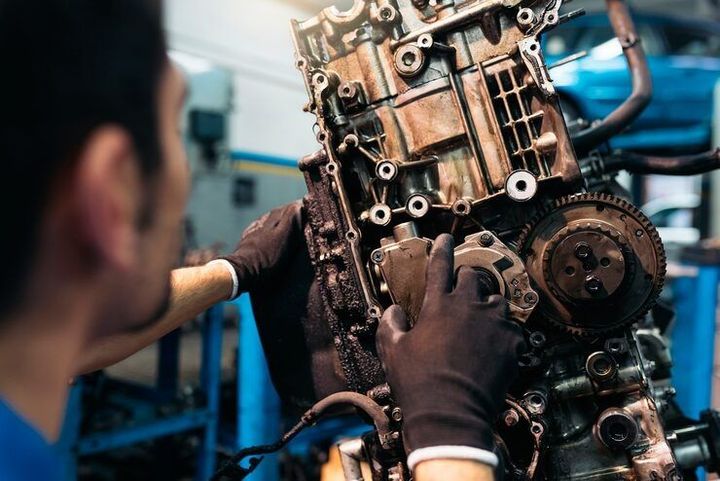
An engine assembly machine supports one or more stages of assembling components such as cylinder blocks, pistons, connecting rods, crankshafts, cylinder heads, valves, bearings, and other related parts.
Depending on the application, equipment may perform positioning, pressing, tightening, measuring, dispensing, inspection, or testing. The objective is to carry out defined assembly operations while maintaining the required sequence and process conditions.
Development of Engine Assembly Equipment
Early engine production relied heavily on skilled manual assembly and mechanical tools. Dedicated fixtures and specialized machines gradually became more common as manufacturers sought greater consistency in repetitive operations.
Computer-controlled equipment has expanded these capabilities. Programmable logic controllers, servo motors, sensors, machine vision, torque monitoring, and production software can now be integrated into engine assembly systems.
Importance
Engine assembly involves many components that must be installed in a particular sequence and position. Small errors in alignment, fastening, lubrication, or component placement can affect later assembly stages or engine operation.
Engine assembly machines help organize these processes by providing controlled work areas and defined operating procedures. They are used in automotive manufacturing, commercial vehicle production, industrial engine manufacturing, agricultural equipment, power-generation equipment, and other applications involving internal combustion or related engine systems.
Consistency in Assembly
Fasteners, bearings, seals, pistons, and other components often require specific installation conditions. Controlled tools can monitor factors such as tightening torque, angle, displacement, or applied force.
For example, a monitored fastening system can record whether a specified tightening sequence has been completed. This provides process information that may be useful for production records and quality checks.
Reducing Repetitive Manual Work
Some engine assembly activities require repeated lifting, positioning, pressing, or fastening. Mechanical assistance can reduce the amount of repetitive physical movement required from operators.
Automation does not eliminate the need for human supervision. Operators and technicians may still be responsible for loading components, monitoring equipment, handling exceptions, inspecting results, and maintaining machinery.
Supporting Inspection
Modern assembly systems can incorporate measurement and inspection equipment. Sensors and machine vision systems may check component presence, orientation, dimensions, or assembly conditions before an engine moves to the next stage.
This approach can help identify process deviations earlier instead of relying only on final inspection.
Types of Engine Assembly Machines
Engine assembly equipment varies according to the engine design, production volume, component size, and level of automation.
Manual and Semi-Automatic Assembly Stations
Manual stations provide fixtures, lifting equipment, tools, and work instructions while allowing operators to perform much of the assembly process.
Semi-automatic stations combine operator activities with automated functions such as pressing, fastening, dispensing, or measurement. These systems can be useful when certain operations require controlled force or precise measurement.
Automated Assembly Machines
Automated systems use programmed mechanical movement to perform defined assembly tasks. Servo-driven systems, programmable controllers, sensors, and automated tooling can coordinate multiple operations.
The level of automation can range from a single automated operation to a larger integrated assembly line.
Engine Block Assembly Equipment
Engine block assembly systems can support operations involving crankshafts, bearings, pistons, connecting rods, seals, and related components.
Specialized fixtures hold the engine block in a defined position while tools or machines perform individual operations.
Cylinder Head Assembly Machines
Cylinder head assembly equipment can support operations involving valves, springs, retainers, camshaft components, and other parts.
Depending on the engine design, machines may incorporate pressing, fastening, measurement, lubrication, or inspection functions.
Robotic Assembly Systems
Robotic systems can be used for component handling, positioning, dispensing, fastening, and other repetitive activities. Robots may operate alongside fixed assembly equipment and inspection systems.
The usefulness of robotic equipment depends on component geometry, production requirements, cycle times, and the degree of variation between engine models.
Components of Engine Assembly Machines
An engine assembly system can contain mechanical, electrical, electronic, and software components.
Main Mechanical Components
Common mechanical elements include frames, fixtures, guides, clamps, conveyors, lifting systems, spindles, pressing mechanisms, tooling, and workholding devices.
Fixtures are particularly important because they maintain the position of the engine or individual components during assembly.
Drive and Motion Systems
Motors, servo drives, pneumatic cylinders, hydraulic systems, and linear actuators may be used to generate controlled movement.
Servo systems are commonly used when precise positioning, speed control, or force monitoring is required.
Sensors and Controls
Sensors can detect component position, pressure, force, movement, temperature, or other process conditions. Controllers interpret these signals and coordinate machine functions.
A PLC can manage sequences such as component detection, clamping, tool activation, inspection, and release.
Torque-Controlled Tools
Fastening systems may include electric or pneumatic tools with torque monitoring. Some advanced systems also monitor tightening angle and record results.
The correct fastening requirements depend on the specific engine design and technical specifications.
Safety Systems
Engine assembly machines may include emergency stops, guards, interlocks, light curtains, safety sensors, and access controls.
These systems are intended to reduce exposure to moving machinery and help prevent operation when defined safety conditions are not met.
Engine Assembly Process
Engine assembly generally follows a planned sequence, although the exact process differs among engine designs.
Component Preparation
Components are first identified, inspected, cleaned, and prepared for assembly. Lubricants, seals, fasteners, bearings, and other parts may be staged according to the production sequence.
Block and Crankshaft Assembly
The engine block may be positioned in a fixture before bearings and the crankshaft are installed. Specialized equipment can help control positioning and pressing operations.
Measurements may be taken to confirm clearances or component conditions before proceeding.
Piston and Connecting Rod Installation
Pistons and connecting rods are installed according to the engine's design and specified orientation. Appropriate fixtures and tools can support controlled insertion and positioning.
Cylinder Head Installation
The cylinder head is positioned on the engine block and fastened according to the specified sequence. Controlled fastening equipment can monitor tightening parameters.
Auxiliary Component Installation
Additional components may include pumps, covers, manifolds, sensors, brackets, belts, chains, and other engine-specific parts.
Inspection and Testing
After assembly, engines may undergo visual inspection, dimensional checks, leak testing, compression-related testing, rotation checks, or other functional tests appropriate to the engine design.
Applications
Engine assembly machines are used in several manufacturing environments.
| Application area | Typical assembly activities |
|---|---|
| Passenger vehicles | Engine component assembly and testing |
| Commercial vehicles | Larger engine assembly and fastening |
| Agricultural equipment | Engine and auxiliary component assembly |
| Industrial engines | Component installation and inspection |
| Power-generation equipment | Engine assembly and functional testing |
| Marine equipment | Large-engine component handling and assembly |
| Engine remanufacturing | Disassembly, inspection, rebuilding, and testing |
The specific equipment configuration depends on engine size, component design, production volume, and required assembly sequence.
Planning Factors
Planning an engine assembly system requires consideration of technical, operational, safety, and production requirements.
Engine Design
The engine's dimensions, weight, component arrangement, fastening requirements, and assembly sequence determine much of the equipment configuration.
Different engine families may require different fixtures or interchangeable tooling.
Production Volume
Production volume influences the level of automation required. Lower-volume environments may use flexible workstations, while higher-volume operations may use interconnected automated stations.
Cycle Time
Cycle time represents the time required for a defined production operation. It should be evaluated across the complete process rather than focusing on one machine operation.
Flexibility
Manufacturers producing multiple engine variants may require adjustable fixtures, programmable tools, automatic tooling changes, or modular workstations.
Quality and Traceability
Assembly equipment can be designed to record information such as torque values, component identification, measurement results, and inspection outcomes.
Traceability requirements should be determined before selecting the control and data architecture.
Maintenance
Machines contain mechanical, electrical, pneumatic, hydraulic, and software components that require inspection and maintenance. Maintenance planning should consider access to critical components, replacement intervals, calibration requirements, and machine diagnostics.
Workplace Safety
Moving components, rotating tools, presses, lifting equipment, electrical systems, and stored energy can create workplace hazards. Machine design should therefore incorporate appropriate guarding, emergency controls, access protection, and operating procedures.
Recent Updates
From 2024 through 2026, engine assembly technology has continued moving toward connected manufacturing, automated inspection, robotics, and data-based process monitoring.
One significant direction is the integration of torque tools and sensors with manufacturing software. Assembly stations can capture process information and associate it with an engine or production sequence.
Machine vision is also increasingly used for component presence, orientation, identification, and inspection. Vision systems can complement mechanical sensors where visual information is needed.
Robotics continues to support component handling and repetitive assembly operations. Collaborative robots may also be used in selected applications where human operators and automated equipment work within the same production area, subject to appropriate risk assessment and safeguards.
Another trend is modular production equipment. Modular stations can allow manufacturers to modify tooling, fixtures, controls, and production sequences when engine designs change.
Laws or Policies
Engine assembly facilities in India must consider applicable occupational safety, environmental, electrical, machinery, and factory requirements. The precise obligations depend on the facility, workforce, equipment, and state-level implementation.
The Occupational Safety, Health and Working Conditions Code, 2020 provides a national framework covering occupational safety and working conditions. Its implementation should be considered together with applicable rules and notifications.
The Bureau of Indian Standards provides standards covering machinery, electrical equipment, industrial safety, measurement, and related areas. Relevant standards depend on the specific machine and application.
Factories and industrial facilities may also need to address electrical safety, fire protection, hazardous substances, noise, ventilation, lifting equipment, and other workplace conditions.
Because regulatory requirements can vary according to the equipment and facility, organizations should consult the applicable legislation, standards, and qualified safety personnel when designing or operating an engine assembly area.
Tools and Resources
Several resources can help with understanding and planning engine assembly systems.
Assembly Process Documentation
Process flow diagrams, assembly instructions, check sheets, and workstation layouts can help define the sequence of operations and identify required equipment.
Torque and Fastening Records
Torque-angle records and fastening specifications can provide information about controlled fastening operations. The values used should come from the relevant engine manufacturer's technical documentation.
Production Planning Software
Manufacturing execution systems and production-planning platforms can track work orders, production status, quality information, and equipment data.
Measurement Equipment
Common measurement resources include torque testers, dimensional gauges, calipers, micrometers, pressure gauges, force sensors, and electronic inspection systems.
Safety Resources
Machine manuals, workplace risk assessments, applicable Indian Standards, government safety publications, and manufacturer documentation can provide information relevant to safe equipment operation.
FAQs
What are engine assembly machines?
Engine assembly machines are mechanical or automated systems used to support the installation, positioning, fastening, pressing, measurement, inspection, and testing of engine components.
What are the main types of engine assembly machines?
Common types include manual workstations, semi-automatic assembly machines, automated assembly systems, engine block assembly equipment, cylinder head assembly machines, robotic systems, and specialized testing stations.
What components are used in engine assembly machines?
Typical components include fixtures, frames, actuators, motors, servo drives, sensors, PLCs, fastening tools, presses, conveyors, safety devices, and control systems.
How does an engine assembly process work?
An engine assembly process normally involves component preparation, block preparation, bearing and crankshaft installation, piston and connecting rod installation, cylinder head installation, auxiliary component assembly, inspection, and testing. The sequence varies by engine design.
What factors should be considered when planning engine assembly equipment?
Important factors include engine design, production volume, cycle time, automation level, flexibility, tooling requirements, workplace layout, quality controls, traceability, maintenance, safety, and future production changes.
Conclusion
Engine assembly machines support the controlled installation, positioning, fastening, inspection, and testing of engine components. Their configurations range from manual and semi-automatic stations to highly automated systems incorporating robotics, sensors, programmable controls, and digital monitoring. Planning an engine assembly system requires attention to engine design, production requirements, process sequence, safety, quality, and maintenance. Applicable Indian regulations and technical standards should also be considered according to the specific equipment and workplace.