EV Charging Station Equipment Guide: Explore Types, Components, Power Levels, and Safety Factors
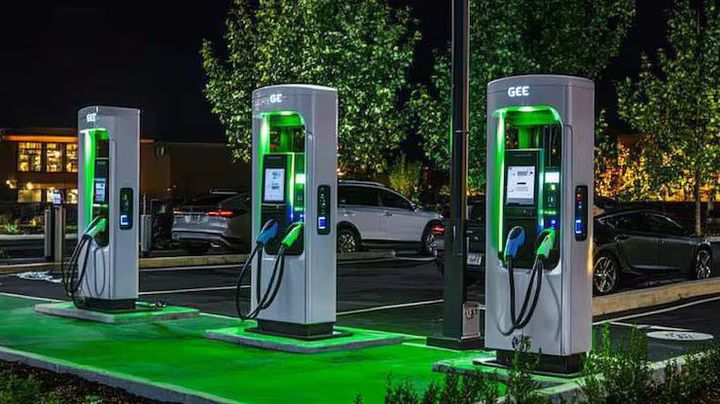
An EV charging station is a system designed to transfer electrical energy from the power supply to an electric vehicle. EV charging station equipment can include charging connectors, cables, control systems, electrical protection devices, communication components, meters, and user interfaces. Together, these components manage the flow of electricity while helping establish communication between the vehicle and the charging system.
Electric vehicle charging developed from the broader adoption of battery-powered transportation. As electric vehicles became more common, charging systems evolved from basic household connections into dedicated equipment designed for homes, workplaces, parking areas, commercial locations, and public roads.
Today, charging equipment is available in several configurations. Some systems provide relatively low-power AC charging for extended parking periods, while others use higher-power DC charging for situations where shorter charging periods are needed. The appropriate configuration depends on the vehicle, electrical supply, location, and intended use.
How an EV Charging Station Works
A charging station connects an electrical source with an electric vehicle through a controlled charging system. The station manages electrical delivery and communicates with the vehicle to determine whether charging can begin and how the process should operate.
With AC charging, alternating current is supplied to the vehicle, and the vehicle's onboard charger converts it into direct current for the battery. With DC charging, the conversion equipment is generally located within the charging system, allowing direct current to be delivered to the vehicle battery under controlled conditions.
Main Types of Charging Equipment
EV charging equipment can be grouped according to how electricity is delivered and how quickly the system can transfer energy.
- AC charging equipment is commonly used where vehicles remain parked for longer periods.
- DC charging equipment can provide higher charging power for applications requiring shorter charging periods.
- Portable charging equipment can connect an electric vehicle to an appropriate electrical outlet or supply.
- Networked charging stations can communicate with software platforms for monitoring, access control, reporting, and operational management.
The equipment configuration can differ considerably between residential, workplace, fleet, and public charging environments.
Importance
Reliable charging infrastructure is an important part of electric transportation because an electric vehicle depends on access to suitable electrical energy. Charging station equipment must therefore work with the vehicle, electrical installation, available power supply, and operating environment.
For drivers, the charging system affects how long a vehicle remains connected and whether the location is appropriate for a particular charging requirement. For property owners and facility operators, electrical capacity, installation conditions, safety measures, space, and energy management can influence how charging equipment is configured.
Why Power Levels Matter
Charging power is commonly expressed in kilowatts (kW). Higher power can allow a vehicle to receive energy more quickly, but actual charging speed depends on the vehicle's charging capability, battery condition, temperature, state of charge, and the characteristics of the charging equipment.
A station rated at a particular power level does not necessarily mean every connected vehicle will continuously receive that amount. The vehicle and charging system communicate to regulate the charging process.
Common Charging Levels
The terminology used for charging levels can vary between standards and regions. A general comparison is shown below:
| Charging category | Typical electrical approach | Common application |
|---|---|---|
| Lower-power AC | AC supply | Homes and long parking periods |
| Higher-power AC | AC supply | Workplaces, parking facilities, and other extended stays |
| DC charging | Direct current from external conversion equipment | Public locations and shorter charging periods |
| High-power DC | Higher-capacity DC equipment | High-use locations and rapid vehicle charging |
The actual power range varies by equipment, electrical infrastructure, connector standard, and vehicle design.
Electrical Capacity and Load
Installing several charging stations can create a significant electrical load. A site must have suitable electrical capacity, distribution equipment, protection, and cabling for the intended charging configuration.
Load management can help coordinate multiple charging points. Instead of allowing every connected vehicle to operate at its maximum available power simultaneously, a control system can distribute available electrical capacity according to predefined conditions.
Recent Updates
From 2024 through 2026, EV charging development has increasingly focused on interoperability, higher-power DC charging, network connectivity, charging reliability, and standardized communication. Charging systems are becoming more closely connected with software platforms that can monitor equipment status, energy consumption, access, and charging sessions.
Vehicle-to-grid and bidirectional charging have also received increasing attention. In a bidirectional arrangement, electricity can potentially move between an electric vehicle and another electrical system when the vehicle and charging equipment support the required technology and applicable operating rules.
Another important development is the expansion of standardized charging infrastructure. In North America, the North American Charging Standard (NACS) has become an important connector and charging interface in the market, while other regions continue using established connector systems such as CCS and Type 2 configurations.
The U.S. Joint Office of Energy and Transportation provides information about national EV charging infrastructure and the National Electric Vehicle Infrastructure program, while the U.S. Department of Energy's Alternative Fuels Data Center provides technical and infrastructure information. U.S. Department of Energy Alternative Fuels Data Center
Smart Charging
Smart charging allows charging activity to be coordinated according to factors such as electrical demand, site capacity, charging schedules, or energy-management requirements. Networked chargers can exchange information with central systems, making it possible to monitor charging activity remotely.
These systems can be particularly relevant at locations with multiple charging points. The exact functions depend on the charger, communication protocol, network platform, and electrical management system.
Charging Interoperability
Interoperability refers to the ability of vehicles, charging equipment, communication systems, and software platforms to work together correctly. Standards such as ISO 15118 provide communication specifications between electric vehicles and charging stations.
Open Charge Point Protocol (OCPP) is another widely used communication framework for communication between charging stations and charging management systems. The Open Charge Alliance maintains information about OCPP specifications and related developments. Open Charge Alliance
Laws or Policies
EV charging infrastructure is influenced by electrical safety requirements, building regulations, energy policies, technical standards, and transportation programs. The specific requirements depend on the country, state, city, property type, and charging installation.
In India, the Ministry of Power has issued guidelines and standards concerning EV charging infrastructure. These documents address areas such as charging infrastructure, connection requirements, safety considerations, and charging-station deployment.
The Bureau of Indian Standards also develops and maintains standards relevant to electrical equipment and electric vehicle charging. Applicable standards can cover connectors, charging systems, electrical safety, communication, and related equipment.
India's Ministry of Power publishes electricity and EV-charging-related guidelines and documents through its official website. Ministry of Power, Government of India
The Central Electricity Authority also provides regulations and technical requirements related to electrical installations and safety. Central Electricity Authority
Safety Requirements
Electrical protection is an essential part of EV charging station equipment. Depending on the installation, protection systems may include circuit breakers, residual-current protection, overcurrent protection, surge protection, grounding or earthing arrangements, and emergency shutdown controls.
Charging equipment should also be installed according to applicable electrical codes and manufacturer instructions. Outdoor charging stations may require protection against environmental conditions such as water, dust, temperature changes, and mechanical impact.
Connector and Cable Safety
Charging connectors and cables must be compatible with the vehicle and charging equipment. Connectors are designed with specific electrical and mechanical characteristics, and the charging system uses communication and control mechanisms to manage the connection.
Damaged cables, connectors, housings, or protective equipment can create electrical or mechanical hazards. Inspection and maintenance procedures should therefore be appropriate to the equipment and installation environment.
Tools and Resources
Several technical resources can help readers understand EV charging equipment and infrastructure.
EV Charging Databases
The U.S. Department of Energy's Alternative Fuels Data Center provides information about charging infrastructure, alternative fuels, vehicle technologies, and related transportation data. Alternative Fuels Data Center
For India, government energy and transport departments provide information about applicable policies, charging infrastructure, and electrical requirements.
Charging Calculators
EV charging calculators can estimate approximate charging duration using battery capacity, starting charge level, charging power, and charging efficiency. These calculations are estimates because actual charging behavior can change during a charging session.
A simplified calculation can be expressed as:
Approximate charging time = Energy required ÷ Charging power
For example, if a vehicle needs 40 kWh of energy and the charging system supplies an average of 10 kW, the theoretical charging period would be about four hours. Actual time can differ because charging power is not always constant.
Technical Standards and Manuals
Equipment manuals provide model-specific information about electrical ratings, connector types, installation requirements, operating conditions, maintenance, and protection features.
Standards organizations and government agencies provide additional technical information about charging infrastructure. These sources are particularly useful when evaluating electrical compatibility or understanding regulatory requirements.
FAQs
What is EV charging station equipment?
EV charging station equipment includes the electrical, mechanical, communication, and control components used to transfer electricity to an electric vehicle. It can include chargers, connectors, cables, meters, protective devices, controllers, and communication systems.
What are the main EV charging station types?
The main categories include AC charging equipment, DC charging equipment, portable charging equipment, and networked charging stations. Their characteristics differ according to power level, electrical design, communication capabilities, and intended application.
What are EV charging power levels?
EV charging power levels describe how quickly electrical energy can potentially be delivered to a vehicle. AC charging generally operates at lower power than many DC systems, while higher-power DC equipment can transfer energy more rapidly when supported by the vehicle and electrical infrastructure.
What safety factors are important for EV charging station equipment?
Important factors include electrical protection, grounding or earthing, appropriate circuit protection, surge protection where required, suitable connectors and cables, environmental protection, correct installation, and compliance with applicable standards.
Can EV charging stations support smart charging?
Yes. Network-connected charging equipment can support smart charging functions that coordinate charging according to schedules, site power limits, energy-management settings, or other defined conditions. The available functions depend on the equipment and software configuration.
Conclusion
EV charging station equipment combines electrical, mechanical, control, and communication components to transfer energy safely and systematically to electric vehicles. AC and DC systems serve different charging situations, while power levels depend on both the charging equipment and vehicle capabilities. Recent developments have emphasized network connectivity, interoperability, smart charging, and bidirectional charging technologies. Applicable electrical regulations, technical standards, and installation requirements should be considered when evaluating charging infrastructure.