Excavators Explained: Types, Components, Applications, Capacity, Features, Benefits and Selection Factors
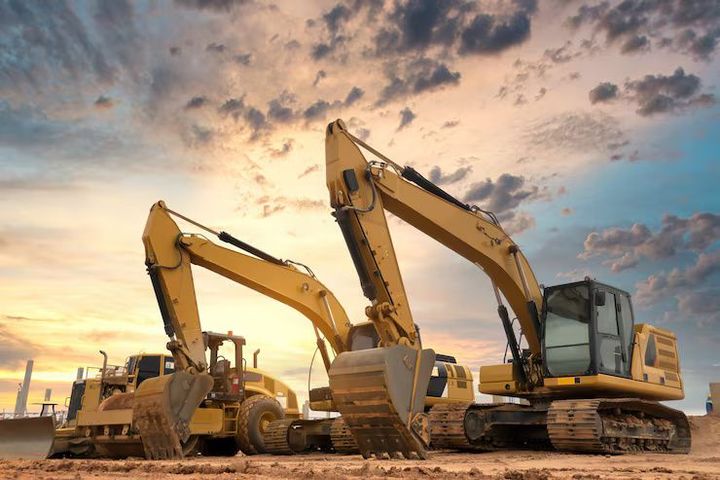
Excavators are heavy construction machines designed primarily for digging, earthmoving, material handling, trenching, demolition, and site preparation. An excavator typically combines a tracked or wheeled undercarriage with a rotating upper structure, boom, arm, and bucket. This arrangement allows the machine to reach, dig, lift, and move materials across a work area.
The development of excavators followed the need to perform earthmoving tasks more efficiently than manual labor could achieve. Early machines used mechanical digging systems, while modern excavators generally use hydraulic systems to control the boom, arm, bucket, and other attachments.
Today, excavators are available in many sizes and configurations. Mini excavators are used where space is limited, while large crawler excavators are designed for substantial earthmoving operations. Wheeled excavators provide greater mobility on roads and prepared surfaces, while specialized machines can be equipped for demolition, forestry, material handling, or other applications.
How an Excavator Works
An excavator uses hydraulic power to move its working equipment. A hydraulic pump sends pressurized fluid through control valves to hydraulic cylinders and motors. These components convert hydraulic pressure into mechanical movement.
The operator controls the machine through joysticks, pedals, switches, and other controls. Depending on the machine, the operator can independently or simultaneously move the boom, arm, and bucket while rotating the upper structure.
Main Excavator Types
Excavators can be classified according to their size, undercarriage, operating environment, and intended application.
- Mini excavators are compact machines designed for landscaping, utility work, small trenches, and confined areas.
- Crawler excavators use tracks and are commonly used on construction sites and uneven terrain.
- Wheeled excavators use tires and can move efficiently between prepared work areas.
- Long-reach excavators have extended booms and arms for applications requiring greater horizontal or vertical reach.
- Dragline excavators use a different digging arrangement and are associated with large-scale earthmoving and mining operations.
- Suction excavators use powerful air or vacuum systems to remove soil and debris in selected utility and excavation applications.
The configuration affects mobility, reach, digging depth, stability, attachment compatibility, and operating conditions.
Importance
Excavators are important because many construction and infrastructure projects require controlled excavation and material movement. They are used for foundation preparation, drainage installation, road construction, utility trenches, demolition, quarrying, landscaping, and land development.
For public infrastructure, excavators can support work involving roads, pipelines, drainage networks, rail projects, and other civil engineering activities. In agricultural settings, smaller excavators may be used for pond preparation, drainage channels, land work, and similar tasks.
Common Applications
Excavators are used in a wide range of activities:
- Earth excavation and soil removal
- Foundation and basement excavation
- Trenching for water, drainage, and utility lines
- Road and highway construction
- Demolition and structural dismantling
- Quarrying and aggregate handling
- Land clearing and site preparation
- Landscaping and grading
- Material loading and handling
- Pipeline and infrastructure projects
The attachment mounted on the excavator can significantly change its function. A bucket may be suitable for digging, while a hydraulic breaker can be used for breaking concrete or rock. Other attachments include grapples, augers, compactors, shears, thumbs, and specialized buckets.
Benefits of Excavators
The benefits of excavators come mainly from their combination of hydraulic power, reach, mobility, and attachment flexibility. A single machine can perform several types of work when compatible attachments are available.
Their rotating upper structure also allows operators to work within a defined area without repeatedly repositioning the entire machine. Track-based models can provide stability on many construction surfaces, while wheeled versions can provide greater mobility on suitable roads and prepared terrain.
Components
An excavator contains several major systems that work together. Understanding these components makes it easier to understand excavator specifications and operating capabilities.
Undercarriage
The undercarriage supports the machine and provides movement. On crawler excavators, it generally includes tracks, track frames, rollers, idlers, sprockets, and related components.
Wheeled excavators use tires, axles, steering components, and braking systems. Some wheeled machines also include stabilizers or outriggers that help support the machine during specific operations.
Upper Structure
The upper structure contains the engine, hydraulic equipment, counterweight, operator cab, and other major systems. It is mounted on a slew ring that allows the upper structure to rotate relative to the undercarriage.
The counterweight helps balance the machine when the boom and load extend away from the center of the excavator.
Boom and Arm
The boom is the first major structural member connected to the upper structure. It supports the arm and provides vertical and horizontal positioning.
The arm, sometimes called the dipper or stick, connects the boom to the bucket or other attachment. Hydraulic cylinders control movement of both the boom and arm.
Bucket and Attachments
The bucket is the most recognizable excavator attachment. Different bucket designs are available for general digging, heavy-duty excavation, trenching, grading, rock handling, and other tasks.
Attachment selection affects productivity, digging characteristics, material handling, and the type of work the machine can perform.
Hydraulic System
The hydraulic system is central to excavator operation. It includes components such as hydraulic pumps, valves, cylinders, motors, hoses, filters, and a hydraulic reservoir.
Hydraulic cylinders generally control linear movements such as boom, arm, and bucket movement. Hydraulic motors can drive the tracks or wheels and rotate the upper structure.
Engine and Cooling System
The engine provides mechanical power to the hydraulic system and other machine systems. A cooling system helps maintain appropriate operating temperatures under working conditions.
Modern excavators may incorporate electronic engine management, emissions-control equipment, and monitoring systems designed around applicable regulatory requirements.
Capacity
Excavator capacity is not represented by a single number. Specifications can include operating weight, bucket capacity, digging depth, reach, lifting capacity, engine power, hydraulic flow, and rated load.
Operating weight indicates the approximate machine weight under a defined configuration. Bucket capacity indicates the volume the bucket can hold under the manufacturer's specified measurement method.
Lifting capacity depends on factors such as machine configuration, working radius, boom and arm position, ground conditions, attachment weight, and hydraulic characteristics. It should therefore be interpreted from the manufacturer's load charts rather than from operating weight alone.
Typical Excavator Size Ranges
The following table provides general categories rather than fixed industry specifications:
| Excavator category | Approximate operating weight | Typical applications |
|---|---|---|
| Mini excavator | Under 6 tonnes | Landscaping, utilities, small excavation |
| Compact excavator | 6–10 tonnes | General construction, trenching, site work |
| Medium excavator | 10–25 tonnes | Infrastructure and general earthmoving |
| Large excavator | 25–50 tonnes | Heavy construction and large excavation |
| Heavy excavator | Over 50 tonnes | Mining, quarrying, major earthmoving |
Actual specifications vary substantially between manufacturers and machine models. Weight category alone should not be used to determine digging or lifting performance.
Features
Modern excavators can include mechanical, hydraulic, electronic, and operator-assistance features. Their purpose varies depending on machine class and application.
Hydraulic Control
Hydraulic control systems allow precise movement of the boom, arm, bucket, and attachments. Flow and pressure management can influence how the machine responds to operator inputs.
Operator Monitoring
Many current excavators use electronic displays to provide information about engine conditions, hydraulic systems, fuel levels, operating hours, warnings, and maintenance indicators.
Attachment Compatibility
Some machines are designed to work with a range of hydraulic and mechanical attachments. Quick couplers can simplify attachment changes, although compatibility and safe locking procedures must be verified.
Operator Assistance
Certain excavators include systems that assist with grading, depth control, payload monitoring, or machine positioning. Depending on the equipment, these systems may use sensors, positioning technology, cameras, or integrated displays.
Safety Features
Excavators may incorporate protective structures, visibility systems, alarms, mirrors, cameras, emergency controls, and hydraulic safety functions. The exact equipment depends on the machine and applicable requirements.
Selection Factors
Selecting an excavator involves matching the machine to the work rather than simply choosing a particular size. Several technical and site-related factors should be considered.
Work Type
Start by identifying the main task. Digging foundations, trenching utilities, loading trucks, demolition, grading, and material handling can require different machine configurations and attachments.
Excavation Depth and Reach
The required digging depth and horizontal reach should be compared with the machine's published working range. A machine that cannot reach the required depth or position may require additional repositioning.
Operating Weight
Operating weight affects transportation, ground pressure, stability, and access requirements. Smaller machines may be appropriate where ground loading and site access are restricted.
Bucket Capacity
Bucket capacity should correspond to the material and excavation requirements. Soil, gravel, rock, and other materials can have different densities, so volume alone does not determine the actual load.
Ground Conditions
Track configuration, tire configuration, machine weight, and undercarriage design should be considered according to the ground conditions. Wet, soft, steep, or uneven surfaces can affect machine stability and mobility.
Attachment Requirements
If several tasks are planned, attachment compatibility becomes an important factor. Hydraulic flow, pressure, attachment weight, coupler type, and machine stability all need to be compatible.
Transportation
The excavator's dimensions and operating weight can affect how it is moved between sites. Transport requirements should be considered before selecting a machine for projects involving frequent relocation.
Recent Updates
From 2024 through 2026, excavator development has increasingly focused on automation, electronic monitoring, fuel and energy efficiency, emissions compliance, and alternative power systems.
Manufacturers have continued developing battery-electric and other lower-emission construction equipment for applications where operating conditions and charging infrastructure are suitable. At the same time, conventional diesel excavators remain widely used, with engine and emissions systems continuing to evolve in response to regulatory requirements.
Digital machine monitoring has also become more common. Connected equipment can transmit information about operating hours, machine condition, location, fuel or energy use, and maintenance indicators. These systems can support fleet monitoring and operational record keeping.
Automation and machine-control technology are also developing. Excavators equipped with positioning systems and digital grade-control tools can assist operators with defined excavation depths, slopes, and site measurements. The availability and functionality of these systems vary by machine and region.
Laws or Policies
Excavator operation is affected by workplace safety, environmental, transportation, and machinery regulations. The exact requirements depend on the country, state, worksite, machine type, and activity.
In India, workplace safety requirements are increasingly organized under the Occupational Safety, Health and Working Conditions Code, 2020 and its associated regulatory framework. Requirements concerning safe working conditions, worker protection, training, and workplace practices can apply to construction and industrial activities.
Construction equipment may also be affected by environmental and emissions requirements. In India, the Central Pollution Control Board and related government authorities administer environmental frameworks that can affect engines, emissions, noise, and pollution control.
Transportation regulations can also apply when excavators are moved on public roads. Machine dimensions, weight, transport vehicle requirements, permits, and road-use conditions may need to be considered according to the specific movement and jurisdiction.
Because regulations can change and requirements vary by location, operators and project managers need to consult the applicable government rules, workplace requirements, machine documentation, and local authorities for specific compliance questions.
Tools and Resources
Several resources can help readers understand excavator specifications and operating requirements.
Manufacturer Specification Sheets
Technical specification sheets commonly provide operating weight, engine power, bucket capacity, digging depth, reach, hydraulic flow, dimensions, and other machine information. These specifications allow different configurations to be compared using consistent measurements.
Load Charts
Load charts are particularly important when an excavator is used for lifting. They show rated lifting capacities under specified machine configurations and working radii.
A load chart should not be replaced by a simple calculation based on operating weight because lifting capacity changes according to boom position, radius, attachment, ground conditions, and machine configuration.
Operator Manuals
Operator manuals provide instructions for controls, inspections, machine limitations, attachment use, maintenance, and safety procedures. They are specific to the machine and therefore provide more useful operating information than general excavator descriptions.
Planning Calculators
Excavation-volume calculators can estimate the approximate volume of soil that needs to be removed from a trench, foundation, or other area. Basic calculations generally use length, width, and depth, although real excavation quantities can differ because of slopes, irregular shapes, over-excavation, and soil conditions.
FAQs
What is an excavator used for?
An excavator is mainly used for digging, trenching, earthmoving, material handling, demolition, grading, and site preparation. Different attachments allow the machine to perform additional tasks.
What are the main types of excavators?
Common types include mini excavators, compact excavators, crawler excavators, wheeled excavators, long-reach excavators, and specialized machines such as suction excavators. Each type has different mobility, reach, stability, and application characteristics.
What are the main excavator components?
The major excavator components include the undercarriage, upper structure, engine, hydraulic system, boom, arm, bucket or attachment, operator cab, counterweight, and control system.
How is excavator capacity measured?
Excavator capacity can refer to several specifications, including operating weight, bucket capacity, digging depth, reach, hydraulic flow, and lifting capacity. These measurements describe different aspects of machine capability.
How do you select an excavator?
Selection factors include the work type, excavation depth, reach, operating weight, bucket capacity, ground conditions, attachment requirements, site access, transportation needs, and applicable safety requirements. The manufacturer's specifications should be reviewed for the specific configuration.
Conclusion
Excavators are versatile earthmoving machines built around a hydraulic system, rotating upper structure, undercarriage, boom, arm, and attachment. Their types and capacities vary considerably, allowing different configurations to be used for applications ranging from small utility work to large-scale excavation. Recent developments include increased automation, digital monitoring, machine-control technology, and alternative power systems. Safe and appropriate excavator selection depends on the work requirements, site conditions, machine specifications, attachments, transportation needs, and applicable regulations.