Forklift Explained: Types, Capacity, Components, Applications, Safety Features, Benefits and Selection Considerations
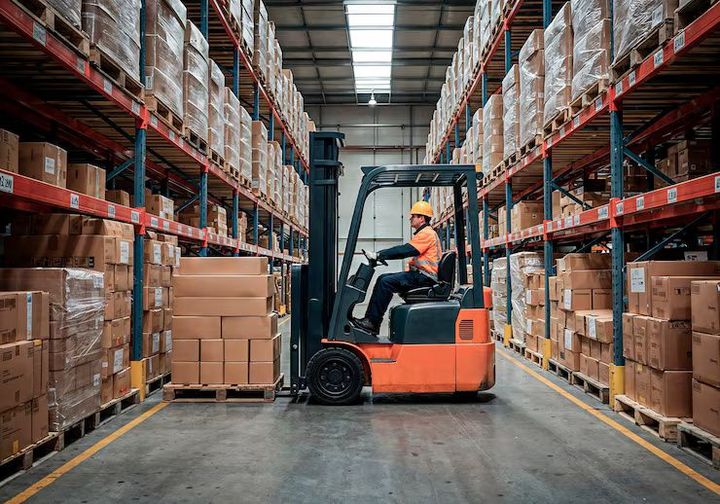
A forklift is a powered industrial vehicle designed to lift, move, position, and stack materials. Forklifts are widely used in warehouses, manufacturing facilities, construction areas, distribution centers, ports, retail storage facilities, and other workplaces where heavy or palletized materials need to be moved. A forklift can transport loads that would otherwise require significant manual handling.
The basic design combines a powered chassis, lifting mechanism, forks, counterweight or stability system, steering controls, and operator controls. The forks slide underneath a pallet or suitable load, while the mast raises or lowers the load to the required height. Different forklift designs are built for different surfaces, aisle widths, load sizes, lifting heights, and operating environments.
Forklift technology has developed from relatively simple industrial lifting vehicles into a broad category of material-handling equipment. Electric forklifts, internal-combustion forklifts, reach trucks, order pickers, pallet trucks, rough-terrain forklifts, and specialized models are now used for different operating conditions. OSHA classifies powered industrial trucks into seven broad classes, ranging from electric rider trucks to rough-terrain forklifts.
How a Forklift Works
A typical forklift uses hydraulic or electric systems to move the mast and forks vertically. The operator positions the forks beneath a load, adjusts the fork spacing when appropriate, lifts the load, and moves it to another location.
Stability is central to forklift operation. When a load is lifted, the combined center of gravity of the truck and load changes. Load weight, load position, shape, distribution, and distance from the front of the forks can affect stability and rated capacity.
Why Forklifts Are Used
Forklifts are primarily used for material handling. Common activities include:
- Moving palletized goods
- Loading and unloading vehicles
- Stacking materials on racks
- Transporting containers and industrial components
- Moving raw materials within production areas
- Positioning heavy loads
- Handling materials in warehouses and distribution facilities
The appropriate forklift depends on the specific material-handling task rather than simply the weight of the load.
Importance
Forklifts are important because modern warehouses and industrial facilities frequently handle materials that are heavy, bulky, elevated, or difficult to move manually. A suitable forklift can move these materials between receiving areas, storage locations, production lines, loading docks, and shipping areas.
However, forklift operation involves mechanical, environmental, and load-related hazards. The vehicle's capacity, load center, visibility, floor condition, turning space, lifting height, and attachment configuration can all influence safe operation.
Forklift Capacity
Forklift capacity is not simply the maximum weight printed on a general specification sheet. The rated capacity is associated with a particular load center and lifting configuration. OSHA explains that many forklifts are rated using a 24-inch load center, meaning the load's center of gravity is positioned at that distance from the vertical face of the forks.
A load that extends farther forward can reduce the practical lifting capacity. For example, a machine rated for a specific weight at a 24-inch load center may have a lower allowable load when the center of gravity moves farther away.
| Factor | Effect on Forklift Capacity or Stability |
|---|---|
| Load weight | Higher weight increases the load moment |
| Load center | Greater distance can reduce allowable capacity |
| Load distribution | Uneven distribution can affect balance |
| Lift height | Some configurations have reduced capacity at greater heights |
| Attachment | Certain attachments can reduce rated capacity |
| Load dimensions | Long or irregular loads can shift the center of gravity |
| Surface condition | Uneven surfaces can influence vehicle stability |
| Mast configuration | Mast type and lift height affect operating characteristics |
The data plate or nameplate is therefore an important source of information. OSHA states that operators should understand the truck's specifications, including capacity and maximum height, and that adding an attachment can generally reduce capacity.
Why Load Center Matters
Load center refers to the horizontal distance from the vertical face of the forks or attachment to the line of action through the load's center of gravity. A larger load-center distance creates a larger load moment.
The basic relationship is:
Load Moment = Load Weight × Load Center Distance
For this reason, two loads with the same weight can have different effects on a forklift if their shapes or positions place their centers of gravity at different distances from the front of the forks.
Recent Updates
Recent forklift developments have focused on electrification, automation, operator-assistance technologies, battery systems, fleet monitoring, and warehouse integration. These changes reflect broader developments in logistics, manufacturing, and warehouse automation.
Electric forklifts are increasingly relevant in indoor environments because they do not produce direct exhaust emissions during operation. Modern battery systems can also support longer operating periods and more structured charging and fleet-management practices.
Electric and Automated Forklifts
Electric models are available in several configurations, including counterbalance trucks and narrow-aisle equipment. Automation is also being applied to material movement through autonomous mobile equipment, automated guided vehicles, navigation systems, and fleet-management software.
Automated or semi-automated equipment can be particularly relevant where repetitive transportation routes are predictable. However, facility layout, pedestrian movement, load characteristics, and integration requirements determine whether automation is appropriate.
Operator Assistance and Monitoring
Newer forklift systems may include cameras, displays, proximity detection, warning systems, speed-management features, impact monitoring, and other electronic technologies. These systems can provide additional information to operators and fleet managers.
Such features do not eliminate the need for appropriate training, workplace controls, inspections, and careful load handling. The underlying mechanical limits of the truck remain important.
Energy and Fleet Management
Forklift fleets may use battery monitoring, charging-management systems, telematics, and maintenance records to track equipment use. These technologies can help organizations understand operating patterns and identify equipment conditions that require attention.
The appropriate technology depends on the type of forklift, operating hours, facility layout, energy infrastructure, and material-handling requirements.
Laws or Policies
Forklift safety requirements depend on the country, workplace, industry, and equipment type. In the United States, OSHA's powered industrial truck requirements are primarily addressed under 29 CFR 1910.178 for general industry. The standard covers areas including design, maintenance, operation, and use of powered industrial trucks.
OSHA also provides specific guidance concerning load handling. Operators are expected to avoid overloading, keep loads stable, center loads as nearly as practical, and understand how load position affects capacity.
In construction environments, OSHA has additional requirements covering material-handling equipment. For example, rated capacities for applicable lift trucks and stackers must be clearly posted and must not be exceeded.
Operator Training
Training is an important part of forklift safety. The specific training requirements depend on the applicable regulatory framework and workplace conditions.
Training commonly addresses vehicle operation, load handling, workplace hazards, inspections, stability principles, and safe operating practices. Operators also need to understand the information shown on the forklift's data plate.
Inspections and Maintenance
Forklifts require regular inspection and maintenance appropriate to their design and operating environment. Operators should identify visible damage, malfunctioning controls, tire problems, hydraulic issues, damaged forks, and other conditions that could affect safe operation.
A forklift with a condition that adversely affects safety should not remain in operation until the issue has been appropriately addressed. OSHA's powered industrial truck requirements include provisions concerning inspection, maintenance, and removal from service when necessary.
Tools and Resources
Understanding forklift specifications becomes easier when several key resources are used together.
Forklift Data Plate
The data plate, sometimes called the nameplate, provides critical information about the truck. Depending on the model, it may identify rated capacity, load center, maximum lift height, vehicle weight, and attachment-related capacity information.
The capacity shown on the plate should not be treated as a universal capacity for every load configuration. OSHA specifically notes that load size, position, weight distribution, and attachments can affect capacity.
Forklift Capacity Calculator
A capacity or load-moment calculation can help explain why load center matters. For unusual or oversized loads, however, calculations should follow the manufacturer's instructions and applicable safety requirements rather than relying on a simple generic formula.
For example, the relationship between load weight and load center can be represented as:
Maximum Load Moment = Rated Load × Rated Load Center
If the actual load center changes, the allowable load may also change. OSHA provides examples of this principle for unusual loads and emphasizes consulting the manufacturer for precise information.
Forklift Parts Reference
Common forklift components include:
- Mast and carriage
- Forks
- Attachments
- Nameplate
- Controls
- Instruments
- Battery or engine system
- Overhead guard
- Tires
- Warning devices
OSHA identifies these as major parts or features of commonly used powered industrial trucks.
Selection Checklist
When evaluating a forklift configuration, important considerations include:
- Maximum load weight
- Load dimensions and center of gravity
- Required lifting height
- Aisle width
- Indoor or outdoor operation
- Floor and terrain conditions
- Operating hours
- Energy or fuel requirements
- Turning radius
- Visibility requirements
- Attachment requirements
- Operator position
- Pedestrian traffic
- Maintenance and inspection requirements
The selection process should begin with the actual material-handling task. A compact electric truck may suit an indoor warehouse aisle, while a rough-terrain forklift is designed for substantially different ground conditions. OSHA identifies rough-terrain forklifts as Class VII equipment intended for unimproved natural terrain and disturbed terrain at construction sites.
FAQs
What are the main types of forklifts?
Common types include counterbalance forklifts, electric forklifts, internal-combustion forklifts, reach trucks, order pickers, pallet trucks, side loaders, and rough-terrain forklifts. OSHA's classification system divides powered industrial trucks into seven broad classes based on their design and application.
How is forklift capacity determined?
Forklift capacity depends on factors such as rated load weight, load center, lift height, mast configuration, load distribution, and attachments. The truck's data plate provides the applicable rated information for its specified configuration.
What are the main components of a forklift?
The major components include the mast, carriage, forks, power system, controls, tires, overhead guard, nameplate, and safety or warning devices. Additional components vary according to forklift type and application.
What safety features does a forklift have?
Common safety-related features include an overhead guard, warning devices, braking systems, load backrests, operator controls, visibility aids, and capacity information on the data plate. The exact features vary by model and configuration.
How do you select the right forklift?
Forklift selection should consider load weight, load center, lifting height, aisle width, surface conditions, indoor or outdoor use, operating hours, power source, attachments, and workplace traffic. The machine's rated capacity must match the actual load configuration rather than just the load's stated weight.
Conclusion
Forklifts are essential material-handling vehicles used to move, lift, stack, and position a wide range of loads. Their capacity depends on more than weight alone, with load center, distribution, lift height, attachments, and configuration playing important roles. Different forklift types are designed for different environments, from narrow indoor aisles to rough outdoor terrain. Understanding components, capacity ratings, safety features, operating conditions, and applicable regulations provides a clearer foundation for evaluating forklift equipment.