Future Trends in Extrusion Machine Technology and Industry Innovations
Extrusion technology is a fundamental manufacturing process used to shape materials like plastics, metals, and ceramics by forcing them through a shaped die.
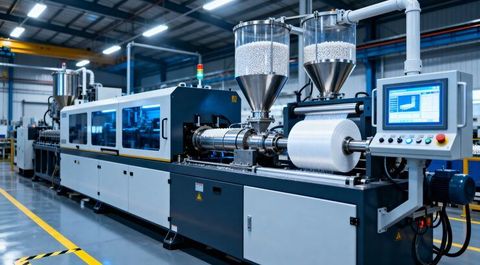
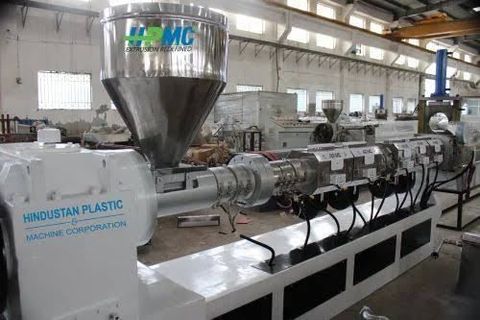
The primary equipment involved, known as an extrusion machine, relies on mechanical force and controlled thermal conditions to produce continuous profiles like pipes, sheets, cables, and structural tubes. Historically, this process operated on rigid manual parameters and fixed mechanical designs.
The main purpose of advancing extrusion machine technology is to improve dimensional precision, enhance energy efficiency, and accommodate a wider range of sustainable raw materials.
Importance
Innovations in extrusion equipment directly impact a wide range of industrial sectors.
These advancements affect multiple stakeholders across the manufacturing lifecycle.
Recent Updates
Recent developments in extrusion machinery focus on digital integration and processing efficiency.
Smarter machinery is also improving the processing of recycled and biodegradable polymers.
Key Technological Developments
Digital twin software for real-time line simulation.
Automated gauge controls for consistent profile thickness.
High-torque twin-screw configurations for recycled materials.
Integrated continuous melt filtration systems for contaminant removal.
| Innovation Focus | Primary Application | Key Operational Benefit |
| Smart Sensor Networks | Real-Time Monitoring | Early Defect Detection |
| Adaptive Screw Designs | Recycled Polymer Processing | Consistent Output Quality |
| Servo-Electric Drives | Power Management | Reduced Energy Consumption |
| Closed-Loop Systems | Dimensional Calibration | Minimized Material Scrap |
Laws or Policies
Global regulatory frameworks are accelerating the adoption of cleaner extrusion technologies. Government policies focused on plastic waste reduction and carbon neutrality require manufacturers to upgrade older processing equipment. Mandates enforcing minimum percentages of post-consumer recycled content push facilities to adopt extruders capable of handling non-uniform raw materials.
Workplace safety standards and energy efficiency regulations also shape machine design. National environmental agencies enforce strict limits on industrial power draw and emissions. Machine safety protocols mandate automated shut-off mechanisms, noise reduction enclosures, and ergonomic loader designs to protect factory personnel.
Tools and Resources
Evaluating modern machinery requires reliable reference materials, analytical platforms, and educational guides.
Information Platforms
Process Simulation Software: Interactive digital modeling tools help engineers calculate polymer viscosity, heat transfer, and pressure drops across the die.
Industrial Energy Calculators: Online templates allow plant managers to estimate potential electricity savings when transitioning from hydraulic to all-electric drive systems.
Standards Organizations: International standards repositories publish updated guidelines on machinery safety, screw geometry standards, and material testing procedures.
Industry Association Portals: Non-profit manufacturing groups provide technical whitepapers, machine comparison frameworks, and regulatory updates.
FAQs
What is the main difference between single-screw and twin-screw extruders?
Single-screw extruders are typically used for basic melting and pushing uniform materials into simple shapes. Twin-screw extruders use two interacting screws, offering superior mixing, degassing, and compounding capabilities suitable for complex or recycled materials.
How does smart technology improve extrusion efficiency?
Smart sensors monitor parameters like temperature, melt pressure, and speed.
Can modern extrusion machines process recycled plastics efficiently?
Yes, modern machines incorporate specialized melt filtration, advanced venting systems, and adaptive screw designs that handle raw material impurities and viscosity fluctuations common in recycled plastics.
Why are energy efficiency upgrades important for extrusion facilities?
Extrusion requires significant thermal and mechanical energy to melt and form materials. Energy-efficient components lower operational expenses, reduce environmental impact, and assist companies in meeting carbon reduction goals.
Conclusion
Extrusion technology is shifting toward automated, highly efficient, and environmentally sustainable processing systems.