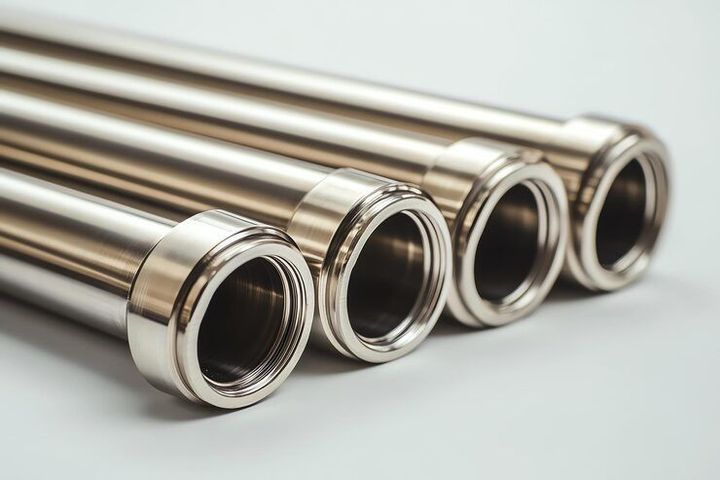
The term “Inconel” refers to a family of nickel-chromium alloys known for excellent resistance to heat, corrosion, and mechanical stress. Tubing manufactured from these alloys is widely used in aerospace, marine engineering, chemical processing, energy production, and industrial manufacturing.
Modern industries rely on materials capable of maintaining structural stability under demanding conditions. Inconel tubing exists to address these operational challenges where safety, durability, and reliability are essential.
Common Characteristics of Inconel Tubing
-
High resistance to oxidation
-
Excellent corrosion protection
-
Strong performance under pressure
-
Stability in elevated temperatures
-
Long operational lifespan
-
Resistance to cracking and scaling
Why Inconel Tubing Matters Today
Global industries continue to expand into more demanding operating environments. Energy systems now function at higher temperatures, aerospace engineering requires lighter but stronger materials, and industrial plants operate with increasingly aggressive chemicals.
Inconel tubing plays a major role in these developments because it helps maintain system integrity where traditional materials may weaken or fail.
Industries That Commonly Use Inconel Tubing
| Industry | Typical Application | Main Benefit |
|---|
| Aerospace | Jet engines and exhaust systems | Heat resistance |
| Chemical Processing | Acid handling pipelines | Corrosion protection |
| Marine Engineering | Saltwater systems | Oxidation resistance |
| Energy Production | Heat exchangers | Durability |
| Automotive | Turbocharger components | Pressure tolerance |
The growing focus on renewable energy and advanced industrial systems has also increased attention toward high-performance alloys. Inconel tubing supports geothermal energy facilities, hydrogen infrastructure, and advanced nuclear systems where extreme environmental conditions are common.
High-Temperature Performance and Material Reliability
One of the most important advantages of Inconel tubing is its ability to retain strength at elevated temperatures. Many industrial alloys lose structural integrity when exposed to prolonged heat, but Inconel alloys are specifically engineered for stability.
Common Grades of Inconel Tubing
Inconel 600
Known for oxidation resistance and versatility in industrial heating systems.
Inconel 625
Frequently used in marine and chemical industries because of superior corrosion resistance.
Inconel 718
Popular in aerospace engineering due to high tensile strength and fatigue resistance.
Inconel X-750
Used in turbine applications and pressure vessels operating under stress.
Different grades are selected depending on environmental conditions, temperature range, and mechanical demands.
Recent Trends and Industry Updates
The past year has seen increased attention toward advanced alloy materials due to rapid growth in aerospace modernization, clean energy infrastructure, and industrial automation.
2025 Industrial Material Trends
Expansion in Hydrogen Energy Systems
Hydrogen processing facilities require materials resistant to high temperatures and chemical reactions. Inconel tubing is increasingly discussed in relation to hydrogen transport and containment systems.
Aerospace Manufacturing Growth
During 2025, aerospace manufacturers continued investing in lightweight and heat-resistant materials for engine efficiency improvements. Nickel-based alloys remain important in turbine and exhaust system development.
Advanced Nuclear Reactor Research
Several energy research organizations have explored superalloy tubing solutions for next-generation nuclear reactors because of long-term thermal stability.
Focus on Corrosion Monitoring Technologies
Industrial monitoring systems now use smart sensors to inspect tubing degradation in real time. Predictive maintenance tools have become more common in large-scale manufacturing facilities.
Material Engineering Developments
Researchers continue improving alloy compositions to increase fatigue resistance and reduce material degradation in high-pressure systems. Additive manufacturing and precision forming technologies are also influencing how tubing components are produced.
Regulations, Standards, and Industrial Policies
Inconel tubing applications are often connected to highly regulated industries such as aerospace, energy, chemical manufacturing, and transportation. Because of this, strict material standards and safety policies apply.
International Standards Affecting Inconel Tubing
ASTM Standards
ASTM International publishes specifications related to alloy composition, mechanical properties, and testing procedures.
ASME Boiler and Pressure Vessel Code
The ASME code influences how tubing materials are selected for pressure-containing systems.
ISO Manufacturing Standards
ISO standards help ensure consistency in industrial material quality and manufacturing processes.
Environmental Compliance Policies
Governments in several countries continue encouraging industrial sustainability through emissions reduction and efficient energy systems. Durable materials like Inconel tubing may support longer operational lifecycles and reduced maintenance waste.
Safety and Inspection Requirements
Industrial operators often follow strict inspection schedules involving:
-
Ultrasonic testing
-
Pressure testing
-
Corrosion monitoring
-
Thermal stress analysis
-
Surface integrity evaluations
Regulatory compliance is particularly important in sectors where equipment failure could create environmental or operational risks.
Tools and Resources Related to Inconel Tubing
Engineers, researchers, and manufacturing professionals often rely on digital resources to evaluate tubing specifications and performance characteristics.
Engineering Tools
Material Property Calculators
These calculators estimate:
-
Thermal expansion
-
Tensile strength
-
Pressure tolerance
-
Corrosion behavior
CAD Design Software
Programs such as AutoCAD and SolidWorks are commonly used for tubing system design and simulation.
Finite Element Analysis Platforms
Simulation tools help engineers analyze stress distribution and thermal performance.
Educational Resources
Industrial Standards Organizations
-
ASTM International
-
ASME
-
ISO
Technical Learning Platforms
Engineering courses and metallurgy education programs provide training on alloy applications and industrial materials science.
Research Publications
Scientific journals frequently publish updates about nickel alloy performance, manufacturing techniques, and corrosion studies.
Inspection and Monitoring Technologies
Modern industrial facilities often use:
-
Infrared thermal imaging
-
Smart corrosion sensors
-
Digital maintenance tracking systems
-
Predictive analytics software
These technologies help improve operational reliability and maintenance planning.
Environmental and Sustainability Considerations
Industrial sustainability has become a major topic across manufacturing and energy sectors. Long-lasting materials can reduce replacement frequency and improve operational efficiency.
Inconel tubing contributes to sustainability goals in several ways:
-
Extended lifespan reduces waste generation
-
Resistance to corrosion lowers maintenance requirements
-
High-temperature stability supports energy-efficient systems
-
Recyclable nickel alloys contribute to material recovery programs
However, alloy manufacturing itself requires significant energy and specialized processing methods. Researchers continue studying ways to improve manufacturing efficiency while maintaining material performance.
Challenges Associated With Inconel Tubing
Although Inconel tubing provides many performance advantages, certain challenges remain important in industrial planning.
Manufacturing Complexity
Nickel-based alloys are more difficult to machine and form compared to conventional steels because of their strength and heat resistance.
Thermal Expansion Management
Systems operating under extreme temperature changes require careful engineering to account for expansion and contraction behavior.
Specialized Welding Requirements
Proper welding techniques are essential to maintain alloy integrity and avoid cracking or stress damage.
Material Selection Decisions
Different industrial environments require careful alloy selection based on:
-
Temperature range
-
Chemical exposure
-
Pressure levels
-
Mechanical stress
-
Environmental conditions
Engineering expertise is important for ensuring long-term reliability.
Future Outlook for Inconel Tubing
Industrial demand for advanced materials is expected to continue growing over the next decade. Emerging technologies in aerospace, renewable energy, hydrogen infrastructure, and advanced transportation systems may further increase interest in nickel-based superalloys.
Material scientists are also developing next-generation alloys with improved thermal efficiency and corrosion resistance. Digital manufacturing systems and automation technologies may improve production precision and material consistency.
As industries continue operating in more extreme conditions, durable alloy tubing systems are likely to remain important components of industrial infrastructure.
Frequently Asked Questions
What is Inconel tubing mainly used for?
Inconel tubing is commonly used in aerospace, chemical processing, marine engineering, energy systems, and high-temperature industrial applications because of its heat and corrosion resistance.
Why is Inconel considered a superalloy?
Inconel is called a superalloy because it maintains strength and stability in extreme temperatures and corrosive environments where many traditional metals fail.
Can Inconel tubing resist seawater corrosion?
Certain grades, such as Inconel 625, are highly resistant to seawater corrosion and are often used in offshore and marine applications.
How is Inconel different from stainless steel?
Inconel generally provides better performance in very high temperatures and highly corrosive environments, while stainless steel is more commonly used in standard industrial conditions.
Are there different grades of Inconel tubing?
Yes. Common grades include Inconel 600, 625, 718, and X-750. Each grade has different properties suited for specific industrial environments.
Conclusion
Inconel tubing plays an important role in modern industrial systems that operate under high temperatures, pressure, and corrosive conditions. Its durability, oxidation resistance, and mechanical strength make it valuable across aerospace, energy, marine, and chemical industries.
Recent developments in clean energy, advanced manufacturing, and industrial automation continue to increase attention toward high-performance alloys. At the same time, regulations and safety standards shape how these materials are tested and applied.
As industries evolve toward more demanding operational environments, Inconel tubing remains an important subject in engineering, materials science, and industrial infrastructure discussions.