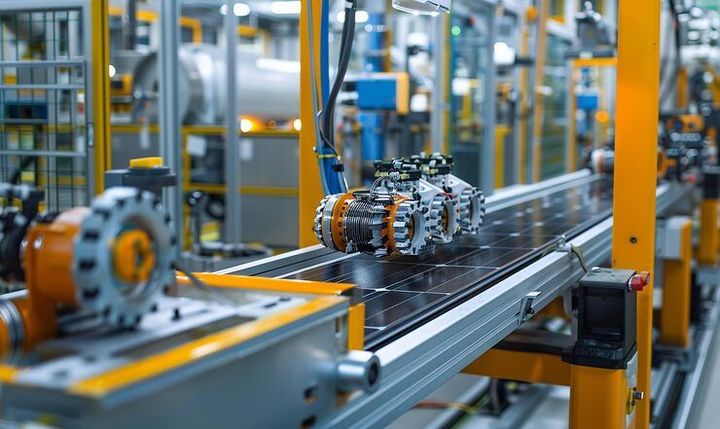
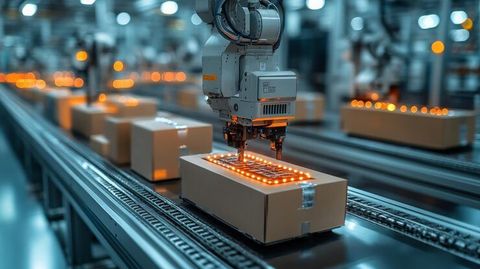
Assembly lines are widely used in industries such as automotive manufacturing, electronics, pharmaceuticals, food processing, aerospace, and consumer goods production. Modern assembly lines combine human expertise with robotics, artificial intelligence, conveyor systems, and digital monitoring tools.
The concept became globally recognized during the early 20th century when mass production methods transformed factory operations. Today, assembly lines continue evolving with smart manufacturing technologies and Industry 4.0 innovations.
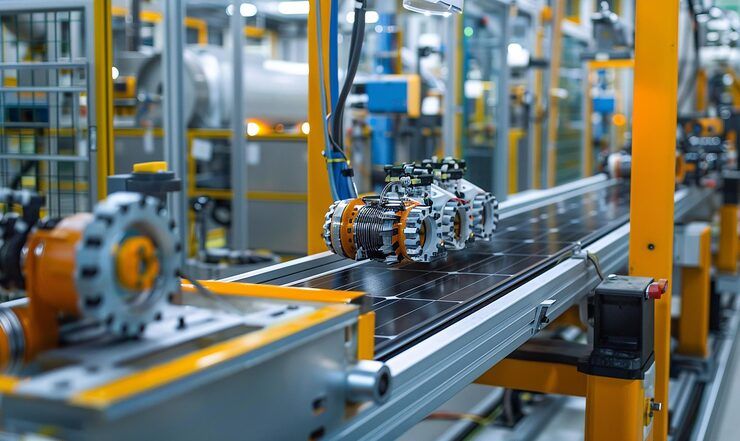
Why Industrial Assembly Lines Matter Today
Industrial assembly lines play a major role in global manufacturing and supply chain operations. They help companies maintain production consistency, improve workplace organization, and support large-scale manufacturing demands.
Modern production systems affect multiple sectors, including:
-
Automotive manufacturing
-
Electronic device production
-
Medical equipment manufacturing
-
Food and beverage packaging
-
Renewable energy equipment assembly
Assembly lines help solve several industrial challenges:
-
Reducing production delays
-
Improving workflow coordination
-
Increasing product consistency
-
Enhancing worker safety
-
Supporting automated quality control
The rise of smart factories has also increased the importance of connected assembly systems. Many factories now use sensors, industrial software, and machine learning to monitor equipment performance in real time.
Evolution of Modern Assembly Line Technology
Manufacturing systems have changed significantly over the past decade. Traditional mechanical production lines are increasingly being replaced by intelligent systems that combine automation and digital analytics.
Key Features of Modern Assembly Lines
| Technology | Purpose | Common Industry Use |
|---|
| Robotics | Automated repetitive tasks | Automotive manufacturing |
| IoT Sensors | Real-time monitoring | Smart factories |
| AI Analytics | Predictive maintenance | Industrial automation |
| Conveyor Systems | Material movement | Packaging plants |
| Machine Vision | Quality inspection | Electronics production |
Many industrial facilities now integrate cloud-based monitoring platforms to track production efficiency and equipment performance remotely.
Recent Updates and Manufacturing Trends in 2025
Industrial assembly lines continue evolving due to technological innovation and global manufacturing demands.
Increased Adoption of AI in Manufacturing
During 2025, manufacturers expanded the use of artificial intelligence for predictive maintenance and production forecasting. AI systems can identify equipment problems before failures occur, helping reduce downtime.
Growth of Collaborative Robots
Collaborative robots, also called cobots, became more common in factories throughout 2024 and 2025. These robots are designed to work safely alongside human workers during assembly operations.
Expansion of Sustainable Manufacturing
Environmental concerns have encouraged factories to improve energy efficiency and reduce industrial waste. Many manufacturing plants now use energy monitoring systems and recyclable production materials.
Smart Factory Investments
Several countries announced manufacturing modernization programs in 2024 and 2025 to support digital industrial transformation. These initiatives focus on:
-
Industrial automation
-
Semiconductor production
-
Supply chain resilience
-
Renewable energy manufacturing
-
Workforce technology training
Advanced Safety Monitoring
Factories increasingly use computer vision and wearable technology to improve workplace safety. These systems can monitor restricted areas, detect hazards, and alert supervisors to safety concerns.
Regulations and Industrial Policies
Industrial assembly lines are heavily influenced by workplace regulations, environmental standards, and manufacturing policies.
Workplace Safety Standards
Manufacturing facilities must follow safety regulations related to:
-
Machine guarding
-
Emergency shutdown systems
-
Fire prevention
-
Electrical safety
-
Hazard communication
In many countries, occupational safety agencies regularly inspect industrial plants to ensure compliance with worker protection standards.
Environmental Regulations
Assembly lines must also comply with environmental laws involving:
-
Air emissions
-
Industrial waste disposal
-
Water usage
-
Chemical handling
-
Energy efficiency standards
Governments increasingly encourage factories to adopt cleaner manufacturing technologies and sustainable production systems.
Automation and Labor Policies
As automation expands, policymakers continue discussing workforce adaptation strategies. Many governments support:
-
Technical education programs
-
Industrial skills training
-
Robotics certification initiatives
-
Digital manufacturing education
Data and Cybersecurity Rules
Modern assembly lines connected to digital networks must also comply with cybersecurity regulations. Manufacturing systems are becoming more vulnerable to cyber threats, making industrial cybersecurity an important focus area.
Tools and Resources for Industrial Assembly Lines
Modern manufacturing facilities use various tools and software platforms to manage assembly line operations efficiently.
Industrial Automation Software
Manufacturers commonly use industrial automation platforms for:
-
Production monitoring
-
Equipment scheduling
-
Predictive maintenance
-
Workflow management
-
Quality tracking
Popular industrial software categories include:
-
Manufacturing Execution Systems (MES)
-
Enterprise Resource Planning (ERP)
-
Industrial IoT dashboards
-
Digital twin platforms
Monitoring and Analytics Tools
Factories use real-time analytics systems to measure:
-
Equipment performance
-
Production speed
-
Downtime frequency
-
Energy consumption
-
Product defect rates
These tools help operators identify operational inefficiencies and improve manufacturing productivity.
Safety and Compliance Resources
Industrial facilities often rely on:
-
Safety inspection templates
-
Hazard assessment tools
-
Compliance checklists
-
Digital training modules
-
Incident reporting systems
Educational Resources
People interested in manufacturing systems can explore:
-
Engineering learning platforms
-
Industrial automation courses
-
Robotics simulation software
-
Manufacturing research publications
-
Government manufacturing programs
Common Challenges in Assembly Line Operations
Despite technological improvements, assembly lines still face operational challenges.
Equipment Downtime
Unexpected machine failures can interrupt production and reduce efficiency. Predictive maintenance systems help minimize these disruptions.
Supply Chain Disruptions
Global logistics issues may delay raw materials and components, affecting manufacturing schedules.
Workforce Training
Advanced assembly systems require workers to understand robotics, software systems, and automated equipment.
Cybersecurity Risks
Connected manufacturing systems may face cybersecurity threats that impact operations and data security.
Energy Management
Large-scale manufacturing operations consume significant amounts of electricity, increasing the importance of energy-efficient production systems.
The Future of Industrial Assembly Lines
Industrial manufacturing is expected to become increasingly digital and automated over the next decade.
Future assembly line developments may include:
-
AI-driven production planning
-
Autonomous mobile robots
-
Digital twin simulation systems
-
Advanced industrial cybersecurity
-
Sustainable manufacturing technologies
Factories are also expected to adopt more flexible production systems capable of handling customized manufacturing with minimal delays.
The growth of electric vehicles, renewable energy equipment, and semiconductor manufacturing may further influence assembly line innovation worldwide.
Frequently Asked Questions
What is an industrial assembly line?
An industrial assembly line is a manufacturing system where products move through organized workstations for assembly, inspection, and packaging processes.
Which industries use assembly lines the most?
Automotive, electronics, pharmaceuticals, aerospace, food processing, and consumer goods industries commonly use assembly line systems.
How does automation improve assembly lines?
Automation improves speed, consistency, safety, and production efficiency while reducing repetitive manual tasks.
What is Industry 4.0 in manufacturing?
Industry 4.0 refers to smart manufacturing technologies that combine automation, sensors, artificial intelligence, and digital connectivity.
Why is predictive maintenance important?
Predictive maintenance helps identify equipment problems before failures occur, reducing downtime and improving operational efficiency.
Conclusion
Industrial assembly lines remain one of the most important components of modern manufacturing. They support efficient production, improve product consistency, and help industries meet growing global demand.
Recent advancements in automation, robotics, artificial intelligence, and smart factory systems continue transforming industrial operations worldwide. At the same time, workplace safety, environmental regulations, and cybersecurity remain critical considerations for manufacturers.
As manufacturing technology evolves, assembly lines are expected to become more intelligent, flexible, and sustainable. Understanding these systems helps businesses, students, engineers, and industry professionals stay informed about the future of global production and industrial innovation.