Industrial Automation Software in Automotive: A Simple Guide
Industrial automation software plays an essential role in modern automotive manufacturing. It refers to computer-based systems designed to control machines, robotics, production lines, and industrial processes with minimal human intervention. These systems combine software platforms, sensors, programmable logic controllers (PLCs), robotics, and data analytics to manage complex manufacturing tasks.
The automotive sector has long been an early adopter of industrial automation due to the complexity of vehicle production. Manufacturing involves multiple stages such as stamping, welding, painting, assembly, and quality inspection.
Managing these processes manually would be inefficient and error-prone. Automation software connects machines, sensors, and monitoring tools into a unified system, enabling seamless coordination across the production floor.
In smart factory environments, automation systems collect real-time data and adjust operations dynamically. This allows manufacturers to detect delays, identify equipment issues, and optimize production speeds efficiently.
Importance of Industrial Automation Software
Industrial automation software plays a critical role in improving productivity, accuracy, and efficiency. Modern vehicles consist of thousands of components that require precise assembly and strict quality control.
Key Beneficiaries
- Automotive manufacturers managing large-scale production
- Engineers designing and maintaining manufacturing systems
- Factory operators and technicians
- Supply chain managers coordinating production schedules
Automation helps address key challenges in vehicle manufacturing by improving consistency and reducing manual intervention.
Core Benefits
Improved Production Efficiency
Automation systems reduce downtime and optimize machine utilization. They can automatically adjust parameters based on real-time conditions, ensuring smoother operations.
Enhanced Product Quality
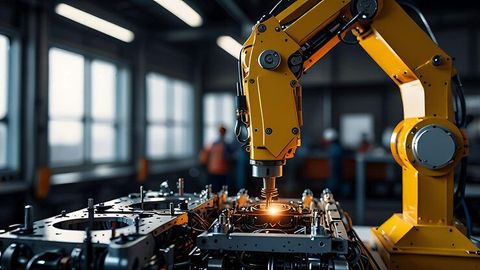
Robotics and machine vision systems detect defects with high accuracy. These tools identify issues such as welding errors, assembly misalignment, and surface defects.
Data-Driven Decision Making
Automation platforms collect and analyze large volumes of production data. This enables performance monitoring, trend analysis, and informed decision-making.
Worker Safety
Automated systems handle hazardous tasks like heavy lifting, welding, and paint spraying. This reduces workplace risks and improves employee safety.
Scalability for New Technologies
Automation allows manufacturers to adapt to innovations such as electric vehicles and advanced electronics without rebuilding entire production lines.
Recent Updates and Industry Trends
Industrial automation in the automotive sector is evolving rapidly with the integration of advanced technologies. These trends are shaping the future of manufacturing systems.
Key Trends
-
Artificial Intelligence Integration (2024–2025):
Machine learning algorithms analyze production data to predict failures and optimize schedules. Predictive maintenance is becoming a key capability. -
Digital Twin Technology:
Virtual replicas of manufacturing systems allow companies to simulate and test production changes before implementation. -
Collaborative Robots (Cobots):
Cobots work alongside human operators, assisting with tasks such as assembly, inspection, and material handling. -
Cloud-Based Industrial Platforms:
Cloud systems enable centralized monitoring across multiple factories and locations. -
Electric Vehicle Manufacturing:
EV production introduces new requirements such as battery assembly and power electronics manufacturing. -
Edge Computing in Factories:
Data is processed locally at machines, reducing latency and enabling faster responses to production changes.
These developments show a shift toward intelligent, connected, and adaptive manufacturing environments.
Laws and Policies
Automation in automotive manufacturing is governed by safety standards, data regulations, and government initiatives. These frameworks ensure safe and responsible implementation.
Industrial Safety Standards
| Regulation / Standard | Purpose |
|---|---|
| ISO 10218 | Safety requirements for industrial robots |
| IEC 61508 | Functional safety of electrical systems |
| ISO 13849 | Safety-related control systems |
These standards ensure that automated systems operate safely alongside human workers.
Key Regulatory Areas
-
Data Protection Regulations:
Organizations must secure and manage operational data responsibly. -
Government Manufacturing Programs:
Many countries promote automation through initiatives supporting digital transformation and smart factories. -
Environmental Regulations:
Factories must comply with policies related to emissions, energy usage, and waste management.
Automation software helps monitor and optimize resource usage to meet environmental standards.
Tools and Resources
Various tools and platforms support industrial automation in automotive manufacturing. These technologies enable efficient production management and system integration.
Common Automation Technologies
-
Manufacturing Execution Systems (MES):
Manage real-time production operations, scheduling, and quality control. -
Supervisory Control and Data Acquisition (SCADA):
Monitor industrial processes and collect data from machines and sensors. -
Programmable Logic Controllers (PLCs):
Control machinery and automate industrial processes. -
Industrial Robotics Software:
Used to program robots for tasks such as welding, painting, and assembly. -
Digital Twin Simulation Tools:
Create virtual models to test and optimize manufacturing processes.
Tools Overview Table
| Tool Category | Function |
|---|---|
| MES Platforms | Manage production operations |
| SCADA Systems | Monitor industrial processes |
| Robotics Software | Program automated manufacturing tasks |
| Predictive Maintenance Tools | Analyze equipment performance |
| Industrial IoT Platforms | Connect machines and sensors |
Learning Resources
- Industrial automation training platforms
- Engineering simulation tools
- Manufacturing analytics dashboards
- Robotics programming environments
- Smart factory research publications
These resources help professionals build expertise in automation technologies and applications.
Frequently Asked Questions (FAQs)
What is industrial automation software in automotive manufacturing?
It refers to digital systems that control machines, robotics, and production processes. These platforms coordinate assembly lines, monitor operations, and improve manufacturing efficiency.
How does automation software improve production?
Automation enhances efficiency by optimizing machine operations, reducing errors, and enabling real-time monitoring of processes.
What technologies are commonly used?
Common technologies include:
- Robotics
- PLC controllers
- SCADA systems
- Industrial IoT platforms
- Machine vision systems
- AI-powered analytics
Is automation replacing workers?
Automation changes job roles rather than eliminating them entirely. Workers often shift to operating, maintaining, and improving automated systems.
Why is automation important for electric vehicles?
Electric vehicle production requires precise assembly of batteries and electronic components. Automation ensures accuracy and consistent quality.
Conclusion
Industrial automation software has become a foundation of modern automotive manufacturing. By integrating robotics, sensors, and intelligent software, manufacturers can manage complex production systems with greater precision and efficiency.
Smart factory environments enable machines to communicate, data to be analyzed continuously, and processes to adapt dynamically. As the industry evolves toward electric vehicles and advanced technologies, automation will remain essential.
Ongoing innovations such as AI, digital twins, cloud platforms, and collaborative robots are shaping the future of manufacturing. Understanding these systems helps industry professionals navigate the rapidly changing landscape of automotive production.