Industrial Automation Systems: Explore Robotics, AI and Smart Manufacturing
Industrial automation connects machines, software, and people. It plays an important role in modern manufacturing by helping industries manage production activities, monitor equipment, and maintain consistent operating processes. Technologies such as industrial robotics, artificial intelligence (AI), programmable logic controllers (PLCs), and Industrial Internet of Things (IIoT) platforms are changing how factories operate.
An industrial automation system combines hardware and software to control industrial processes. These systems can perform repetitive activities, collect operational information, and coordinate different stages of production. Industrial automation companies work across several industries, including automotive manufacturing, food processing, pharmaceuticals, electronics, and energy.
Understanding these technologies helps explain how traditional factories are developing into connected and intelligent manufacturing environments.
Understanding Industrial Automation Systems
What Is Industrial Automation?
Industrial automation refers to the use of control systems, computers, sensors, and machinery to perform manufacturing and industrial activities with limited manual intervention. Depending on the application, automation can manage individual machines or coordinate entire production facilities.
Common components include:
Sensors: Collect information about temperature, pressure, movement, and other operating conditions.
Controllers: Process information and determine machine actions.
Actuators: Convert control signals into physical movements.
Robots: Perform repetitive, precise, or physically demanding activities.
Industrial software: Monitors equipment and organizes production information.
These components work together to improve process coordination and provide better visibility into industrial operations.
Importance in Modern Manufacturing
Automation supports manufacturing environments where accuracy, repeatability, and production coordination are important. Automated equipment can perform repetitive tasks consistently while allowing workers to focus on supervision, maintenance, and decision-making.
Its major applications include assembly, material handling, packaging, quality inspection, and equipment monitoring. However, the level of automation depends on production requirements, available infrastructure, workforce capabilities, and operational objectives.
Robotics and Artificial Intelligence in Manufacturing
Industrial Robotics and Applications
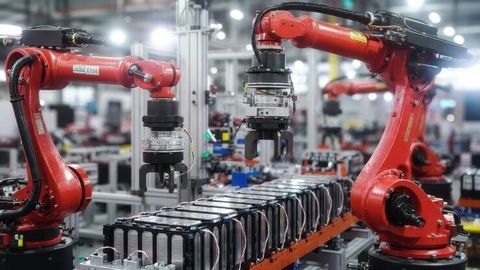
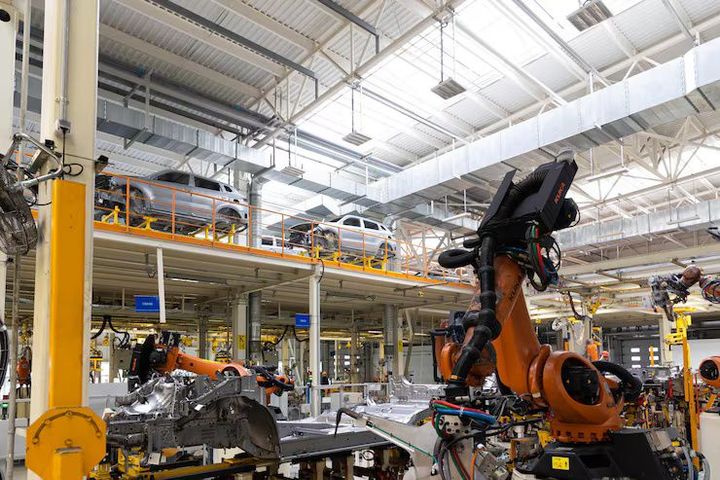
Industrial robots are programmable machines designed to perform physical activities in manufacturing environments. An industrial robotics company or system integrator may work with robotic arms, sensors, controllers, and safety equipment to develop automated production applications.
Common industrial robotics applications include:
Assembly: Positioning and joining components during manufacturing.
Welding: Performing controlled welding operations on metal components.
Material handling: Moving products between production stations.
Packaging: Arranging, sorting, and preparing manufactured goods.
Inspection: Supporting visual checks and identifying potential production defects.
Collaborative robots, commonly called cobots, are another development. They are designed to operate near people under specified safety conditions. Their suitability depends on risk assessments, workspace design, and application requirements.
Artificial Intelligence and Smart Production
Artificial intelligence helps manufacturing systems analyze information and identify patterns in operational data. Machine learning applications can examine equipment performance, production records, and sensor readings.
AI applications include predictive maintenance, automated visual inspection, production forecasting, and process optimization. For example, an AI-supported monitoring system may identify unusual equipment behavior that requires further inspection.
AI does not independently solve every manufacturing challenge. Its performance depends on data quality, system integration, appropriate algorithms, and human oversight.
Important Industrial Automation Technologies
PLC Programming and Control Systems
A Programmable Logic Controller (PLC) is an industrial computer used to control machinery and production processes. PLC programming services involve developing, configuring, testing, and maintaining control logic for industrial equipment.
PLCs commonly manage conveyor belts, motors, pumps, packaging machines, and automated assembly equipment. They are designed for industrial environments where reliable operation and predictable responses are important.
Distributed Control System
A DCS control system, or Distributed Control System, manages complex industrial processes through multiple interconnected controllers. Instead of depending on one central controller, control responsibilities are distributed across different system components.
DCS technology is commonly used in:
Chemical processing facilities
Oil and gas operations
Power generation plants
Water treatment facilities
Large-scale manufacturing processes
These systems support centralized supervision while allowing individual process areas to operate through distributed controls.
SCADA Software and Industrial Monitoring
SCADA stands for Supervisory Control and Data Acquisition. A SCADA system collects information from industrial equipment and presents it through monitoring interfaces.
SCADA software helps operators observe machine conditions, review alarms, track production activities, and supervise processes remotely where appropriate. It is commonly used in manufacturing, utilities, infrastructure, and energy management.
Industrial IoT Platforms
An Industrial IoT platform connects industrial equipment, sensors, software, and data systems. It allows connected devices to exchange operational information through suitable communication technologies.
IIoT platforms support equipment monitoring, predictive maintenance, energy tracking, and production analysis. Their implementation requires attention to network reliability, cybersecurity, data management, and compatibility with existing equipment.
Manufacturing Execution System
MES software, or Manufacturing Execution System software, manages and tracks production activities on the factory floor. It connects production operations with broader business and planning systems.
Its common functions include:
Production scheduling and tracking
Material and inventory monitoring
Quality management
Equipment performance records
Production reporting and traceability
MES software helps organizations understand how manufacturing activities progress from production orders to completed products.
Comparing Major Automation Technologies
Different automation technologies perform different functions. The following table explains their general purposes.
Technology | Primary Function | Common Application |
|---|---|---|
PLC | Machine control | Automated equipment |
DCS | Distributed process control | Chemical plants |
SCADA | Monitoring and supervision | Industrial facilities |
IIoT | Equipment connectivity and data collection | Smart factories |
MES | Production management | Manufacturing operations |
Robotics | Automated physical activities | Assembly and packaging |
AI | Data analysis and pattern recognition | Predictive maintenance |
These technologies can operate together as part of an integrated industrial automation environment.
Recent Developments and Industry Trends
Connected and Intelligent Factories
Smart manufacturing increasingly combines robotics, cloud computing, AI, and connected industrial equipment. These technologies allow production facilities to collect information from different operations and use it for planning and monitoring.
Digital twins are another developing technology. They create virtual representations of physical machines, production lines, or industrial processes. Engineers can use these models to study operating conditions and evaluate potential changes.
Cybersecurity and Data Management
As manufacturing equipment becomes more connected, cybersecurity becomes increasingly important. Unauthorized access, network disruptions, and compromised industrial data can affect production activities.
Manufacturers commonly consider network segmentation, access controls, software updates, monitoring, and secure communication when developing connected systems.
Challenges and Considerations
Industrial automation introduces technical and organizational challenges that require careful planning. Integrating modern equipment with older machinery can involve compatibility and communication difficulties.
Other important considerations include:
Initial investment: Hardware, software, installation, and infrastructure require financial planning.
Technical skills: Employees need suitable training to operate and maintain automated systems.
Cybersecurity: Connected equipment requires appropriate security measures.
Maintenance: Sensors, controllers, robots, and networks need regular inspection.
System integration: Different technologies must communicate reliably.
A practical automation strategy considers existing infrastructure, production requirements, workforce readiness, and long-term maintenance needs.
Frequently Asked Questions
What Do Industrial Automation Companies Do?
Industrial automation companies develop, integrate, and maintain technologies such as PLCs, robotics, control systems, and industrial monitoring software.
What Is an Industrial Robotics Company or Integrator?
An industrial robotics integrator combines robots, controllers, sensors, and safety equipment to automate specific manufacturing activities.
What Is the Difference Between SCADA and MES Software?
SCADA focuses on equipment monitoring and supervisory control, while MES manages production activities, tracking, quality records, and manufacturing information.
How Does an Industrial IoT Platform Work?
An IIoT platform connects industrial devices and collects operational data for monitoring, analysis, and equipment management.
Why Are PLC Programming Services Important?
PLC programming helps configure industrial controllers to manage machine operations, automate processes, and coordinate equipment responses.
Conclusion
Industrial automation systems are an important part of modern manufacturing. Robotics, artificial intelligence, PLCs, DCS, SCADA, IIoT platforms, and MES software each contribute different capabilities to industrial operations.