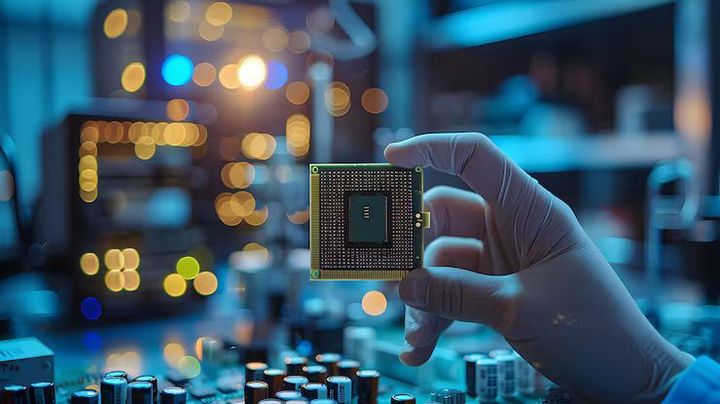
Industrial-Grade Chips Guide to Embedded Systems in Next-Gen Machinery
Industrial-grade chips are specialized semiconductor components designed to operate reliably in demanding environments such as factories, energy systems, transportation, and automation equipment. Unlike consumer-grade chips, these components are built to handle extreme temperatures, vibration, dust, and long operational lifecycles. They exist because modern machinery increasingly depends on digital control, data processing, and connectivity to function efficiently.
These chips form the foundation of embedded systems, enabling machines to perform precise operations, monitor conditions in real time, and communicate with other devices. As industries move toward automation and smart manufacturing, industrial-grade chips have become essential for ensuring stability, accuracy, and long-term performance.
Guide to Industrial-Grade Chips Importance in Smart Manufacturing
Industrial-grade chips matter today because they support the growing demand for automation, efficiency, and safety across sectors. From manufacturing plants to renewable energy systems, these chips control processes, collect data, and optimize performance.
Key Reasons Industrial Chips Are Important
- Reliability in harsh environments: Designed for continuous operation in extreme conditions
- Support for automation: Enable robotics, sensors, and control systems
- Energy efficiency: Help reduce power consumption in machinery
- Long lifecycle: Suitable for systems requiring years of consistent operation
- Data-driven decisions: Facilitate real-time monitoring and analytics
Industries Affected by Industrial Chips
| Industry | Application of Industrial Chips |
|---|---|
| Manufacturing | CNC machines, robotics, automation systems |
| Energy | Smart grids, solar inverters, turbines |
| Transportation | Rail systems, automotive electronics |
| Healthcare | Medical devices, diagnostic equipment |
| Agriculture | Smart irrigation, precision farming tools |
These chips solve problems such as system downtime, inefficient operations, and lack of real-time visibility. By improving machine intelligence, they contribute to productivity and operational safety.
Insights into Recent Updates in Industrial Chip Technology
Over the past year, several developments have shaped the industrial semiconductor landscape. In 2025, advancements in chip design focused on performance, energy efficiency, and integration with artificial intelligence.
Notable Trends
- AI-enabled industrial chips: Integrate machine learning for predictive maintenance and automation
- Edge computing growth: More processing occurs locally on machines instead of cloud systems
- Smaller process nodes: Advanced manufacturing improves performance while reducing power usage
- Supply chain recovery: Global semiconductor shortages have gradually stabilized since late 2024
- Increased adoption of IoT devices: Industrial Internet of Things (IIoT) systems continue to expand
Trend Comparison Overview
| Year | Key Focus Area | Impact on Industry |
|---|---|---|
| 2023 | Supply shortages | Delays in manufacturing |
| 2024 | Recovery and scaling | Improved availability |
| 2025 | AI and edge integration | Smarter, faster machinery |
These updates highlight how industrial chips are evolving to meet modern demands, particularly in automation and data processing.
Overview of Laws and Policies Affecting Industrial Chips
Industrial-grade chips are influenced by regulations and policies that ensure safety, quality, and compliance. Governments and regulatory bodies establish standards to control manufacturing processes, environmental impact, and usage.
Relevant Frameworks in India
- Make in India initiative: Encourages domestic semiconductor manufacturing
- Production Linked Incentive (PLI) Scheme: Supports electronics and semiconductor industries
- Bureau of Indian Standards (BIS): Sets quality and safety standards for electronic components
- Environmental regulations: Govern the disposal and recycling of electronic waste
Globally, policies such as export controls and technology regulations also affect the availability and development of industrial chips. Compliance ensures quality, maintains operational safety, and mitigates risks.
Discover Tools and Resources for Industrial Chip Applications
Several tools and resources help engineers, developers, and learners work with industrial-grade chips effectively. These tools support design, simulation, testing, and implementation.
Useful Resources
- EDA (Electronic Design Automation) software: For chip design and simulation
- Microcontroller development platforms: For prototyping embedded systems
- Datasheets and technical manuals: Provide specifications and usage guidelines
- Online learning platforms: Offer courses on embedded systems and semiconductor design
- Industrial IoT platforms: Enable connectivity and data analysis
Examples of Commonly Used Tools
| Tool Type | Purpose |
|---|---|
| Simulation Software | Test chip behavior before deployment |
| Development Boards | Build and test embedded applications |
| Debugging Tools | Identify and fix system errors |
| Monitoring Platforms | Track machine performance in real time |
These resources bridge the gap between theoretical knowledge and practical application.
FAQs
What makes industrial-grade chips different from consumer chips?
Industrial-grade chips are designed for durability, extended temperature ranges, and long operational lifespans, unlike consumer chips that prioritize cost and short-term performance.
Where are industrial-grade chips commonly used?
They are used in manufacturing systems, energy infrastructure, transportation networks, and medical devices.
Why are these chips important for automation?
They enable machines to process data, make decisions, and operate with minimal human intervention.
What is the role of AI in industrial chips?
AI allows chips to analyze data, predict failures, and improve efficiency through intelligent decision-making.
Are industrial chips affected by global supply issues?
Yes, supply chain disruptions can impact availability, though recent improvements have stabilized production.
Conclusion
Industrial-grade chips are critical components of modern machinery, enabling reliable, efficient, and intelligent operations across industries. Their ability to function in harsh environments and support advanced technologies like AI and IoT makes them essential for next-generation systems.
As industries continue to evolve, these chips will play an even greater role in shaping automation, sustainability, and innovation. Understanding their functionality, importance, and supporting ecosystem helps individuals and organizations stay informed about the future of industrial technology.