Industrial Oven Guide to Understanding Types, Applications, and Modern Heating Technologies
Heat treatment and controlled thermal processing are essential across modern manufacturing industries.
From curing coatings and drying materials to baking components, heat treating metals, and processing composites, industrial ovens play a vital role in ensuring consistent product quality and production efficiency. Unlike conventional household ovens, industrial ovens are engineered to deliver precise temperature control, uniform heat distribution, and reliable performance for demanding industrial operations.
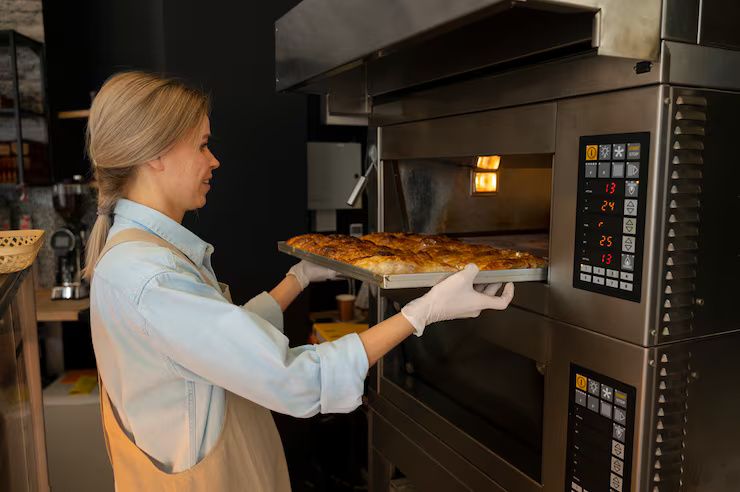
Advancements in automation, digital controls, insulation materials, and energy management have transformed industrial ovens into highly efficient production systems capable of supporting a wide range of manufacturing processes. Understanding how these ovens operate helps manufacturing professionals, engineers, production managers, maintenance teams, and students appreciate the technologies that drive modern thermal processing. This industrial oven guide explores oven types, heating methods, core components, industrial applications, operational considerations, quality standards, and future innovations.
This article explains industrial oven fundamentals, heating technologies, temperature control systems, industrial uses, performance considerations, and emerging developments in thermal processing equipment.
What Is an Industrial Oven?
An industrial oven is a specialized heating system designed to expose products or materials to controlled temperatures for manufacturing, processing, curing, drying, baking, annealing, or other thermal applications.
Unlike domestic ovens, industrial ovens are built for continuous or batch production while maintaining consistent temperature distribution throughout larger processing chambers.
They are widely used in manufacturing facilities, automotive production, aerospace engineering, electronics, pharmaceuticals, food processing, laboratories, and research environments.
Accurate thermal control helps manufacturers achieve repeatable production results while supporting product quality and operational efficiency.
Common Types of Industrial Ovens
Different manufacturing processes require different oven configurations.
Batch Ovens
Batch ovens process products in individual production cycles. They are commonly used for smaller production volumes, specialized manufacturing, testing, and operations requiring flexible scheduling.
Continuous Ovens
Continuous ovens move products through heated chambers using conveyor systems, supporting high-volume manufacturing with consistent processing conditions.
Curing Ovens
Curing ovens are designed to harden coatings, adhesives, paints, composites, and polymer-based materials through carefully controlled heating cycles.
Drying Ovens
Drying ovens remove moisture, solvents, or water from products before additional manufacturing processes or packaging.
Heat Treatment Ovens
Heat treatment ovens modify the physical properties of metals and other materials through precisely controlled heating and cooling processes.
Each oven type is optimized for specific industrial production requirements.
Modern Heating Technologies
Industrial ovens use several heating methods depending on the application.
Electric heating provides precise temperature control and clean operation, making it suitable for many manufacturing processes.
Gas-fired systems generate heat through natural gas or other approved industrial fuels and are commonly used where high thermal output is required.
Infrared heating transfers energy directly to product surfaces, enabling efficient heating in selected applications.
Convection heating circulates heated air throughout the oven chamber, promoting uniform temperature distribution across products.
Radiant heating systems transfer thermal energy without requiring direct contact between the heat source and the product.
Selecting an appropriate heating technology depends on material characteristics, production requirements, and process objectives.
Main Components of an Industrial Oven
Several integrated systems contribute to reliable thermal processing.
Heating System
Heating elements or burners generate the thermal energy required for the manufacturing process.
Insulated Chamber
High-performance insulation helps retain heat, improve energy efficiency, and maintain stable operating temperatures.
Air Circulation System
Fans and airflow systems distribute heated air evenly throughout the chamber to support consistent processing.
Temperature Control System
Digital controllers, sensors, and monitoring equipment regulate heating conditions with high accuracy.
Safety Features
Industrial ovens commonly incorporate over-temperature protection, emergency shutdown systems, airflow monitoring, and other safety mechanisms that support reliable operation.
Together, these components create controlled thermal environments suitable for demanding industrial applications.
Industrial Applications
Industrial ovens support manufacturing across numerous industries.
Automotive manufacturers use ovens for paint curing, component drying, and adhesive processing.
Aerospace companies process advanced composite materials and precision-engineered components.
Electronics manufacturers cure circuit boards, coatings, and specialized materials.
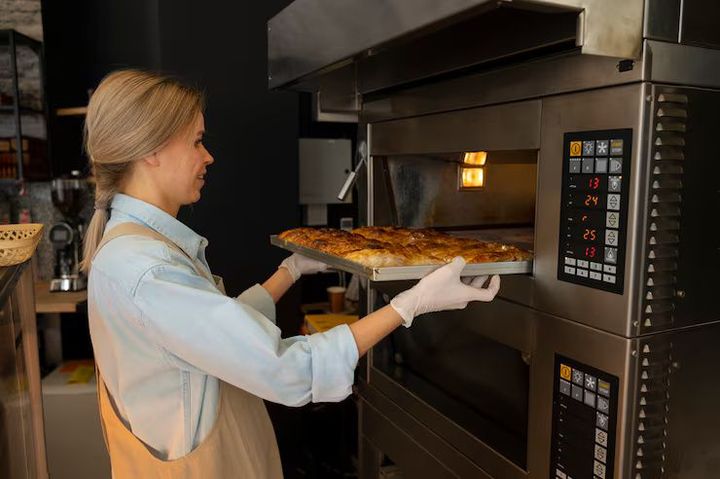
Food processing facilities utilize industrial baking and drying systems for consistent product quality.
Pharmaceutical manufacturers employ controlled thermal processing for selected production applications.
Metal fabrication facilities perform heat treatment processes that influence material properties.
These diverse applications demonstrate the versatility of industrial ovens in modern production.
Temperature Control and Quality Standards
Precise temperature control is essential for achieving consistent manufacturing results.
Digital control systems continuously monitor heating conditions using temperature sensors placed throughout the oven.
Uniform heat distribution minimizes variation between products processed within the same production cycle.
Regular calibration of sensors and control equipment supports measurement accuracy and process reliability.
Quality management programs often include documented operating procedures, routine maintenance, equipment verification, and process monitoring to maintain consistent production performance.
Compliance with applicable industry standards further supports product quality and operational safety.
Decision Guide: Selecting an Industrial Oven
Choosing the best industrial oven depends on production volume, material characteristics, temperature requirements, heating technology, chamber size, airflow design, energy efficiency, process automation, and manufacturing objectives.
Batch ovens often suit operations with varied production schedules or specialized products, while continuous ovens are commonly selected for high-volume manufacturing requiring uninterrupted processing. Electric heating may be preferred where precise temperature control is essential, whereas gas-fired systems are often used for applications demanding higher thermal output.
An industrial oven comparison generally evaluates heating method, temperature uniformity, energy efficiency, airflow performance, automation capabilities, chamber capacity, maintenance requirements, and operational flexibility.
In many cases, ovens with advanced digital controls and efficient insulation tend to support improved production consistency because stable thermal conditions reduce process variation.
The real difference appears when oven design aligns with manufacturing requirements, product characteristics, and long-term production goals.
Emerging Trends in Industrial Oven Technology
Industrial thermal processing continues advancing through automation and intelligent manufacturing.
Smart sensors provide real-time monitoring of temperature, airflow, and equipment performance.
Artificial intelligence increasingly assists predictive maintenance and process optimization.
Energy-efficient insulation materials continue reducing heat loss while improving operational efficiency.
Connected manufacturing systems integrate industrial ovens into broader digital production environments that support remote monitoring and performance analysis.
Manufacturers are also developing environmentally responsible heating technologies that improve efficiency while reducing overall energy consumption.
These innovations continue shaping the future of industrial thermal processing.
Frequently Asked Questions
1. What is an industrial oven?
An industrial oven is a controlled heating system used for manufacturing processes such as curing, drying, baking, and heat treatment.
2. What are the main types of industrial ovens?
Common types include batch ovens, continuous ovens, curing ovens, drying ovens, and heat treatment ovens.
3. What heating technologies are used in industrial ovens?
Electric heating, gas-fired systems, convection heating, infrared heating, and radiant heating are widely used depending on the application.
4. Why is temperature control important?
Accurate temperature control helps maintain product quality, process consistency, manufacturing efficiency, and repeatable production results.
5. What factors should be considered when selecting an industrial oven?
Production requirements, heating technology, chamber capacity, temperature range, energy efficiency, automation, maintenance needs, and application type should all be evaluated.
Conclusion
Industrial ovens are essential manufacturing systems that support a wide range of thermal processing applications across numerous industries. Understanding oven types, heating technologies, temperature control systems, industrial applications, and quality considerations provides valuable insight into one of modern manufacturing's most important production technologies. This comprehensive industrial oven guide demonstrates how precise thermal processing contributes to product quality, operational efficiency, and manufacturing consistency. As automation, digital controls, and energy-efficient technologies continue advancing, industrial ovens will remain a cornerstone of modern industrial production.