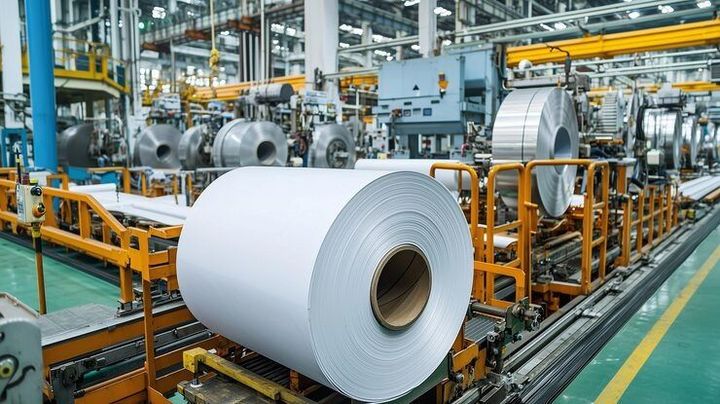
Industrial Silicone-Coated Paper Rolls Manufacturing Guide
Industrial silicone-coated paper rolls are engineered papers that contain a thin layer of silicone on one or both sides of the paper surface. This silicone coating creates a smooth, non-stick, moisture-resistant, and heat-resistant surface suitable for numerous industrial applications.
Manufacturers use silicone-coated paper because ordinary paper often sticks to adhesives, chemicals, rubber compounds, food products, and composite materials. Silicone creates an effective release layer that prevents unwanted adhesion while maintaining paper strength and flexibility.
Today, industrial silicone-coated paper has become an essential material in packaging, food production, medical products, pressure-sensitive labels, electronics, automotive manufacturing, composite materials, and industrial processing. Improvements in coating technology continue to increase product performance while supporting more sustainable manufacturing practices.
Understanding Industrial Silicone-Coated Paper
Silicone-coated paper is produced by applying a carefully controlled layer of silicone onto specially prepared paper using precision coating equipment. The coating is then cured to create a durable release surface.
The finished paper offers several important characteristics:
- Excellent release performance
- High temperature resistance
- Moisture resistance
- Chemical stability
- Smooth surface finish
- Dimensional stability
- Reliable handling during industrial processing
Depending on the application, manufacturers may produce single-sided or double-sided silicone-coated paper in various thicknesses, widths, and release levels.
Manufacturing Technology Behind Silicone-Coated Paper
The production process combines paper engineering with precision coating technology.
Typical manufacturing stages include:
- Selection of high-quality base paper
- Surface preparation and treatment
- Silicone formulation preparation
- Precision coating application
- Thermal or ultraviolet curing
- Quality inspection
- Roll winding and finishing
- Packaging for industrial distribution
The coating thickness must remain highly consistent throughout production because even minor variations may affect release performance in industrial applications.
Common Manufacturing Technologies
Several coating technologies are commonly used depending on production requirements.
| Manufacturing Technology | Primary Purpose | Common Application |
|---|---|---|
| Roller Coating | Uniform silicone application | Packaging papers |
| Gravure Coating | High precision coating | Label release liners |
| Slot Die Coating | Controlled coating weight | Industrial laminates |
| Air Knife Coating | Surface leveling | Specialty papers |
| Multi-Layer Coating | Enhanced performance | Advanced industrial products |
Modern production lines rely heavily on automated monitoring systems to ensure coating accuracy and product consistency.
Why Industrial Silicone-Coated Paper Matters
Industrial manufacturing continues to demand materials that improve production efficiency while reducing waste.
Silicone-coated paper plays an important role because it helps prevent sticking, improves product handling, protects sensitive materials, and supports consistent manufacturing quality.
Industries benefiting from silicone-coated paper include:
- Packaging manufacturing
- Food processing
- Medical device production
- Printing
- Electronics assembly
- Automotive manufacturing
- Construction materials
- Textile processing
- Composite manufacturing
- Industrial adhesives
As manufacturing automation increases worldwide, demand for precision release materials continues to expand.
Key Benefits
Industrial silicone-coated paper provides numerous practical advantages.
Reliable Release Performance
The silicone surface allows adhesives and sticky materials to separate cleanly without damaging the product.
Heat Resistance
Many silicone-coated papers perform effectively under elevated processing temperatures used in industrial manufacturing.
Moisture Protection
The coating helps improve resistance to moisture exposure during production and storage.
Improved Productivity
Consistent release characteristics reduce production interruptions and material waste.
Chemical Resistance
Many industrial chemicals have limited interaction with silicone-coated surfaces.
Dimensional Stability
Properly manufactured paper maintains its shape during converting and processing operations.
Commercial Uses Across Industries
Industrial silicone-coated paper serves numerous commercial applications.
Packaging Industry
Packaging manufacturers use release liners for labels, tapes, and protective films.
Food Manufacturing
Silicone-coated baking paper assists food processing by reducing sticking during baking and packaging operations.
Medical Applications
Medical manufacturers use release papers in wound care products, medical tapes, and specialized healthcare materials.
Electronics Manufacturing
Electronics industries use silicone-coated paper during component assembly and protective material processing.
Automotive Industry
Automotive production uses release liners in adhesive systems, insulation materials, and composite manufacturing.
Printing Industry
Printing operations use silicone-coated paper for specialty labels, graphic applications, and pressure-sensitive products.
Composite Materials
Composite manufacturers rely on release papers during molding and curing processes.
Industrial Trends in 2025–2026
The silicone-coated paper industry has continued evolving throughout 2025 and into 2026.
Some notable developments include:
- Greater use of automated coating inspection systems
- Increased adoption of digital quality monitoring
- Development of lower-emission silicone curing technologies
- Growing interest in recyclable paper substrates
- Expansion of precision coating equipment
- Higher demand from electric vehicle manufacturing
- Increased production for electronics and semiconductor industries
- Greater focus on reducing material waste during manufacturing
Manufacturers are also investing in energy-efficient production methods to improve sustainability while maintaining high product quality.
Manufacturing Process Flow
Base Paper
      │
      ▼
Surface Preparation
      │
      ▼
Silicone Coating
      │
      ▼
Curing Process
      │
      ▼
Quality Inspection
      │
      ▼
Roll Slitting
      │
      ▼
Finished Industrial Roll
This simplified process illustrates the main stages used in industrial production.
Industry Applications Overview
| Industry | Main Purpose | Typical Benefit |
| Packaging | Release liners | Clean adhesive release |
| Food Processing | Baking paper | Reduced sticking |
| Medical | Protective liners | Hygienic handling |
| Automotive | Composite processing | Easy material separation |
| Electronics | Protective materials | Surface protection |
| Printing | Label production | Improved converting |
| Construction | Industrial laminates | Better processing efficiency |
Laws and Policies
Industrial silicone-coated paper manufacturing is influenced by environmental regulations, industrial safety standards, and product quality requirements that vary by country.
Common regulatory areas include:
- Environmental protection regulations governing industrial emissions
- Occupational health and workplace safety requirements
- Waste management and recycling guidelines
- Chemical handling regulations
- Industrial manufacturing quality standards
- Food-contact material requirements for applicable products
- Medical manufacturing standards for healthcare applications
Many manufacturers also follow internationally recognized quality management systems and environmental management practices to improve consistency and regulatory compliance.
As sustainability initiatives continue expanding worldwide, governments increasingly encourage responsible manufacturing, improved recycling practices, and efficient resource utilization.
Tools and Resources
Several general resources help manufacturers, engineers, researchers, and students understand silicone-coated paper production.
Useful resources include:
- Paper thickness measurement tools
- Coating weight calculators
- Moisture analysis equipment
- Quality inspection checklists
- Production planning templates
- Manufacturing process flow diagrams
- Industrial standards documentation
- Material specification sheets
- Engineering design software
- Technical training materials
These resources assist in maintaining consistent manufacturing quality while improving production efficiency.
Factors That Influence Product Performance
Several variables determine how silicone-coated paper performs during industrial use.
Important factors include:
- Base paper quality
- Silicone formulation
- Coating thickness
- Curing temperature
- Surface smoothness
- Roll tension
- Storage conditions
- Environmental humidity
- Manufacturing precision
Careful control of these variables helps ensure consistent release characteristics throughout production.
Future Outlook
The outlook for industrial silicone-coated paper remains positive as advanced manufacturing continues expanding.
Several long-term trends are expected to shape future production:
- Increased automation
- Smarter quality inspection
- Improved coating precision
- More environmentally responsible manufacturing
- Higher demand from advanced electronics
- Growth in sustainable packaging
- Expansion of industrial automation
- Development of innovative release technologies
Ongoing research aims to improve coating performance while reducing environmental impact and enhancing production efficiency.
Frequently Asked Questions
What is industrial silicone-coated paper?
Industrial silicone-coated paper is specialty paper coated with silicone to create a non-stick surface suitable for manufacturing, packaging, food processing, medical products, and industrial applications.
Why is silicone used as a coating?
Silicone provides excellent release properties, heat resistance, chemical stability, and moisture resistance, making it suitable for applications where materials must separate cleanly.
Which industries commonly use silicone-coated paper?
Packaging, food processing, healthcare, electronics, automotive manufacturing, printing, construction, and composite industries commonly use silicone-coated paper.
Can silicone-coated paper withstand high temperatures?
Many industrial grades are designed to tolerate elevated processing temperatures, although performance depends on the specific paper grade and manufacturing specifications.
What factors affect the quality of silicone-coated paper?
Paper quality, silicone formulation, coating uniformity, curing process, moisture control, and manufacturing precision all contribute to overall product performance.
Conclusion
Industrial silicone-coated paper rolls have become an essential material across numerous modern industries because they provide reliable release performance, improved manufacturing efficiency, and consistent product quality. Advances in coating technology, automation, and sustainable manufacturing continue to expand their commercial applications.