Industrial Terminals Guide: Understanding Types, Functions, and Applications
Industrial terminals are connection points used to join electrical wires, cables, circuits, and control equipment in industrial environments.
They developed alongside electrical distribution and factory automation as systems required organized, secure, and maintainable wiring. Today, industrial terminal blocks and industrial electrical terminals are found in control cabinets, machinery, transportation systems, energy equipment, and manufacturing facilities.
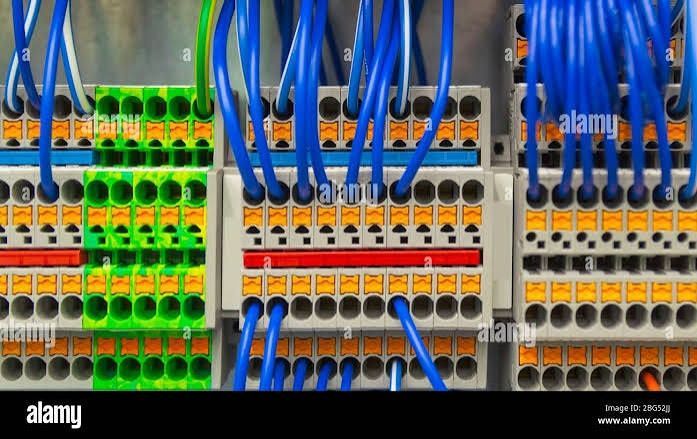
Electrical terminal blocks provide a structured way to connect multiple conductors without permanently joining wires. Depending on the design, terminal block connectors may use screws, springs, clamps, plugs, or other mechanisms to hold conductors in place.
Common Types of Industrial Terminals
Different applications require different connection methods and physical designs.
| Terminal Type | Connection Method | Common Application |
|---|---|---|
| Screw terminal blocks | Screw clamp | Control panels and machinery |
| Spring-clamp terminals | Spring pressure | Automation and vibration-prone equipment |
| PCB terminal blocks | Board-mounted connection | Electronic control circuits |
| PLC terminal blocks | Interface connection | Programmable control systems |
| Barrier terminals | Separated connection points | Power distribution |
| Plug-in terminals | Detachable connection | Modular equipment |
Industrial wire terminals may also include ring, fork, pin, blade, and ferrule designs. Industrial connector terminals are often selected according to wire size, current level, voltage, environmental conditions, and maintenance requirements.
Importance
Industrial electrical connectors play an important role in keeping electrical systems organized and easier to inspect. Without suitable connection points, wiring can become difficult to trace, maintain, or modify.
Control panel terminals help technicians arrange connections between switches, sensors, motors, controllers, and power components. PLC terminal blocks perform a similar function in automated systems by connecting field devices to programmable logic controllers.
Industrial automation terminals also address several practical challenges:
- Wiring organization: Clearly arranged terminals make circuits easier to identify.
- Maintenance access: Individual connections can often be inspected without changing an entire wiring assembly.
- Space management: Compact terminal designs help organize crowded electrical panels.
- Connection stability: Proper terminal selection can reduce loose or poorly arranged wiring.
- Circuit separation: Different circuits can be grouped according to voltage, function, or equipment type.
Electrical panel accessories such as markers, end plates, jumpers, mounting rails, and protective covers can further support organized terminal arrangements.
Recent Updates
The current trend in industrial terminals is moving toward compact designs, modular wiring, digital monitoring, and easier integration with automated equipment. Smart terminal solutions may include electronic measurement, condition monitoring, signal processing, or communication functions.
Industrial terminal connectors are also being designed for increasingly dense control cabinets. Push-in and spring-based connection methods have become more common where rapid assembly and resistance to vibration are important.
Another development is greater integration between industrial connector terminals and connected manufacturing systems. Modern facilities increasingly require terminals that can support sensors, distributed control equipment, robotics, and data-driven monitoring while maintaining clear electrical separation.
Laws or Policies
Industrial terminals are influenced by electrical safety rules, equipment standards, and installation requirements. In India, electrical installations are generally shaped by national electrical safety requirements, applicable Bureau of Indian Standards specifications, and rules related to safe wiring and equipment design.
International standards developed by organizations such as the International Electrotechnical Commission are also widely referenced for terminal blocks and low-voltage equipment. Depending on the application, requirements may address insulation, conductor capacity, temperature rise, mechanical strength, electrical clearance, and protection against accidental contact.
Terminal block manufacturers, equipment designers, and installers may need to consider the standards that apply to the final machine, control panel, or electrical system. Requirements can vary according to voltage, industry, location, and environmental conditions.
Tools and Resources
Several tools and resources can help with understanding and planning terminal connections.
- Wire size charts help match conductors with suitable terminal capacities.
- Electrical load calculators help estimate current requirements for circuits.
- Wiring diagrams show how industrial electrical terminals connect different components.
- CAD and electrical design platforms help create control panel layouts and connection plans.
- Terminal marking templates support consistent identification of circuits.
- Manufacturer technical documents provide information about dimensions, ratings, mounting methods, and compatible accessories.
Terminal block distributors and technical catalog platforms can also provide product specifications for comparison, while electrical standards databases help users understand relevant technical requirements.
FAQs
What are industrial terminal blocks used for?
Industrial terminal blocks connect and organize electrical conductors in machinery, control cabinets, automation equipment, and power distribution systems. They provide defined connection points that support inspection and circuit organization.
What is the difference between electrical terminal blocks and industrial wire terminals?
Electrical terminal blocks usually contain multiple connection points mounted on a rail, panel, or circuit board. Industrial wire terminals are often individual components attached to wire ends, such as ring, fork, pin, or ferrule terminals.
Where are PLC terminal blocks commonly used?
PLC terminal blocks are commonly used between programmable logic controllers and field equipment such as sensors, switches, relays, and actuators. They help organize input and output wiring within automation systems.
How are screw terminal blocks different from spring terminals?
Screw terminal blocks secure conductors through mechanical screw pressure. Spring terminals use spring force to hold the conductor and may be useful in systems exposed to vibration or frequent wiring changes.
What factors affect the selection of industrial terminals?
Important factors include voltage, current, wire size, connection method, available panel space, temperature, vibration, moisture, and applicable electrical standards. The surrounding equipment and maintenance requirements also influence terminal selection.
Conclusion
Industrial terminals provide organized connection points for electrical and automation systems. Designs such as screw terminal blocks, PCB terminal blocks, PLC terminal blocks, and industrial terminal connectors support different wiring arrangements and operating conditions. Current developments focus on compact construction, modular integration, and smart terminal solutions. Understanding terminal types, functions, and technical requirements helps explain their role in modern industrial electrical systems.