Industrial Warping Machines: Automation and Precision Textile Processing
Industrial warping machines are specialized textile-processing machines used to arrange multiple yarns in a controlled, parallel sequence before the weaving stage. The process is known as warping, and it plays an important role in preparing yarn for efficient and accurate fabric production.
During warping, yarn is transferred from individual packages onto a warp beam or another suitable preparation system. The machine controls important factors such as yarn tension, spacing, speed, length, and alignment. Proper control helps create a stable warp sheet that can move into subsequent weaving operations.
Traditional warping methods required significant manual monitoring and mechanical adjustment. Modern industrial warping machines increasingly use automation, electronic controls, sensors, and programmable systems to improve process consistency.
There are several configurations used in textile manufacturing, including direct warping and sectional warping machines. The appropriate configuration depends on yarn characteristics, fabric design, production volume, and the requirements of the weaving process.
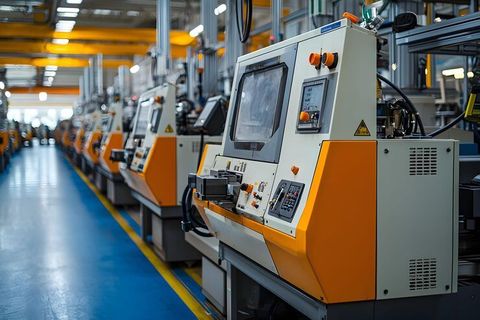
Modern systems may include programmable logic controllers, electronic tension control, automatic monitoring, digital displays, yarn-break detection, and data-recording functions. These technologies help operators monitor the process more accurately.
The development of automated textile machinery has made precision an important part of modern textile engineering. Instead of relying only on manual adjustments, manufacturers can use controlled machine parameters to maintain more consistent processing conditions.
Why Industrial Warping Machines Matter Today
The quality of the warp preparation process can influence the performance of the weaving stage. Poor yarn alignment or inconsistent tension may contribute to defects, interruptions, uneven fabric structures, or additional processing challenges.
Industrial warping machines matter because they address several important requirements in modern textile production.
Consistent yarn tension:
Maintaining relatively uniform tension across yarn ends helps create a more stable warp sheet. Electronic tension-control systems can monitor and adjust conditions during processing.
Accurate yarn arrangement:
Warping equipment positions yarns according to the required pattern and spacing. This is particularly important for fabrics that require precise construction.
Higher process automation:
Automated controls can reduce repetitive manual adjustments and provide operators with clearer information about machine conditions.
Better production monitoring:
Sensors and control systems can identify events such as yarn breaks, speed changes, or abnormal operating conditions.
Improved preparation for weaving:
A properly prepared warp beam provides a more consistent input for subsequent weaving operations.
Support for different textile materials:
Modern warping equipment can be configured for different yarn types, depending on machine design and processing requirements.
These benefits are relevant to textile mills, weaving facilities, technical textile producers, and other organizations involved in yarn preparation and fabric manufacturing.
Automation is also becoming more important as textile manufacturers look for better process visibility. Digital controls allow production information to be monitored more systematically, making it easier to identify recurring process issues.
Types of Industrial Warping Machines
Industrial warping equipment can be classified according to the method used to prepare the warp.
Direct Warping Machines
Direct warping machines transfer yarn directly from packages onto a warp beam. They are commonly associated with applications involving larger production quantities and relatively straightforward yarn arrangements.
The machine typically controls yarn delivery, tension, speed, and beam formation. Consistency across the yarn sheet is important because variations can affect later weaving operations.
Sectional Warping Machines
Sectional warping machines build the warp in sections before transferring the prepared yarn onto a beam. This approach is particularly useful for fabrics requiring complex patterns, specific color arrangements, or comparatively smaller warp quantities.
Sectional warping provides greater flexibility in arranging yarns according to a particular fabric design.
High-Speed Warping Systems
High-speed systems are designed for applications where continuous and controlled yarn preparation is important. Advanced drive systems and electronic controls help maintain operating parameters while the machine runs at higher speeds.
Automated Warping Systems
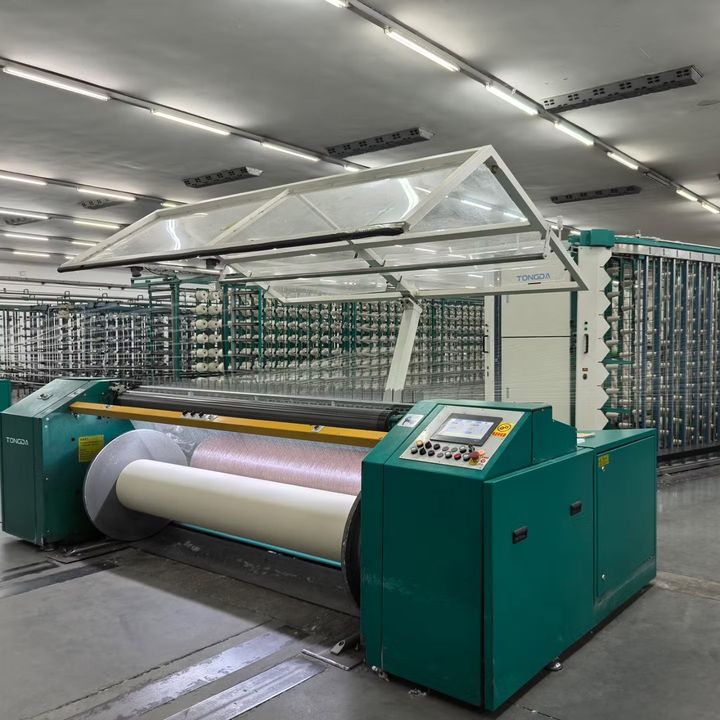
Automated warping machines combine mechanical equipment with electronic controls, sensors, programmable systems, and monitoring functions. Depending on the configuration, automation may cover tension regulation, yarn-break detection, machine speed, beam handling, and production data.
Key Components and Technologies
Modern textile machinery combines mechanical engineering with automation technology. Important components may include:
- Yarn creels for holding yarn packages
- Tension-control mechanisms
- Guide rollers and yarn guides
- Measuring and monitoring systems
- Warp beams
- Drive motors
- Programmable control units
- Sensors for yarn-break detection
- Human-machine interfaces
- Automatic stop and safety mechanisms
- Data-monitoring systems
The exact configuration varies according to machine type and application.
Programmable control systems are particularly important because they allow operating parameters to be configured according to production requirements. Digital interfaces can also make it easier for operators to observe machine status and identify abnormal conditions.
Industrial automation technology can connect warping machines with broader manufacturing systems. In more advanced textile facilities, production data may be integrated into digital monitoring platforms to support process analysis.
Recent Developments in Textile Warping Automation
During 2025 and 2026, textile manufacturing continued to focus on automation, energy efficiency, digital monitoring, and integrated production systems.
In India, government textile infrastructure initiatives have continued to emphasize modernization across the textile value chain. The Ministry of Textiles' 2024–25 annual report describes PM-MITRA Parks as integrated textile manufacturing environments covering areas including spinning, weaving, processing, garment manufacturing, and textile machinery.
Energy efficiency has also remained an important industrial theme. The Bureau of Energy Efficiency reported ongoing implementation of the Perform, Achieve and Trade framework for energy-intensive industries, with textiles included among the covered sectors.
In 2026, the Bureau of Energy Efficiency also continued publishing material related to textile energy efficiency, including technology information, monitoring guidance, and developments connected with industrial energy management.
Another notable direction is the increasing use of digital control. Modern textile equipment is moving toward sensor-based monitoring, programmable controls, automated fault detection, and production-data collection.
Energy-efficient motors, improved drives, optimized machine movement, and better control algorithms can also contribute to more efficient textile-processing operations. Actual energy performance depends on the machine configuration, operating conditions, yarn type, production schedule, and maintenance practices.
The broader trend is therefore moving from standalone mechanical equipment toward connected and data-aware textile production systems.
Laws, Policies, and Regulatory Considerations in India
Industrial warping machines operate within the broader regulatory environment applicable to textile manufacturing, industrial safety, energy management, and environmental compliance.
In India, the Energy Conservation framework is particularly relevant to energy-intensive textile operations. The Bureau of Energy Efficiency identifies textile manufacturing among the sectors covered under the Designated Consumer framework. Certain designated facilities have obligations relating to energy management and energy audits.
The Perform, Achieve and Trade mechanism is another important energy-efficiency framework. Depending on the status and classification of a facility, applicable requirements may include energy monitoring, reporting, verification, and energy-performance targets.
For smaller textile enterprises, India's ADEETIE scheme has also identified textile operations among eligible energy-intensive sectors. The scheme period is stated as FY 2025–26 through FY 2027–28 and includes support related to energy audits, project preparation, implementation assistance, and measurement and verification for eligible enterprises.
Textile facilities must also consider applicable workplace safety, electrical safety, environmental, fire-safety, and factory regulations at the national and state levels. Specific requirements depend on the facility, location, machinery configuration, workforce, and industrial classification.
Manufacturers and facility operators should therefore verify current requirements with the appropriate government authorities before making compliance decisions.
Tools and Resources for Warping Machine Planning
Several general tools can help professionals understand, evaluate, and monitor textile warping operations.
Warping calculation tools:
Digital calculators can help estimate yarn length, warp density, beam requirements, and related production parameters.
Yarn tension monitoring tools:
Tension measurement equipment can help identify variations during yarn preparation.
Production monitoring dashboards:
Digital dashboards can display machine speed, running time, stoppages, yarn-break events, and production information.
Energy monitoring systems:
Power meters and energy-monitoring software can help textile facilities track electricity consumption associated with machinery.
Maintenance checklists:
Digital or printable maintenance templates can help operators record inspections, lubrication activities, component conditions, and recurring issues.
Machine manuals and technical documentation:
Equipment manuals provide important information about operating limits, safety procedures, control settings, maintenance intervals, and machine configuration.
Textile engineering calculators:
Calculation resources can help with yarn count, warp density, beam capacity, production planning, and fabric-related measurements.
Using these tools together can create a more systematic approach to machine operation and process improvement.
Frequently Asked Questions
What is the main purpose of an industrial warping machine?
Its main purpose is to arrange multiple yarns in a controlled, parallel form and prepare them for subsequent textile processes, especially weaving.
What is the difference between direct and sectional warping?
Direct warping generally transfers yarn directly onto a warp beam and is suitable for many larger-scale applications. Sectional warping creates the warp in sections, providing greater flexibility for patterns, colors, and specialized fabric designs.
How does automation improve warping?
Automation can improve process monitoring through electronic tension control, sensors, programmable settings, automatic stopping, digital displays, and production-data collection. The actual improvement depends on machine configuration and operating conditions.
Which industries use industrial warping machines?
They are mainly used in textile manufacturing and weaving operations. Applications can include conventional fabrics, technical textiles, specialty fabrics, and other products requiring prepared warp yarn.
What factors should be considered when selecting warping equipment?
Important factors include yarn type, yarn count, warp width, production volume, required tension control, fabric design, automation level, beam specifications, machine compatibility, energy requirements, safety features, and available technical infrastructure.
Conclusion
Industrial warping machines are an important part of modern textile processing because they prepare yarn for weaving with controlled alignment, tension, length, and spacing. Their role becomes increasingly important as textile manufacturers pursue consistent production and more precise process control.