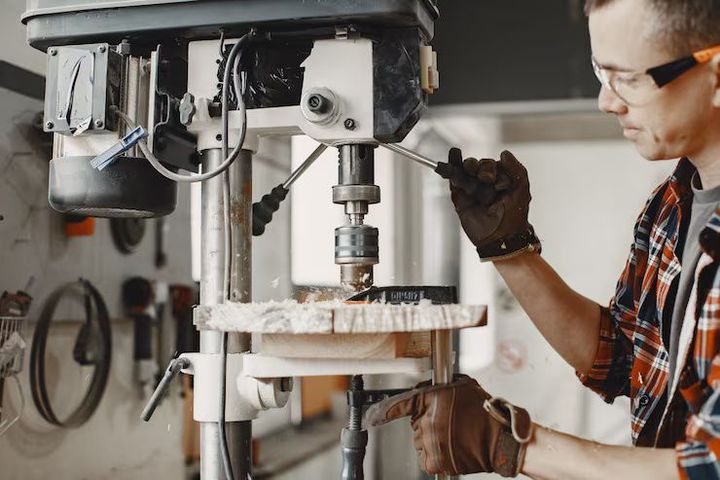
Lathe machines exist because industries require accurate cylindrical and symmetrical parts for machinery, automotive systems, aerospace components, electronics, and construction equipment. Without precision machining tools, it would be difficult to produce shafts, screws, pipes, bushings, and numerous other industrial components.
Today, lathe machines range from manual workshop models to highly automated computer numerical control systems commonly known as CNC lathes. These advanced systems help industries maintain consistent quality and reduce material waste.
Why Lathe Machines Matter Today
Modern industries rely heavily on machining technology because manufacturing precision directly affects performance, safety, and durability. Lathe machines are especially important in sectors where dimensional accuracy is critical.
Key Reasons Lathe Machines Remain Important
-
Support high-precision metalworking and industrial fabrication
-
Improve efficiency in automotive and aerospace production
-
Help create standardized machine parts
-
Reduce manual errors in manufacturing
-
Enable advanced CNC automation and digital production systems
-
Assist educational institutions in technical training
The growing adoption of industrial automation and smart manufacturing has also increased the importance of CNC lathe technology. Businesses and engineering institutions now focus on digital manufacturing skills because industries increasingly depend on automated machining operations.
Common Types of Lathe Machines
Different industries use different types of lathe machines depending on production needs and material requirements.
| Type of Lathe Machine | Main Purpose | Common Industry Use |
|---|
| Engine Lathe | General machining operations | Mechanical workshops |
| CNC Lathe | Automated precision cutting | Aerospace and automotive |
| Turret Lathe | Repetitive production tasks | Industrial manufacturing |
| Bench Lathe | Small-scale machining | Educational training |
| Toolroom Lathe | High-accuracy work | Precision engineering |
| Vertical Lathe | Large heavy components | Heavy equipment industries |
How a Lathe Machine Works
A lathe machine works by rotating the workpiece around a central axis while a cutting tool shapes the material. The cutting tool moves either parallel or perpendicular to the rotating object depending on the operation being performed.
Common Lathe Operations
Turning
Removes material from the outer diameter of the workpiece.
Facing
Creates a flat surface at the end of the material.
Drilling
Produces holes using drill bits mounted on the machine.
Threading
Creates screw threads for bolts and industrial fasteners.
Knurling
Adds textured patterns for grip enhancement.
These operations are essential in industrial manufacturing, precision engineering, and machine component development.
Recent Trends and Updates in Lathe Technology
The past year has seen rapid growth in industrial automation and smart manufacturing systems. In 2025, many manufacturing companies adopted AI-assisted CNC machining technologies to improve production efficiency and reduce downtime.
Important Developments in 2025
-
Increased adoption of AI-driven CNC monitoring systems
-
Expansion of Industrial Internet of Things (IIoT) integration
-
Growth in sustainable manufacturing processes
-
Improved energy-efficient machining systems
-
Rising use of digital twin technology in production environments
Many global manufacturers are also investing in hybrid machining systems that combine additive manufacturing and traditional turning operations. These systems help reduce production time while maintaining precision.
Educational institutions and technical training centers have also expanded CNC machining programs to meet rising demand for advanced manufacturing knowledge.
Industrial Safety and Regulatory Standards
Lathe machines are regulated under workplace safety and industrial machinery standards in many countries. Governments and manufacturing organizations enforce these regulations to reduce accidents and improve operational safety.
Common Safety Requirements
-
Proper use of protective equipment
-
Machine guarding and emergency stop systems
-
Operator training and certification
-
Routine machine maintenance inspections
-
Noise and vibration monitoring
In countries such as India, manufacturing industries often follow standards issued by organizations such as the Bureau of Indian Standards (BIS) and occupational safety authorities. Similar regulations exist in the United States, Europe, Japan, and other industrial economies.
Environmental policies are also influencing manufacturing practices. Many factories now focus on reducing coolant waste, improving energy efficiency, and limiting industrial emissions during machining operations.
CNC Technology and Digital Manufacturing
Computer Numerical Control technology has transformed the traditional lathe machine into a digitally controlled production system. CNC lathes use programmed instructions to perform complex machining operations with minimal manual intervention.
Benefits of CNC Lathe Systems
-
Higher machining precision
-
Faster production cycles
-
Improved repeatability
-
Lower human error rates
-
Better material utilization
-
Easier integration with smart factories
Industries increasingly combine CNC systems with cloud monitoring platforms and predictive maintenance software. These technologies help manufacturers identify equipment issues before failures occur.
Helpful Tools and Educational Resources
Learning about lathe machines has become easier because of digital tools, simulation software, and online technical resources.
Useful Software and Platforms
CAD Software
Programs such as AutoCAD and SolidWorks help engineers design machine components before manufacturing.
CNC Simulation Platforms
Simulation software allows students and technicians to practice machining operations virtually.
Engineering Learning Websites
Technical platforms provide tutorials on machining principles, CNC programming, and industrial safety.
Industrial Calculators
Machining calculators help determine:
-
Cutting speed
-
Feed rate
-
Tool path measurements
-
Material removal rates
Technical Documentation
Manufacturers often provide digital manuals and maintenance guidelines for machine operation and troubleshooting.
Challenges in Modern Machining Industries
Despite technological improvements, machining industries continue to face several operational and economic challenges.
Skilled Workforce Shortage
Many industries report a shortage of trained CNC programmers and machining specialists. Technical education remains essential for maintaining manufacturing productivity.
Equipment Maintenance
Industrial machinery requires regular maintenance to maintain precision and operational safety.
Cybersecurity Risks
Smart manufacturing systems connected to digital networks can face cybersecurity threats. Companies increasingly invest in industrial cybersecurity protection.
Rising Material Costs
Metal price fluctuations continue to affect production planning and manufacturing efficiency.
Frequently Asked Questions
What is the main purpose of a lathe machine?
A lathe machine is mainly used to shape rotating materials such as metal, wood, or plastic into precise cylindrical components.
What is the difference between a manual lathe and a CNC lathe?
A manual lathe requires direct operator control, while a CNC lathe uses computer programming to automate machining operations.
Which industries use lathe machines the most?
Automotive, aerospace, manufacturing, construction, railway, and heavy engineering industries commonly use lathe machines.
Why is CNC machining becoming more popular?
CNC machining improves accuracy, production speed, consistency, and automation compared to traditional machining methods.
What safety precautions are important when operating a lathe machine?
Operators should wear protective equipment, avoid loose clothing, follow machine instructions, and use emergency stop systems properly.
Future of Lathe Machine Technology
The future of lathe technology is closely connected to automation, artificial intelligence, and sustainable manufacturing. Smart factories are increasingly adopting interconnected machines capable of monitoring performance in real time.
Future developments may include:
-
AI-assisted machining optimization
-
Robotic material handling systems
-
Advanced predictive maintenance
-
Improved digital manufacturing analytics
-
Greater energy-efficient production systems
As industries continue modernizing production processes, lathe machines will remain an essential part of industrial engineering and precision manufacturing.
Conclusion
Lathe machines continue to play a major role in modern manufacturing and industrial engineering. From traditional workshop machines to advanced CNC systems, these tools support precision production across multiple industries worldwide.
Recent developments in automation, smart manufacturing, and digital machining have expanded the capabilities of modern lathe systems. At the same time, safety regulations, environmental standards, and technical education remain important factors in industrial operations.
Understanding lathe machine technology helps students, engineers, manufacturers, and industrial professionals stay informed about one of the most important tools in modern production system