Learning Powder Machines: Key Technical Knowledge
Powder machines are industrial machines designed to process materials in powdered or granular form. These machines handle tasks such as grinding, mixing, drying, classifying, conveying, and packaging powders. They exist because many industries rely on powders as raw materials or intermediate products due to their ease of handling, uniformity, and suitability for controlled processing.
Historically, powder processing began with manual grinding and mixing methods. As industrial production expanded, these approaches became insufficient for maintaining consistency, scale, and safety.
Mechanical powder machines were introduced to improve efficiency and ensure controlled particle size and composition. Today, they are used across industries such as food processing, pharmaceuticals, chemicals, and construction.
Understanding powder machines helps explain how modern manufacturing achieves precision in material preparation.
Importance of Powder Machines
Powder machines are important because powdered materials are widely used in industrial and consumer products. They support consistent processing and large-scale production.
Key Reasons Powder Machines Matter
- Enable uniform particle size and composition
- Improve efficiency in material processing
- Support automation in manufacturing
- Reduce variability in production outcomes
These machines are essential in maintaining quality and consistency.
Problems Powder Machines Help Address
- Uneven mixing and inconsistent material quality
- Material loss during processing
- Dust and contamination risks
- Inefficient manual handling
Understanding their role helps improve industrial process control.
Recent Updates in Powder Processing
Recent developments focus on safety, automation, and energy efficiency. In 2024, improved dust control systems gained attention for safer working environments.
Key Updates (2024–2025)
- Enhanced dust control and enclosed systems
- Integration of digital monitoring and sensors
- Increased focus on energy-efficient designs
- Adoption of modular machine configurations
These updates reflect advancements in industrial technology and process optimization.
Laws and Policies Affecting Powder Machines
Powder machines are regulated by safety, quality, and environmental standards. These regulations ensure safe operation and minimize environmental impact.
Key Regulatory Areas
- Industrial safety and machine guarding
- Dust control and emission regulations
- Electrical and operational safety standards
- Environmental compliance for waste handling
International standards help ensure consistency in machine performance and safety.
Tools and Resources for Understanding Powder Machines
Various tools and resources support learning about powder processing systems. These resources focus on technical understanding.
Helpful Resources
- Particle size and flowability charts
- Process flow diagrams
- Machine specification tables
- Safety and dust control guidelines
- Technical manuals and engineering references
These tools assist in understanding machine selection and operation.
Common Types of Powder Machines
Different machines perform specific roles within powder processing systems.
| Machine Type | Core Function | Typical Application Area |
|---|---|---|
| Grinding Mills | Reduce materials to powder | Minerals, chemicals |
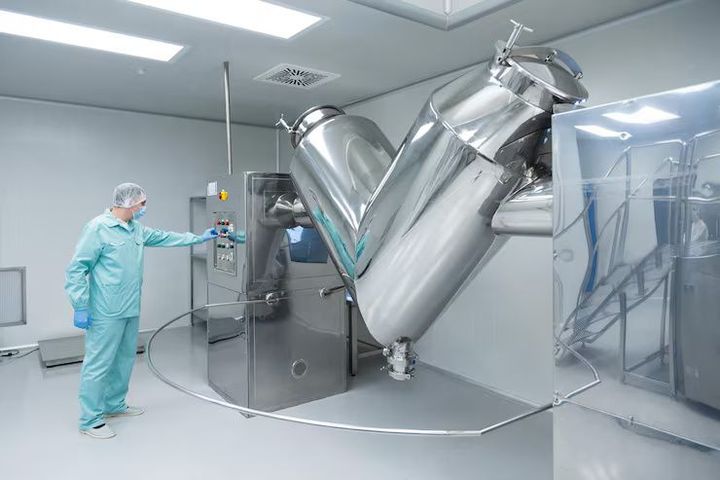
| Mixers and Blenders | Combine powders evenly | Food, pharmaceuticals |
| Dryers | Remove moisture | Chemicals, agriculture |
| Classifiers | Separate particles by size | Advanced materials |
| Conveying Systems | Transport powders safely | Manufacturing plants |
These machines work together in a complete processing line.
FAQs: Common Questions About Powder Machines
What materials are processed?
Materials include food ingredients, minerals, chemicals, pharmaceuticals, and construction materials.
Why is particle size important?
It affects flow, mixing quality, and final product performance.
Are powder machines automated?
Many machines include automation, but manual oversight is still required.
What are common challenges?
Dust control, moisture sensitivity, and cleaning requirements are common issues.
How do regulations affect machines?
They require safety features, emission control, and standardized operations.
Conclusion
Powder machines play a vital role in modern manufacturing by enabling precise and controlled processing of materials. They support efficiency, safety, and consistency across various industries.
As technology evolves, powder processing continues to improve through automation, energy efficiency, and safety innovations.
Understanding powder machines provides valuable insight into how industrial systems maintain quality and performance in large-scale production.