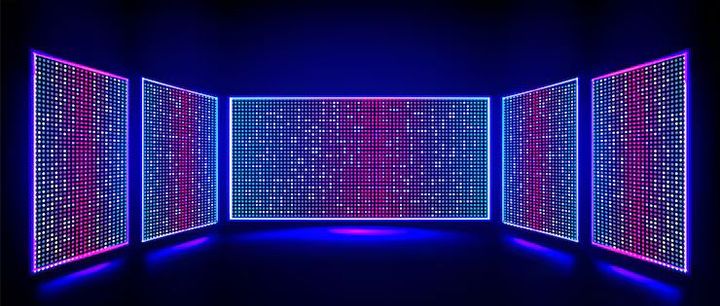
LED stage walls are designed to improve visibility and visual communication during events. Traditional projectors or printed backdrops often struggle in large venues or outdoor environments. LED technology solves this by offering high brightness, high resolution, and flexible screen configurations.
LED stage walls are made by combining thousands of small light-emitting diodes into panels. Each diode acts as a pixel, displaying colors and brightness. When connected, these panels create seamless displays for videos, animations, and live feeds.
Key Components of LED Stage Wall Systems
Typical systems include several essential components that work together to deliver visual output:
-
LED display panels
-
Video processors
-
Media servers
-
Control software
-
Power distribution units
-
Rigging and mounting structures
These components ensure smooth operation and high-quality visuals during events.
Why LED Stage Walls Matter in Today’s Event Industry
Visual communication is critical in modern events, especially those with large audiences. Without digital displays, it becomes difficult for attendees to clearly see presentations or performances. LED stage walls help solve this problem effectively.
They address several key challenges:
-
Improve visibility in large venues
-
Display real-time presentations and graphics
-
Support hybrid and live-streamed events
-
Enhance branding and stage design
LED displays are widely used across industries such as corporate conferences, concerts, trade shows, and sports events. Their flexibility allows panels to be arranged in custom shapes, including curved and vertical designs.
Recent Developments in LED Event Display Technology
Recent years have brought significant advancements in LED stage wall technology. In 2025, there has been a shift toward high-resolution panels with smaller pixel pitch, improving image clarity at closer viewing distances.
Another important development is AI-powered video processing. These systems can automatically adjust brightness, contrast, and color based on the venue environment. This improves visual consistency during live events.
Key Innovations
-
Lightweight panels for faster installation
-
Energy-efficient modules reducing power usage
-
Modular curved displays for creative setups
-
High refresh-rate screens for better broadcast quality
-
Interactive LED displays for audience engagement
These innovations support immersive and modern event experiences.
Regulations and Policies Affecting LED Stage Displays
LED stage displays must comply with safety regulations to ensure proper installation and operation. These guidelines protect both event staff and attendees.
Common Regulatory Areas
-
Electrical safety standards
-
Venue fire safety requirements
-
Structural rigging regulations
-
Public safety and crowd management policies
Regulatory Overview Table
| Regulatory Area | Purpose |
|---|
| Electrical Safety Standards | Prevent power overload and hazards |
| Structural Rigging Standards | Ensure secure mounting of LED walls |
| Fire Safety Guidelines | Reduce risks in large gatherings |
| Event Licensing Rules | Ensure compliance with venue requirements |
Large installations may also require approval from authorities or safety inspectors before use.
Tools and Resources for LED Stage Display Planning
Event planners use various digital tools to design and manage LED stage displays. These tools improve accuracy and reduce technical issues during events.
Common Tools
-
3D stage design software
-
Video mapping software
-
Media server platforms
-
LED calibration tools
-
Event production planning software
Key Planning Tasks
-
Designing stage layouts
-
Calculating panel arrangements
-
Testing resolution and display quality
-
Managing live video feeds
-
Synchronizing lighting and visuals
Planning Factors Table
| Planning Factor | Description |
|---|
| Pixel Pitch | Determines clarity based on viewing distance |
| Screen Size | Depends on venue size and audience capacity |
| Viewing Angle | Ensures visibility across different seating positions |
| Brightness | Important for outdoor or well-lit environments |
These tools help teams deliver smooth and visually engaging event experiences.
Technical Overview of LED Display Systems
LED stage wall systems rely on multiple integrated components working together. Each component plays a specific role in delivering high-quality visuals.
System Components and Functions
| Component | Function |
|---|
| LED Panels | Display visual content |
| Video Processor | Converts signals for LED panels |
| Media Server | Stores and manages content |
| Control Software | Manages playback and display settings |
| Mounting Structures | Supports installation |
Content must match the screen resolution to ensure proper scaling and clarity. Many teams also use monitoring dashboards to track system performance in real time.
Display Performance Comparison
| Display Type | Brightness | Image Clarity | Outdoor Suitability |
|---|
| Projector Screen | Moderate | Moderate | Limited |
| LED Stage Wall | High | High | Strong |
LED displays perform better in bright environments where projectors may struggle.
Frequently Asked Questions
What is an LED stage wall?
An LED stage wall is a large digital screen made of modular LED panels. It is used to display videos, graphics, and presentations during events.
How does pixel pitch affect display quality?
Pixel pitch refers to the distance between LEDs. Smaller pixel pitch results in higher image clarity, especially for close viewing.
Where are LED stage walls commonly used?
They are used in concerts, conferences, exhibitions, sports events, and product launches. Corporate presentations also frequently use LED displays.
Can LED stage walls be used outdoors?
Yes, many LED panels are designed for outdoor use. They include weather-resistant features and high brightness for daylight visibility.
What type of content can be displayed?
LED stage walls can display videos, live feeds, motion graphics, presentation slides, and branding visuals.
Conclusion
LED stage walls have become essential in modern event production. They provide bright, flexible displays that enhance audience engagement and visibility.
With advancements like high-resolution panels, AI-based processing, and energy-efficient modules, their capabilities continue to grow. At the same time, proper planning and compliance with safety regulations remain important.
Understanding LED technology, planning tools, and system components helps event organizers deliver effective and immersive visual experiences.