Modern Microscopes Overview: Understanding Advanced Imaging Techniques
Modern microscopes have transformed the way people observe objects that cannot be seen with the human eye alone.
From classrooms to research laboratories, these instruments make it possible to examine cells, microorganisms, materials, and tiny structures in remarkable detail. Advances in optics, electronics, and computer technology have expanded the capabilities of the modern microscope far beyond traditional designs.
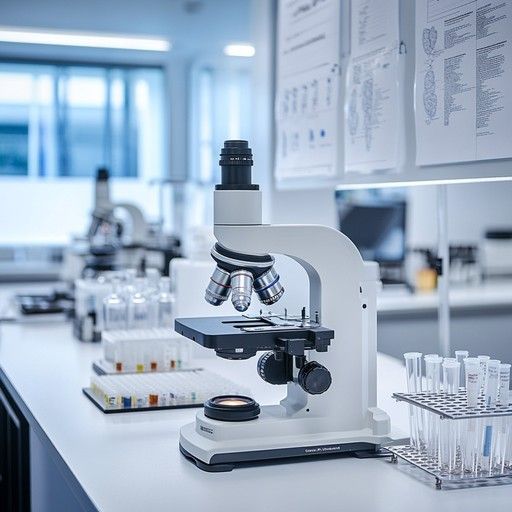
Today, a digital microscope can capture images directly on a computer screen, while a laboratory microscope supports detailed scientific observation across many fields. Specialized systems such as a fluorescence microscope and an electron microscope reveal features that ordinary light microscopes cannot display. These developments have contributed to improvements in education, medicine, engineering, environmental studies, and manufacturing.
Understanding how different microscope types work helps readers appreciate their role in scientific discovery and everyday life. Although each design serves a different purpose, all microscopes share the common goal of enlarging small objects so they can be examined more carefully.
Context
The Evolution of Microscopy
The history of microscopy began with simple optical lenses that magnified tiny objects. Over many years, scientists improved lens quality, illumination, and focusing systems, allowing increasingly detailed observation. Modern instruments now combine precision optics with digital imaging and computer analysis.
A scientific microscope may include advanced cameras, image-processing software, and automated controls. These additions make observation more consistent while reducing manual adjustments. As a result, microscope imaging system technology has become an important part of many scientific activities.
Different Types of Modern Microscopes
Modern microscopy includes several specialized instruments designed for different purposes.
| Microscope Type | Primary Application | Main Feature |
|---|---|---|
| Biological microscope | Viewing living cells and tissues | Uses visible light |
| Digital microscope | Education, inspection, documentation | Displays images on a monitor |
| Laboratory microscope | Scientific analysis | Multiple magnification options |
| Research microscope | Advanced scientific studies | High imaging precision |
| Industrial microscope | Material inspection | Examines manufactured components |
| Fluorescence microscope | Cell labeling and molecular studies | Detects fluorescent markers |
| Electron microscope | Extremely small structures | Uses electrons instead of light |
Each microscope type contributes to different areas of science, medicine, engineering, and education.
How Imaging Systems Work
A microscope imaging system combines optical components, light sources, image sensors, and software. Instead of relying only on direct viewing through eyepieces, many systems create digital images that can be stored, measured, and compared.
Digital processing also improves brightness, contrast, and image organization, making observations easier to interpret while supporting consistent documentation.
Importance
Supporting Medical Knowledge
Medical professionals and researchers depend on microscopic observation to understand cells, tissues, bacteria, fungi, and other biological samples. A medical imaging microscope allows detailed examination that contributes to disease investigation and laboratory analysis.
A biomedical research microscope is commonly used to study cellular behavior, tissue structure, and biological processes. Although microscopy alone does not provide every answer, it supplies important visual information that supports broader scientific investigations.
Advancing Life Science Research
Life science microscopy plays an important role in understanding how living organisms function. Researchers study plant cells, animal tissues, microorganisms, and genetic material using different imaging methods.
Modern microscopes also help scientists observe interactions that were previously difficult to detect. This contributes to a deeper understanding of biology, ecology, and environmental science.
Improving Industrial Quality
An industrial microscope helps manufacturers examine tiny components, electronic circuits, metal surfaces, fibers, and precision parts. Small imperfections may become visible before larger problems develop during production.
Microscopy also supports material research by allowing detailed examination of surface structures, coatings, and microscopic defects.
Supporting Education
Schools, colleges, and universities continue to use microscopes as practical learning tools. A digital microscope enables students to view enlarged images together on a display, making classroom discussions easier.
Interactive imaging also helps learners compare samples, record observations, and understand scientific concepts through direct visual evidence.
Recent Updates
Increased Digital Integration
Current microscope development focuses on stronger integration between optical systems and digital technology. Modern instruments increasingly include automated image capture, cloud-based storage options, and advanced software for organizing observations.
Artificial intelligence is also becoming part of microscope imaging system workflows by assisting with image recognition, object classification, and measurement. Human interpretation remains important, while automated tools support faster analysis.
Improved Imaging Quality
Optical components continue to improve through enhanced lens design, brighter illumination systems, and more sensitive digital sensors. These developments produce clearer images while reducing visual noise.
Many laboratory microscope systems now include automated focus adjustment, image stitching, and three-dimensional reconstruction features for selected applications.
Growth of Collaborative Research
Researchers increasingly share microscope images across institutions using secure digital environments. This allows specialists from different scientific fields to examine the same observations without moving delicate physical samples.
Digital records also improve long-term documentation and simplify comparison between different experiments.
Expanded Automation
Automation has become more common in research microscope environments. Instruments may scan multiple sample locations, capture images automatically, and organize information into structured databases.
Although automation improves efficiency, trained professionals continue to interpret findings and verify scientific conclusions.
Laws or Policies
Laboratory Standards
Many countries regulate laboratory activities through national health agencies, workplace safety authorities, and scientific organizations. Laboratories using microscopes generally follow established procedures for handling biological materials, chemicals, and hazardous substances.
These rules promote consistent laboratory practices while reducing unnecessary risks during scientific work.
Medical Device Regulations
Medical imaging microscope equipment used in healthcare environments may be subject to regulatory review before clinical use. Requirements vary between countries, but they commonly address manufacturing quality, documentation, safety testing, and intended applications.
Healthcare institutions also follow internal procedures regarding equipment maintenance and calibration.
Research Ethics
Research involving human or animal samples is commonly reviewed by ethics committees or institutional review boards. These reviews help ensure that scientific investigations follow accepted ethical principles and legal requirements.
Proper documentation, sample handling, and privacy protection remain important parts of responsible scientific research.
International Standards
Many microscope manufacturers design equipment according to internationally recognized quality and safety standards. Standardized measurement methods also improve consistency between laboratories located in different regions.
Tools and Resources
Several resources help students, educators, researchers, and laboratory professionals learn about microscopy and image analysis.
- Educational microscopy websites explain microscope components, imaging principles, and laboratory techniques.
- Scientific journals publish research involving biological microscope, fluorescence microscope, and electron microscope applications.
- Image analysis software assists with measurements, labeling, and comparison of microscope images.
- Virtual microscopy libraries allow users to examine digitized specimen collections.
- University learning portals provide instructional materials covering optics, microscopy methods, and laboratory practices.
- Government science agencies publish laboratory guidance documents and educational publications.
- Scientific organizations develop educational resources related to life science microscopy and biomedical research microscope applications.
These resources help readers understand microscopy concepts while supporting accurate scientific learning.
FAQs
What is a modern microscope?
A modern microscope combines optical technology with digital imaging, improved lighting, and computer-assisted features to examine very small objects with greater clarity than traditional instruments.
What is the difference between a digital microscope and a laboratory microscope?
A digital microscope displays images electronically using a camera and monitor, while a laboratory microscope commonly uses optical eyepieces and may also include digital imaging capabilities depending on its configuration.
When is a fluorescence microscope used?
A fluorescence microscope is used when scientists need to observe fluorescent labels attached to cells, proteins, or other biological materials. This technique helps distinguish specific structures within complex samples.
Why is an electron microscope different from a biological microscope?
An electron microscope uses a beam of electrons instead of visible light, allowing observation of much smaller structures. A biological microscope uses light and is commonly suited for viewing cells, tissues, and microorganisms.
What is a microscope imaging system?
A microscope imaging system combines optical components, digital cameras, software, and image-processing tools to capture, store, analyze, and organize microscopic observations for scientific and educational purposes.
Conclusion
Modern microscopes have expanded scientific observation through advances in optics, digital imaging, and automated analysis. Different microscope types support education, medicine, engineering, and scientific research by providing detailed views of structures that are otherwise invisible. Continued improvements in imaging technology, software, and laboratory practices have strengthened the role of microscopy across many disciplines. Understanding the capabilities of these instruments helps explain their importance in both scientific discovery and practical applications.