New Agricultural Technology: Benefits, Uses and Trends
Agriculture is one of the oldest and most important human activities. It involves cultivating crops, raising livestock, and managing natural resources to produce food, fiber, and other agricultural products. Throughout history, agriculture has played a critical role in supporting civilizations, economic development, and food security.
New agricultural technology refers to modern tools, systems, equipment, and digital solutions used to improve farming practices. These technologies help farmers monitor crops, manage water, reduce waste, increase efficiency, and make informed decisions based on data.
Traditional farming methods often relied heavily on manual labor and experience-based decision-making. While these approaches remain valuable, modern innovations now provide additional support through sensors, artificial intelligence, automation, and data analytics.
Agricultural technology exists to address challenges such as:
- Increasing food demand
- Limited natural resources
- Climate change impacts
- Labor shortages
- Crop disease management
- Water conservation requirements
Today, technology plays a growing role in helping agricultural systems become more productive, efficient, and sustainable.
Why New Agricultural Technology Matters
Modern agriculture faces several challenges that require innovative solutions. New agricultural technology helps address these challenges while supporting long-term food security.
Farmers can use technology to monitor soil conditions, weather patterns, irrigation systems, and crop health. This information allows them to make better decisions and respond quickly to changing conditions.
The benefits extend beyond farmers and affect multiple stakeholders, including consumers, governments, researchers, and environmental organizations.
Some key advantages include:
- Improved crop productivity
- Better resource management
- Reduced environmental impact
- Enhanced food quality
- Greater operational efficiency
- Increased resilience to climate risks
The following table highlights common agricultural challenges and how technology helps address them.
| Agricultural Challenge | Technological Solution |
|---|---|
| Water shortages | Smart irrigation systems |
| Pest infestations | AI-based monitoring tools |
| Soil degradation | Precision nutrient management |
| Labor shortages | Agricultural automation |
| Weather uncertainty | Weather forecasting systems |
| Crop diseases | Remote sensing and diagnostics |
Technology also supports sustainable farming by helping reduce excessive use of fertilizers, pesticides, and water. This contributes to environmental protection while maintaining agricultural productivity.
Major Innovations Transforming Agriculture
Several technological innovations are reshaping the agricultural landscape.
Precision Agriculture
Precision agriculture uses sensors, satellite imagery, and data analytics to manage crops more accurately. Farmers can identify specific areas that require attention rather than treating entire fields uniformly.
This approach helps improve efficiency and reduce unnecessary resource use.
Smart Irrigation Systems
Smart irrigation technologies use sensors to monitor soil moisture and automatically adjust water delivery. This helps conserve water while ensuring crops receive adequate hydration.
Agricultural Drones
Drones are increasingly used for crop monitoring, field mapping, and plant health assessment. They provide aerial views that help farmers detect issues before they become widespread.
Artificial Intelligence
Artificial intelligence assists in analyzing large amounts of agricultural data. AI systems can help identify diseases, predict yields, and optimize planting schedules.
Internet of Things (IoT)
Connected devices collect real-time information from farms. Sensors placed in fields, greenhouses, and storage facilities provide valuable insights that support decision-making.
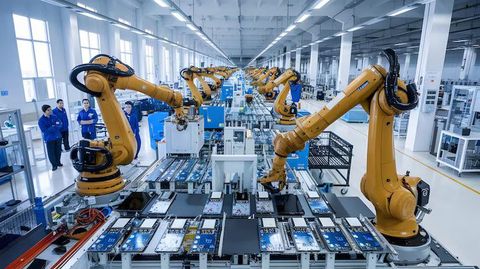
Robotics and Automation
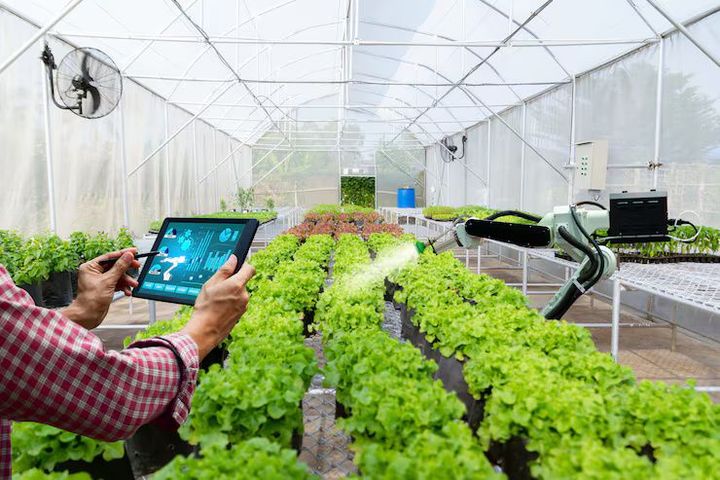
Automated machinery can assist with planting, harvesting, monitoring, and crop maintenance. These systems improve efficiency and help address labor challenges.
Recent Updates and Emerging Trends
The agricultural technology sector has experienced significant developments over the past year.
During 2025 and early 2026, several trends gained increased attention across global agricultural markets.
Expansion of AI-Powered Farming
Artificial intelligence applications became more advanced, offering improved crop monitoring, predictive analytics, and farm management capabilities. Many agricultural organizations expanded AI integration into daily operations.
Growth of Climate-Smart Agriculture
Climate-smart technologies continued to gain momentum as farmers sought solutions to address changing weather patterns and environmental concerns.
These technologies focus on:
- Water efficiency
- Carbon management
- Soil conservation
- Climate resilience
Increased Adoption of Digital Farm Management
Digital platforms that consolidate farm data became more widely used throughout 2025. These systems allow farmers to track operations, monitor performance, and improve planning.
Advancements in Controlled Environment Agriculture
Greenhouses and indoor farming systems incorporated improved automation and environmental controls. These developments support year-round production in certain regions.
Improved Satellite Monitoring
Enhanced satellite imaging capabilities have provided more accurate agricultural data, helping farmers monitor crop conditions and identify potential risks earlier.
Agricultural Technology Adoption Trend
The following chart illustrates a general representation of increasing technology adoption within agriculture.
| Year | Technology Adoption Trend |
|---|---|
| 2021 | Moderate |
| 2022 | Moderate to High |
| 2023 | High |
| 2024 | Higher |
| 2025 | Very High |
| 2026 | Continuing Growth |
The trend reflects growing interest in data-driven farming and sustainable agricultural practices worldwide.
Laws and Policies Influencing Agricultural Technology
Government policies play an important role in encouraging responsible technology adoption within agriculture.
Different countries have developed frameworks that support innovation while ensuring environmental protection and food safety.
Common policy areas include:
Digital Agriculture Programs
Many governments have introduced programs that encourage farmers to adopt modern technologies through education, training, and infrastructure development.
Environmental Regulations
Agricultural technologies must often comply with environmental standards related to water use, chemical applications, emissions, and land management.
Data Protection Requirements
As farms increasingly rely on digital systems, regulations concerning agricultural data collection, storage, and usage have become more important.
Sustainable Agriculture Initiatives
Governments continue to support technologies that improve sustainability and resource efficiency.
Research and Innovation Support
Public research institutions often collaborate with agricultural organizations to develop and test new technologies that can benefit farmers and food systems.
In countries such as India, agricultural modernization initiatives continue to emphasize digital agriculture, precision farming, water management, and climate-resilient agricultural practices.
Helpful Tools and Resources for Agricultural Technology
A variety of tools and resources help farmers, students, researchers, and agricultural professionals understand and apply modern technologies.
Useful categories include:
Farm Management Platforms
These systems help organize field records, crop schedules, resource planning, and operational activities.
Weather Monitoring Tools
Weather forecasting resources provide valuable information for irrigation planning, planting decisions, and risk management.
Soil Analysis Resources
Soil testing tools help assess nutrient levels, moisture conditions, and soil health indicators.
Crop Monitoring Systems
Remote sensing and imaging technologies support crop assessment and field monitoring.
Agricultural Calculators
Common calculators include:
- Irrigation calculators
- Fertilizer planning calculators
- Yield estimation calculators
- Water requirement calculators
- Crop budgeting calculators
Learning Resources
Educational resources help users stay informed about:
- Precision agriculture
- Sustainable farming
- Agricultural engineering
- Climate-smart agriculture
- Digital farming technologies
These resources support continuous learning as agricultural innovation evolves.
Future Outlook for Agricultural Technology
The future of agriculture is expected to become increasingly data-driven and technology-focused.
Several emerging developments may influence the sector in the coming years:
- Advanced artificial intelligence systems
- Improved autonomous machinery
- Enhanced agricultural robotics
- Expanded satellite monitoring
- Greater use of predictive analytics
- Increased focus on sustainability
- Smarter water management systems
As technology becomes more accessible, adoption is likely to expand across farms of different sizes and production systems.
Future innovations will likely focus on balancing productivity, environmental responsibility, and long-term food security.
Frequently Asked Questions
What is new agricultural technology?
New agricultural technology refers to modern tools, equipment, software, and digital systems that help improve farming efficiency, productivity, and sustainability.
How does agricultural technology help farmers?
Agricultural technology helps farmers monitor crops, manage resources, improve decision-making, reduce waste, and respond more effectively to environmental challenges.
What is precision agriculture?
Precision agriculture is a farming approach that uses data, sensors, satellite imagery, and analytics to optimize agricultural practices for specific field conditions.
Why is agricultural technology important for sustainability?
Technology helps reduce unnecessary use of water, fertilizers, and pesticides while supporting efficient resource management and environmental protection.
What are the future trends in agricultural technology?
Future trends include artificial intelligence, automation, robotics, climate-smart agriculture, digital farm management, and advanced monitoring systems.
Conclusion
New agricultural technology is reshaping modern farming through innovative solutions that improve efficiency, sustainability, and productivity. From precision agriculture and smart irrigation to artificial intelligence and automation, these technologies help address some of the most pressing challenges facing agriculture today.