Oxy-Fuel Cutting Machines: Types, Applications and Modern Industry Trends
Oxy-fuel cutting machines are thermal metal-cutting systems that use a fuel gas and oxygen to cut steel and other suitable ferrous materials. The process begins with a flame that heats the metal to its ignition temperature. A concentrated stream of oxygen then reacts with the heated steel and removes the oxidized material from the cut line.
This technology exists because industries often need to cut large and thick metal plates that can be difficult to process with conventional mechanical methods. Oxy-fuel cutting is particularly associated with heavy steel fabrication, construction, shipbuilding, structural manufacturing, recycling, and industrial equipment production.
The system can be operated manually, mechanically, or through computer numerical control (CNC). A typical setup includes gas cylinders or supply lines, regulators, hoses, flashback protection, cutting torches, nozzles, and a machine structure that controls torch movement.
Oxy-fuel cutting machines remain important because they can handle substantial steel thicknesses and are relatively adaptable to large fabrication environments. While plasma and laser cutting have expanded significantly, oxy-fuel technology continues to have a role in heavy-duty applications where high heat penetration and thick-material processing are important.
Why Oxy-Fuel Cutting Technology Matters Today
Modern manufacturing depends on accurate and reliable material processing. Steel plates are used in infrastructure, industrial machinery, transport equipment, energy projects, mining systems, and large structural components. Oxy-fuel cutting machines help convert these large plates into usable shapes and components.
The technology affects several industries, including:
- Heavy steel fabrication
- Construction and structural engineering
- Shipbuilding and marine manufacturing
- Mining and earthmoving equipment
- Railway and transport infrastructure
- Industrial machinery production
- Metal recycling and dismantling
- Large-scale repair and maintenance operations
One major problem addressed by oxy-fuel cutting is the processing of thick carbon steel. For certain heavy plate applications, oxy-fuel systems can provide deeper cutting capability than many alternative thermal processes. The technology can also be integrated into large CNC gantry systems for repeated cutting patterns and improved dimensional consistency.
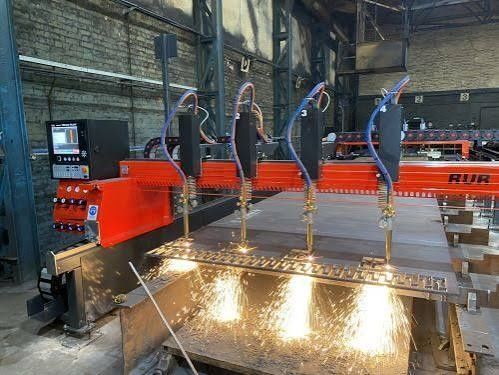
Another important advantage is flexibility. A single machine can often be configured with multiple torches, allowing several parts to be processed from a large plate. This is useful for production environments where material utilization and consistent cutting paths matter.
However, oxy-fuel cutting is not ideal for every material. It is primarily suited to metals that can support the oxidation process required for cutting. Materials such as aluminium and stainless steel generally require different thermal or mechanical cutting methods.
Main Types of Oxy-Fuel Cutting Machines
Oxy-fuel cutting machines are available in several configurations. The correct type depends on material thickness, production volume, cutting accuracy, automation requirements, and the size of the workpiece.
Manual Oxy-Fuel Cutting Systems
Manual systems use a handheld torch operated directly by a trained worker. They are commonly used for repair work, maintenance, irregular cutting, and applications where flexibility is more important than automated repetition.
Manual cutting can be useful for quick modifications, but the final result depends heavily on operator technique, flame adjustment, travel speed, and torch positioning.
Portable Oxy-Fuel Cutting Machines
Portable machines are designed for movement around a workshop or worksite. They may use compact track systems or movable cutting units. These systems are useful when large metal plates cannot easily be transported to a fixed cutting table.
CNC Oxy-Fuel Cutting Machines
CNC oxy-fuel machines use computer-controlled movement to guide the cutting torch according to a programmed design. They can improve repeatability and help reduce variation between similar parts.
A CNC system may include:
- Digital drawing or CAD file input
- Automated torch movement
- Height control
- Flame ignition systems
- Multiple cutting heads
- Automatic gas-control functions
Multi-Torch Cutting Machines
Multi-torch systems use several cutting heads operating on the same machine. They are designed for higher production volumes and can cut multiple components from a single steel plate.
Combination Cutting Systems
Modern fabrication systems may combine oxy-fuel cutting with other technologies such as plasma cutting. This allows a machine to process different thickness ranges using the most suitable cutting method for each application.
Common Applications Across Industry
Oxy-fuel cutting machines are widely used where thick steel processing is required.
In construction, they are used for structural plates, beams, supports, and large fabricated components. Construction-related fabrication often involves heavy steel sections that require controlled thermal cutting before welding or assembly.
Shipbuilding is another important application. Large steel plates and structural sections must be shaped before they are assembled into hulls and internal structures. CNC oxy-fuel cutting systems can help process large plate layouts with repeated patterns.
In mining and heavy equipment manufacturing, oxy-fuel systems are used for components such as frames, buckets, structural plates, and replacement parts. These applications often involve thick carbon steel and large workpieces.
Metal recycling and dismantling operations also use oxy-fuel cutting for separating large steel structures. This can include industrial equipment, structural components, and end-of-life machinery.
Industrial machinery manufacturers use oxy-fuel cutting during the early stages of component fabrication. Large plates can be cut into parts that later undergo bending, machining, welding, or surface treatment.
Recent Industry Trends and Technology Developments
The oxy-fuel cutting sector is evolving alongside wider manufacturing trends. Recent industry discussions have focused on automation, digital control, hybrid cutting systems, gas efficiency, workplace safety, and environmental performance. Market research published in April 2026 highlighted continued use of oxy-fuel technology for thick steel, alongside increased interest in CNC integration, automated gas control, and hybrid systems that combine different cutting processes.
Automation is becoming more important. CNC systems can help standardize torch movement and cutting sequences, while digital controls can support more consistent operating parameters. Some advanced research has also explored vision-based control for robotic oxy-fuel cutting, showing how cameras and automated feedback may support future improvements in torch positioning and process control.
Another trend is the development of multi-process fabrication equipment. A single cutting table may combine oxy-fuel torches for very thick material with plasma technology for thinner sections. This approach can help manufacturers use one production platform for a wider range of metal thicknesses.
Environmental performance is also receiving greater attention. Oxy-fuel cutting involves combustion and can generate fumes, particulate matter, and combustion-related emissions. As industrial air-quality expectations become more demanding, workshops are placing greater emphasis on ventilation, fume extraction, process monitoring, and responsible gas management.
Research and engineering discussions during 2025 and 2026 have also examined alternative fuel combinations, including hydrogen-based combustion systems. However, the practical adoption of any alternative fuel requires careful evaluation of flame characteristics, equipment compatibility, safety controls, supply infrastructure, and applicable regulations.
Laws, Safety Rules, and Industrial Policies
Oxy-fuel cutting involves combustible gases, pressurized cylinders, high temperatures, fire hazards, and potentially hazardous fumes. Therefore, safety requirements are an important part of machine operation.
In India, gas-cylinder handling is affected by regulations administered through the Petroleum and Explosives Safety Organisation (PESO). The Gas Cylinders Rules have also seen amendments during 2025 and 2026, making it important for industrial facilities to check the latest applicable requirements for cylinder storage, handling, transport, and related safety arrangements.
The Ministry of Steel's safety guidance for iron and steel operations emphasizes precautions such as securing cylinders, using suitable regulators, preventing cylinders from entering confined spaces, using flashback arrestors, inspecting cutting equipment, and ensuring that trained personnel perform gas-cutting work.
Important workplace safety practices generally include:
- Keeping cylinders upright and properly secured
- Separating incompatible gases where required
- Inspecting hoses, regulators, valves, and torch assemblies
- Using appropriate flashback protection
- Maintaining suitable ventilation
- Removing combustible materials from the cutting area
- Providing appropriate personal protective equipment
- Establishing emergency procedures for leaks and fire
- Training workers in correct equipment operation
Requirements can vary according to the country, industry, facility size, and type of gas system. Industrial operators should always verify current national, state, and local rules before establishing or modifying a cutting installation.
Helpful Tools and Resources for Learning and Planning
Several general tools can help users understand and manage oxy-fuel cutting operations.
Cutting Parameter Charts
Reference charts can help users understand the relationship between material thickness, nozzle selection, oxygen pressure, fuel-gas settings, and cutting speed.
CAD and Nesting Software
Digital design and nesting tools can help arrange multiple components on a plate layout. This can support better planning and reduce unnecessary material waste.
Gas Consumption Calculators
Industrial calculation tools can estimate oxygen and fuel-gas usage based on cutting time, nozzle configuration, and operating conditions.
Maintenance Checklists
A structured checklist can cover hoses, regulators, torch components, flashback arrestors, electrical controls, machine rails, and emergency equipment.
Safety Training Materials
Training resources can help workers understand cylinder handling, leak detection, ignition procedures, emergency shutdown, protective equipment, and fire prevention.
Air-Quality Monitoring Tools
Workplace monitoring equipment can help assess airborne particles and fumes in areas where thermal cutting is performed.
Frequently Asked Questions
What materials can oxy-fuel cutting machines process?
Oxy-fuel cutting is mainly used for carbon steel and certain low-alloy steels. The process depends on the material's ability to react with oxygen at the required temperature. Stainless steel and aluminium generally require other cutting technologies.
What is the difference between manual and CNC oxy-fuel cutting?
Manual cutting depends on direct operator control, while CNC cutting uses programmed machine movement. CNC systems are generally more suitable for repeated shapes and consistent production patterns.
Why is oxy-fuel cutting used for thick steel?
The process combines preheating with a concentrated oxygen jet, allowing it to cut substantial steel thicknesses. This makes it useful in heavy fabrication and structural steel applications.
Is oxy-fuel cutting safe?
It can be operated safely when equipment is correctly maintained and appropriate procedures are followed. The main risks include fire, explosion, gas leaks, burns, flashback, and exposure to fumes. Proper training and safety controls are essential.
How is oxy-fuel cutting changing with modern technology?
Modern developments include CNC automation, digital controls, multi-torch systems, hybrid cutting machines, improved monitoring, and research into robotic and alternative-fuel applications.
Conclusion
Oxy-fuel cutting machines remain an important technology in heavy metal fabrication. Their ability to process thick steel makes them valuable in construction, shipbuilding, mining equipment, industrial machinery, recycling, and other sectors.
The technology is changing through greater automation, CNC control, multi-process systems, digital monitoring, and research into new fuel options. At the same time, safety and environmental responsibilities are becoming increasingly important.