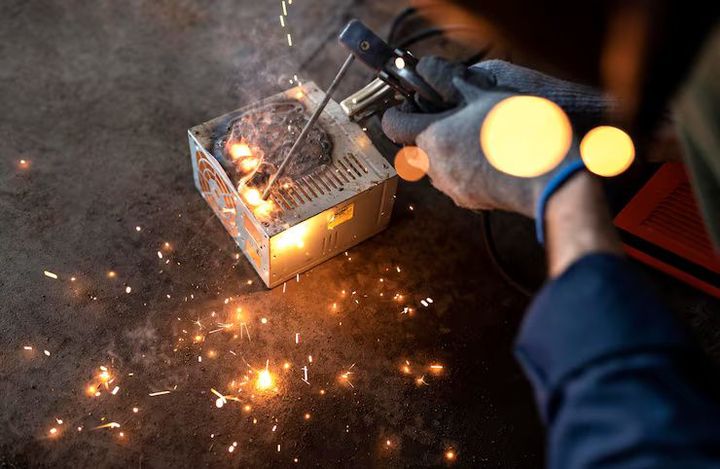
Welding is a manufacturing process that uses heat, pressure, or both to fuse metal parts together. Traditional welding equipment often requires fixed installations and large power sources, making it less flexible for fieldwork.
Portable welding machines were developed to address these limitations. They allow operators to perform welding tasks directly at the work location, improving efficiency and reducing the need for transportation.
Most portable welding units use modern inverter technology. This technology converts electrical energy into a stable welding current while reducing equipment size and weight.
Common Welding Techniques Supported
Portable welding machines support a variety of welding methods, including:
-
Shielded Metal Arc Welding (SMAW)
-
Gas Metal Arc Welding (GMAW or MIG welding)
-
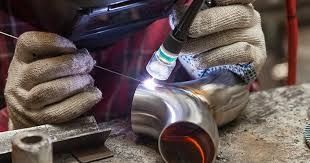
Gas Tungsten Arc Welding (GTAW or TIG welding)
-
Flux-Cored Arc Welding (FCAW)
These machines are widely used across industries such as construction, automotive manufacturing, shipbuilding, and infrastructure development.
Why Portable Welding Machines Matter Today
Portable welding machines are increasingly important due to their flexibility and adaptability. As industries shift toward decentralized operations, these machines enable on-site fabrication and repair.
They are used in multiple sectors, including:
-
Construction and infrastructure projects
-
Automotive manufacturing and repair
-
Energy and utility installations
-
Aerospace maintenance
-
Agricultural machinery fabrication
Key Benefits of Portable Welding Equipment
Portable welding machines solve several practical challenges in industrial environments.
-
On-site welding capability reduces the need to transport heavy materials
-
Faster maintenance minimizes downtime in critical industries
-
Accessibility for small workshops enables cost-effective fabrication setups
These advantages make portable welders essential in modern industrial workflows.
Recent Updates and Technological Trends
Recent advancements in welding technology have improved portable welding machines significantly. In 2024 and early 2025, manufacturers introduced advanced inverter systems with better energy efficiency and current control.
Digital control systems are now commonly integrated into portable welders. These systems allow operators to adjust parameters such as current output, arc stability, and duty cycle.
Emerging Trends in Welding Technology
Several trends are shaping the future of portable welding:
-
Battery-powered welding systems using lithium-ion technology
-
Smart sensors for arc monitoring
-
Real-time data tracking and diagnostics
-
Wireless connectivity for equipment monitoring
Sustainability is also a key focus, with new machines designed to reduce energy consumption and improve efficiency.
Training institutions are adopting welding simulators that allow learners to practice without material waste.
Regulations, Standards, and Government Policies
Portable welding machines must comply with safety and industrial regulations. Welding involves high temperatures, electrical currents, and hazardous fumes, making safety compliance essential.
In India and many other countries, welding operations fall under workplace safety and labor regulations. These frameworks ensure safe working environments for operators.
Key Regulatory Considerations
Important safety and compliance factors include:
-
Electrical safety standards for equipment
-
Protective gear requirements for operators
-
Ventilation systems for controlling fumes
-
Fire prevention measures
International organizations such as ISO and AWS provide guidelines for welding processes and equipment performance.
Government initiatives promoting manufacturing modernization also support the adoption of portable welding technologies.
Helpful Tools and Resources for Welding Applications
Various tools and resources help improve welding accuracy and efficiency. These tools support both professionals and trainees in achieving consistent results.
Common Welding Tools and Resources
-
Welding parameter calculators
-
Welding procedure specification (WPS) templates
-
Metal compatibility charts
-
Welding simulation software
-
Safety inspection checklists
Digital design tools such as CAD and CAM software are also widely used in fabrication planning.
Types of Portable Welding Machines and Applications
The table below summarizes common welding types and their applications:
| Welding Type | Typical Applications | Material Compatibility |
|---|
| SMAW (Stick Welding) | Construction and outdoor repair | Steel and iron |
| MIG Welding | Automotive fabrication | Steel, aluminum |
| TIG Welding | Precision welding tasks | Stainless steel, aluminum |
| FCAW | Structural fabrication | Thick metals |
Portable welding machines vary in output current, power source, and duty cycle. Selecting the right equipment depends on the work environment and materials used.
General Features of Portable Welding Machines
| Feature | Portable Welding Machines |
|---|
| Mobility | High |
| Power Source | AC or inverter-based |
| Weight | Lightweight to moderate |
| Applications | Repair, fabrication, construction |
Frequently Asked Questions
What is a portable welding machine?
A portable welding machine is a compact device used to join metal components using heat or electrical arcs. It is designed for easy transportation and use in various locations.
What types of welding can portable machines perform?
They commonly support stick welding, MIG welding, TIG welding, and flux-cored arc welding.
Why are inverter welding machines common?
Inverter technology reduces machine size and improves energy efficiency. It also provides stable arc control compared to traditional systems.
Where are portable welding machines used?
They are widely used in construction sites, repair facilities, infrastructure projects, and field fabrication environments.
What safety precautions are important?
Operators should use protective gear such as helmets, gloves, and flame-resistant clothing. Proper ventilation and electrical safety measures are also necessary.
Conclusion
Portable welding machines play a vital role in modern manufacturing and repair operations. Their mobility allows technicians to perform welding tasks directly at worksites, reducing logistical challenges.
Technological advancements such as inverter systems, battery-powered units, and digital controls have improved their performance and usability. These innovations align with industry trends toward automation and energy efficiency.
Regulatory frameworks ensure safe and environmentally responsible welding practices. As industries continue to evolve, portable welding machines remain essential tools for engineers and technicians.