Precision Casting Machinery Guide: Types, Applications, and Key Industry Benefits
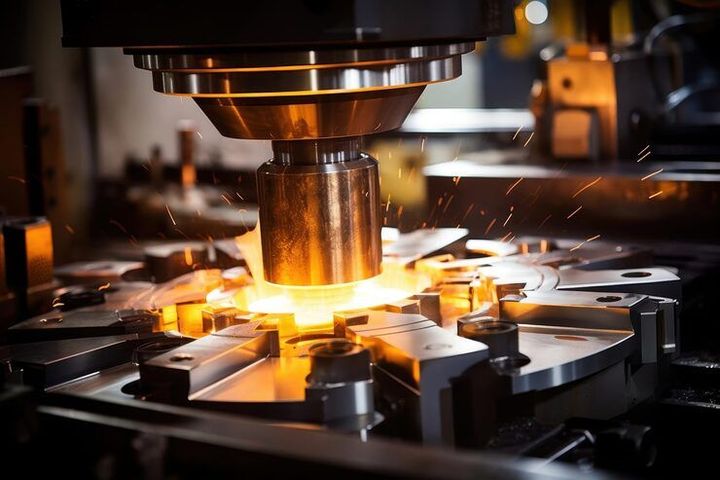
Precision casting machinery refers to specialized equipment used to produce metal components with high dimensional accuracy and detailed surface finishes. The process often involves pouring molten metal into carefully designed molds that replicate complex shapes. Once the metal solidifies, the mold is removed to reveal a finished or near-finished part.
Precision casting machinery is widely used in industries where accuracy and consistency are essential. These machines are designed to maintain strict temperature control, precise mold alignment, and controlled material flow during production.
The technology has evolved from traditional casting methods that relied heavily on manual labor. Modern systems now incorporate automation, robotics, and computer-controlled operations to improve efficiency and quality.
Today, precision casting supports the production of complex components used in aerospace, automotive, medical, and industrial sectors. These machines enable manufacturers to create intricate designs that are difficult to achieve through conventional machining.
Types of Precision Casting Processes
Common Casting Methods
Different casting processes use specialized machinery depending on production needs and material types.
- Investment casting (lost-wax casting)
- Die casting
- Vacuum casting
- Sand casting with precision control
- Continuous casting systems
Each method offers unique advantages in terms of detail, scalability, and material compatibility.
Importance of Precision Casting Machinery
Precision casting machinery plays a vital role in modern manufacturing by improving efficiency and product quality. It allows industries to produce components with tight tolerances and complex geometries.
The technology also reduces the need for extensive machining, which helps lower production costs and material waste. Automation further enhances production speed and consistency.
Key Benefits
- Improved dimensional accuracy
- Reduced material waste
- Faster production cycles
- Greater design flexibility
These benefits make precision casting an essential solution for advanced manufacturing requirements.
Industries Using Precision Casting
| Industry | Typical Components Produced |
|---|---|
| Aerospace | Turbine blades, structural brackets |
| Automotive | Engine parts, transmission components |
| Medical Devices | Surgical tools, implants |
| Energy Sector | Pump housings, turbine parts |
| Industrial Machinery | Valves, gears, heavy-duty fittings |
Precision casting is particularly useful for producing components with internal channels, thin walls, or intricate shapes.
Recent Developments in Precision Casting Technology
Recent advancements in precision casting machinery have focused on automation and digital integration. Manufacturers are increasingly using smart systems to monitor temperature, mold conditions, and metal flow in real time.
In 2025, many facilities adopted connected manufacturing systems that improve process control and reduce defects. These systems are part of the broader Industry 4.0 transformation.
Key Trends (2024–2025)
- Automated casting lines in large-scale production
- Artificial intelligence for quality monitoring
- Advanced mold materials for high-temperature resistance
- Integration of 3D printing for mold creation
- Energy-efficient casting furnaces
Additive manufacturing is increasingly used to create complex molds, improving flexibility and reducing production time.
Regulations and Manufacturing Standards
Precision casting machinery operates under strict regulations to ensure safety, quality, and environmental compliance. These standards help maintain consistent production and protect workers.
Key Regulatory Areas
Workplace Safety
Manufacturers must follow safety protocols to protect workers from high temperatures and moving machinery. This includes protective equipment, machine guards, and proper ventilation systems.
Environmental Protection
Casting processes can generate emissions and waste materials. Regulations require proper filtration systems and responsible waste management practices.
Quality Standards
| Standard | Purpose |
|---|---|
| ISO 9001 | Quality management systems |
| ISO 14001 | Environmental management |
| ISO 45001 | Occupational health and safety |
These certifications help manufacturers meet global quality and compliance expectations.
Tools and Resources for Precision Casting
Modern casting environments rely on digital tools and engineering software to improve accuracy and efficiency. These tools support design, simulation, and process optimization.
Common Tools
- CAD software for component design
- CAM software for mold development
- Casting simulation software
- Thermal analysis tools
- CNC control systems
- Industrial monitoring dashboards
Simulation tools are especially useful for predicting metal flow and cooling behavior. This helps engineers detect potential defects before production begins.
Typical Casting Workflow
| Stage | Description |
|---|---|
| Design | Digital models of components are created |
| Mold Preparation | Molds are produced using machining or 3D printing |
| Melting | Metal is heated to a controlled temperature |
| Casting | Molten metal is poured into molds |
| Cooling | Metal solidifies under controlled conditions |
| Finishing | Components are cleaned and inspected |
This structured workflow ensures consistency and high-quality output in manufacturing processes.
Frequently Asked Questions
What is precision casting machinery used for?
Precision casting machinery is used to produce metal components with high accuracy and complex shapes. It is widely used in industries such as aerospace, automotive, and medical manufacturing.
What metals are commonly used?
Common materials include aluminum, stainless steel, titanium, bronze, and industrial alloys. The selection depends on the required strength, durability, and application.
How is it different from machining?
Precision casting shapes components using molds, while machining removes material from solid blocks. Casting reduces waste and allows for more complex designs.
What is investment casting?
Investment casting involves creating a wax model, coating it with ceramic, and then melting the wax away to form a mold. Molten metal is then poured into the mold to produce the final part.
Why is automation important?
Automation improves production consistency, enhances safety, and enables real-time monitoring. It also helps detect defects early in the manufacturing process.
Conclusion
Precision casting machinery is a key component of modern manufacturing, enabling the production of complex and high-quality metal parts. It supports industries that require strict performance and safety standards.
Advancements in automation, digital monitoring, and additive manufacturing have significantly improved casting efficiency. These innovations allow manufacturers to optimize processes and maintain consistent quality.
With strong regulatory frameworks and advanced engineering tools, precision casting will continue to play a vital role in industrial development. It remains essential for innovation across sectors such as energy, transportation, and healthcare.