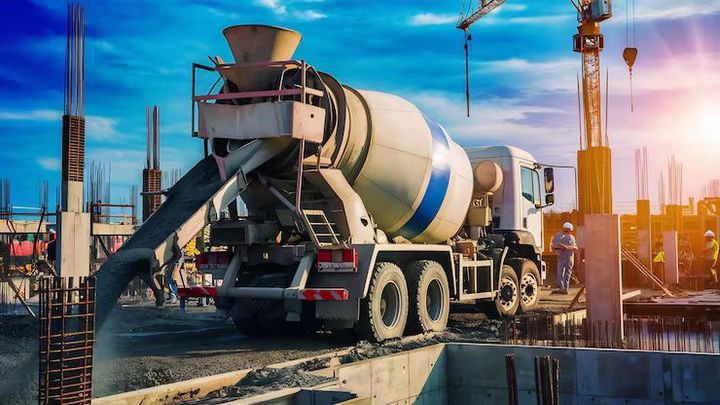
Ready-Mix Transport Mixers Guide: Explore Types, Components, Capacity, Uses, and Planning Factors
Ready-mix transport mixers are truck-mounted machines designed to carry fresh concrete from a batching or ready-mix concrete plant to a construction site. They are commonly called transit mixers or concrete mixer trucks. Their rotating drums help keep concrete moving during transportation and can also perform mixing or additional agitation, depending on the system and the way the concrete was prepared. Indian Standard IS 5892 describes a transit mixer as equipment mounted commonly on a truck or another mobile haulage unit for mixing concrete or agitating already mixed concrete during transit.
The basic idea developed from the need to transport concrete without allowing the ingredients to separate excessively or the material to become difficult to place before reaching its destination. Instead of preparing every batch directly at a construction site, ready-mix concrete can be proportioned and processed at a plant and then transported using specialized equipment.
A ready-mix transport mixer generally consists of a truck chassis, rotating drum, drive system, internal blades, water arrangement, discharge chute, controls, and supporting components. The drum is mounted at an angle and rotates during transportation, while its internal blades move the concrete through the drum.
How Ready-Mix Transport Works
The concrete may be completely mixed at a central plant before loading or may undergo partial or complete mixing inside the truck, depending on the production method. IS 5892 recognizes functions including mixing ingredients, preventing segregation through agitation, and completing the mixing of partially mixed concrete.
During transportation, the drum rotates at a controlled rate. The internal blades repeatedly lift and move the concrete, helping maintain a relatively uniform mixture. At the construction site, changing the direction or speed of drum rotation allows the material to move toward the discharge opening.
Ready-Mix Transport Mixer and Other Mixers
A transit mixer should not be confused with a stationary concrete mixer or a self-loading mixer. A stationary mixer normally remains at the batching location, while a self-loading mixer can load raw materials, mix them, and discharge the concrete as a mobile unit.
A ready-mix transport mixer is primarily associated with transporting concrete from a batching plant to a placement location. The exact role of the drum depends on whether the concrete is centrally mixed, shrink mixed, or mixed within the truck.
Importance
Ready-mix transport mixers play an important role in construction projects where concrete needs to move from a controlled batching location to a separate placement area. They are used for buildings, bridges, roads, foundations, industrial structures, infrastructure projects, and other concrete applications.
Transportation is important because fresh concrete has a limited period in which it remains suitable for placement. Time, temperature, traffic conditions, mix composition, and handling methods can affect workability and the potential for segregation.
IRC:112-2020 states that mixed concrete should be transported as early as practicable using methods that prevent segregation or loss of ingredients, and it identifies transit mixers as one method of concrete transportation.
Common Uses
Ready-mix transport mixers can support several types of construction activity:
- Building foundations and structural slabs
- Columns, beams, and walls
- Road and pavement construction
- Bridge and infrastructure projects
- Industrial floors and structures
- Large concrete pours
- Commercial and residential construction
- Remote or separated construction areas when suitable transport access exists
The appropriate mixer depends on the quantity of concrete required, road conditions, access limitations, delivery distance, plant location, and placement rate.
Transportation Challenges
Several practical challenges can affect concrete transportation. Traffic congestion can increase travel time, while high temperatures may accelerate changes in workability. Narrow roads, steep approaches, weak surfaces, low-clearance structures, and limited turning space can also restrict access.
The construction site must also be prepared for the arriving truck. Adequate space may be needed for reversing, positioning, chute movement, washing arrangements, and safe movement around the vehicle.
Capacity and Project Planning
Capacity is normally expressed in cubic metres of concrete. The drum's nominal capacity should not be confused with its total physical volume. The usable capacity depends on the machine design and the manufacturer's rated specifications.
Current Indian market references commonly show truck-mounted mixer capacities across several sizes, with 6 m³, 7 m³, and 8 m³ units frequently encountered in practical applications. Larger machines are also available for projects with appropriate road and site conditions.
| Approximate mixer capacity | Typical application context | Main planning consideration |
|---|---|---|
| 4–5 m³ | Smaller or restricted projects | Site access and smaller pour volumes |
| 6 m³ | General construction and RMC delivery | Balance of load and maneuverability |
| 7–8 m³ | Larger structural pours | Road access and continuous placement |
| 9–10 m³ | High-volume infrastructure work | Vehicle dimensions and road capacity |
| 11–12 m³ | Selected large-scale applications | Heavy chassis and suitable infrastructure |
These ranges are indicative rather than universal. Exact capacity, vehicle configuration, payload limitations, and permitted operating conditions should always be confirmed from the particular manufacturer's specifications and applicable vehicle requirements.
Recent Updates
From 2024 through 2026, ready-mix transport technology has continued moving toward improved vehicle integration, automation, monitoring, and operational control. Digital systems can help connect batching plants, transport vehicles, dispatch information, and construction-site requirements.
One noticeable development is greater attention to truck-mounted equipment as part of integrated construction logistics. Modern systems may combine hydraulic drum drives, electronic controls, vehicle monitoring, and improved discharge arrangements.
Government automotive requirements have also developed around truck mixers. India's Ministry of Road Transport and Highways published an AIS 163 Part 2 Annex 5 document specifying particular requirements for truck mixers used for producing or delivering concrete or mortar. The document addresses functional and performance requirements associated with roadworthiness of applicable N2 and N3 vehicle categories.
Automation and Monitoring
Automation can be used in areas such as batching coordination, dispatch management, drum control, and operational monitoring. These systems can provide information about vehicle movement and delivery status, depending on the equipment configuration.
Digital records can also help construction teams coordinate plant production with concrete placement. This is particularly relevant for projects involving multiple mixer trucks and continuous concrete placement.
Drum and Drive Developments
The drum remains the central working component of a transport mixer. Modern machines may use hydraulic systems powered through the vehicle's engine and power take-off arrangement or through other drive configurations.
Internal blades are shaped to move concrete during rotation and support discharge when the direction of rotation changes. The Indian Railways Institute of Civil Engineering describes truck-mounted drum mixers as having inclined revolving drums with internal helical blades.
Emphasis on Transport Control
Current concrete practices continue to emphasize controlling the time between mixing and placement. Temperature, distance, traffic, mix design, and required workability all influence transportation planning.
For this reason, capacity alone does not determine whether a mixer is appropriate. A larger drum can be unsuitable where access is restricted or where the concrete placement rate cannot accommodate the incoming volume.
Laws or Policies
In India, ready-mix transport mixers are influenced by standards covering concrete production, mixer equipment, vehicle requirements, and workplace safety.
IS 5892 is an Indian Standard specifically associated with concrete transit mixers. It establishes technical considerations for the equipment, including capacity, construction, and performance-related requirements.
IS 4926 provides a code of practice for ready-mixed concrete and addresses areas such as production, delivery, equipment, transportation, and quality-related procedures. Technical requirements should be checked against the applicable edition and project specifications.
For road vehicles, applicable Central Motor Vehicle Rules, vehicle classification requirements, and relevant Automotive Industry Standards can affect the configuration and operation of truck-mounted mixers. AIS 163 Part 2 Annex 5 specifically identifies requirements for truck mixers in relation to roadworthiness and special-purpose vehicle applications.
Construction projects may also follow specifications issued by organizations such as the Indian Roads Congress, Central Public Works Department, state authorities, or individual project owners. IRC guidance states that transportation methods should prevent segregation and loss of ingredients and permits the use of transit mixers for concrete transportation.
Safety requirements are also important because the equipment contains rotating machinery, hydraulic components, moving vehicle parts, access platforms, and heavy materials. Operators should follow the manufacturer's instructions and the applicable workplace and road-safety requirements.
Tools and Resources
Several resources can help readers understand and plan the use of ready-mix transport mixers.
Manufacturer Specifications
A machine's technical specification sheet can provide information about drum capacity, overall dimensions, vehicle weight, axle configuration, drum drive, water tank arrangement, discharge system, and operating requirements. These details are useful when checking compatibility with a particular project.
Concrete Delivery Planning Sheets
A basic planning sheet can track:
- Required concrete volume
- Mixer capacity
- Number of planned loads
- Batching plant location
- Approximate travel distance
- Expected travel conditions
- Site access restrictions
- Placement rate
- Required arrival sequence
- Discharge arrangement
This information can help coordinate transportation with concrete placement.
BIS Standards Resources
The Bureau of Indian Standards provides online resources for locating Indian Standards and related information. Searching by standard number or subject can help users identify documents relevant to concrete equipment and construction practices.
IRC Resources
Indian Roads Congress publications are useful for understanding concrete transportation and placement practices in road and bridge projects. IRC:112-2020, for example, includes provisions concerning concrete mixing, transportation, placing, compaction, and curing.
Capacity Calculation
A simple planning calculation can estimate the number of loads:
Number of loads = Total concrete volume ÷ Rated mixer capacity
For example, a project requiring 48 m³ of concrete and using 6 m³ mixers would theoretically require eight full loads. Actual planning may require additional consideration for loading limits, site conditions, production sequence, and operational constraints.
FAQs
What is a ready-mix transport mixer?
A ready-mix transport mixer is a truck-mounted machine used to transport fresh concrete from a batching plant to a construction site. Its rotating drum agitates or mixes the concrete during transportation, depending on the production method.
What are the main components of a ready-mix transport mixer?
The main components generally include the truck chassis, rotating drum, internal blades, hydraulic or mechanical drive system, discharge chute, water arrangement, control mechanism, frame, and safety-related components.
What capacity does a ready-mix transport mixer have?
Capacity varies by machine. Common truck-mounted mixer sizes in India include approximately 4–10 m³, while larger configurations are also available. The exact rated capacity should be checked against the particular machine specification and vehicle configuration.
What is the difference between a transit mixer and a concrete mixer?
A transit mixer is specifically designed as a mobile unit for transporting concrete while maintaining mixing or agitation. A stationary concrete mixer generally mixes concrete at a fixed location, while a self-loading mixer can load raw materials and produce concrete as a mobile machine.
Why does the drum rotate during transportation?
The rotating drum continuously moves the concrete through its internal blades. This agitation helps maintain a more uniform mixture and reduce segregation during transportation. IS 5892 identifies slow drum revolution as a means of agitating already mixed concrete during transit.
Conclusion
Ready-mix transport mixers connect concrete batching operations with construction sites by transporting and, depending on the system, mixing or agitating fresh concrete. Their major elements include the truck chassis, rotating drum, internal blades, drive system, discharge chute, and control components. Capacity, road conditions, travel time, site access, placement rate, and applicable standards all influence transport planning. In India, standards such as IS 5892, concrete practice requirements, and applicable vehicle regulations provide important technical references for these machines.