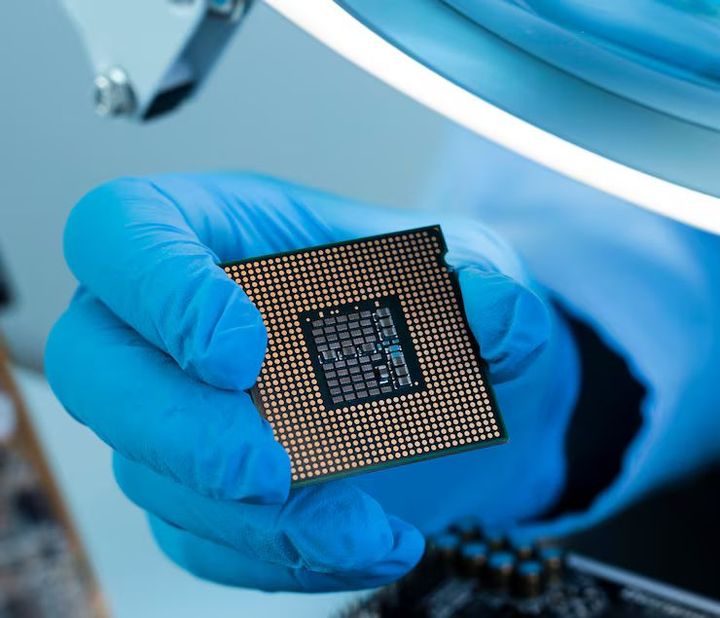
Industrial chips are specifically designed for demanding environments such as manufacturing plants, automotive systems, power grids, and automation equipment. Unlike consumer-grade chips, they are built for durability, reliability, and long operational life.
Semiconductors enable electronic control and computation. Without them, modern digital systems—including computers, communication devices, and industrial machines—would not function. Over time, they have evolved from simple transistors to highly complex microprocessors and system-on-chip (SoC) architectures.
Common Types of Semiconductor Chips
Semiconductor and industrial chips are categorized based on their functions and applications.
-
Microcontrollers (MCUs)
-
Microprocessors (CPUs)
-
Power management ICs
-
Analog and mixed-signal chips
-
Application-specific integrated circuits (ASICs)
-
Field-programmable gate arrays (FPGAs)
These components are embedded into devices to manage everything from simple control tasks to advanced data processing.
Importance of Semiconductor Chips
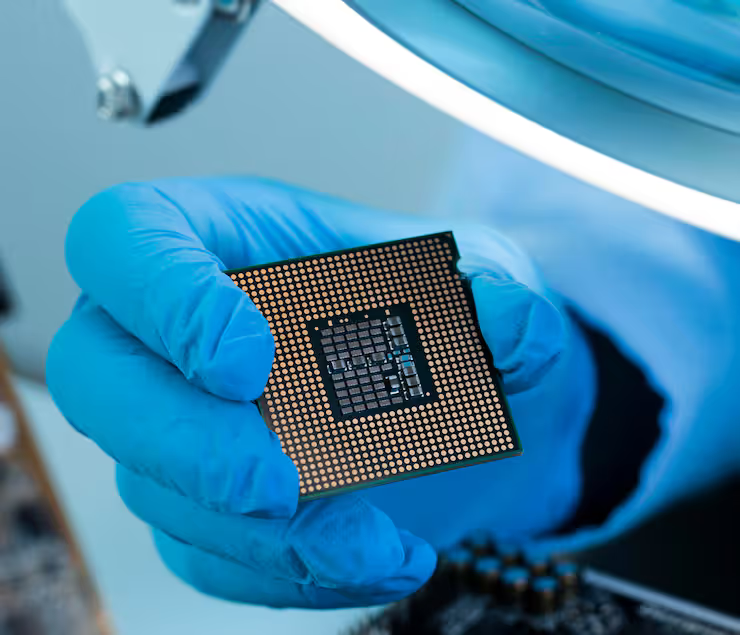
Semiconductor chips play a central role in today’s technology-driven world. Their importance has increased with the rise of automation, connectivity, and digital transformation.
Key Benefits
These chips provide several critical advantages across industries:
-
Enable smart devices and embedded systems
-
Support industrial automation and robotics
-
Power communication networks such as 5G
-
Drive AI and machine learning advancements
-
Improve energy efficiency in power systems
Industries That Rely on Semiconductor Chips
Several major industries depend heavily on semiconductor technology:
-
Automotive (electric vehicles, driver assistance systems)
-
Healthcare (medical imaging, monitoring devices)
-
Manufacturing (automation and control systems)
-
Telecommunications (network equipment and data transmission)
-
Consumer electronics (smartphones, laptops, wearables)
One major problem these chips solve is efficient data processing. They allow systems to operate quickly and reliably while consuming less energy.
Recent Updates in the Semiconductor Industry
The semiconductor industry has experienced rapid growth and transformation, especially in 2025. These changes are driven by global demand and continuous innovation.
Key Developments
-
Expansion of chip manufacturing below 5 nanometers
-
Increased investment in domestic semiconductor production
-
Growth of AI-focused and edge computing chips
-
Rising demand for automotive-grade semiconductors
-
Adoption of chiplet-based architectures
Countries worldwide are investing in local semiconductor ecosystems to reduce dependency on global supply chains. Energy-efficient chips and AI accelerators are also gaining traction in industrial and cloud applications.
Laws and Policies
Semiconductor production is influenced by various regulations and government initiatives. These policies aim to ensure safety, sustainability, and global competitiveness.
Key Regulatory Areas
-
Export controls on advanced technologies
-
Environmental standards for manufacturing
-
Intellectual property protection
-
Safety and quality certifications
-
Trade and supply chain regulations
Countries like India, the United States, and the European Union have introduced policies to boost domestic semiconductor production. Environmental laws also ensure responsible manufacturing practices.
Tools and Resources for Semiconductor Development
A wide range of tools supports semiconductor design, testing, and production. These tools are essential for engineers, researchers, and students.
Common Tools
-
Electronic Design Automation (EDA) software
-
Circuit simulation tools
-
PCB design software
-
Hardware description languages (Verilog, VHDL)
-
Chip testing and validation platforms
-
Thermal analysis tools
Learning and Research Resources
-
Online semiconductor learning platforms
-
Technical documentation and datasheets
-
Industry research reports
-
Open-source hardware communities
Comparison of Common Chip Types
| Chip Type | Primary Function | Common Applications |
|---|
| Microcontroller | Control tasks | Appliances, IoT devices |
| Microprocessor | General computing | Computers, servers |
| Power IC | Power regulation | Energy systems, electric vehicles |
| FPGA | Programmable logic | Prototyping, telecom systems |
| ASIC | Specialized processing | Industrial and high-performance systems |
Basic Semiconductor Design Workflow
-
Define system requirements
-
Create circuit design using EDA tools
-
Simulate and validate the design
-
Fabricate the chip
-
Test and integrate into systems
Emerging tools now include AI-assisted chip design platforms, improving efficiency and optimization.
Frequently Asked Questions
What are semiconductor chips made of?
Semiconductor chips are primarily made from silicon. This material can act as both a conductor and an insulator under different conditions.
What is the difference between industrial and consumer chips?
Industrial chips are built for durability and long-term reliability in harsh environments. Consumer chips focus more on performance and cost efficiency.
Why are semiconductor chips important?
They enable data processing, communication, automation, and control systems across nearly all industries.
What is a microcontroller used for?
A microcontroller controls specific functions within devices. It is commonly used in sensors, motors, and embedded systems.
What are AI chips?
AI chips are specialized processors designed to handle machine learning tasks efficiently. They are used in both cloud computing and edge devices.
Additional Insights and Data Trends
The semiconductor industry continues to grow due to increasing digitalization. Demand is rising across multiple sectors.
Demand Growth by Sector (2025)
| Sector | Growth Trend |
|---|
| Automotive | High |
| Consumer Electronics | Moderate |
| Industrial Automation | High |
| Data Centers | High |
| Telecommunications | High |
Key Technology Focus Areas
-
Smaller transistors for better performance
-
Improved thermal management
-
Integration of multiple functions into single chips
-
Enhanced hardware security features
Edge computing is also increasing demand for chips that process data locally. This reduces reliance on centralized cloud systems and improves efficiency.
Conclusion
Semiconductor and industrial chips are essential to modern technology and industrial systems. They enable everything from simple electronic control to advanced computing and automation.
Advancements in AI, energy efficiency, and manufacturing are shaping the future of the industry. Government policies and global initiatives are strengthening production and supply chains.
Understanding semiconductor technology helps individuals and businesses adapt to a rapidly evolving digital landscape. These chips will continue to drive innovation across industries in the years ahead.