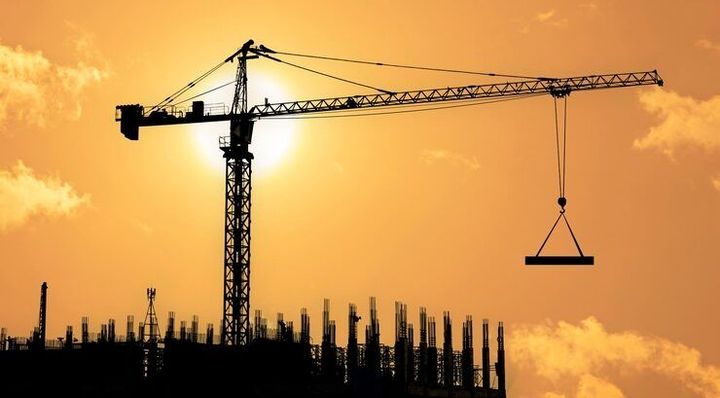
Tower Cranes Overview: Explore Designs, Lifting Capacity, Features, Uses, and Planning Factors
A tower crane is a fixed lifting machine designed to move materials vertically and horizontally across construction sites. Tower cranes are commonly associated with high-rise buildings because their tall mast, long jib, and rotating structure allow materials to be positioned at significant heights and distances from the crane base.
The basic concept comes from balance cranes that use a vertical support, horizontal working arm, counterweight, and lifting mechanism. Modern tower cranes developed this principle into large mechanical systems that can be assembled at construction sites and increased in height as a building progresses.
A typical tower crane consists of a foundation or base, vertical mast, slewing mechanism, jib, counter-jib, counterweights, trolley, hoist, wire rope, hook, and operator controls. The mast provides vertical support, while the jib provides horizontal reach. The slewing system allows the upper structure to rotate, enabling loads to move around the working area.
How a Tower Crane Works
The lifting process begins when the hoist mechanism raises a load using wire rope and a hook or other approved lifting attachment. A trolley can move along a horizontal jib to change the load's working radius, while the slewing mechanism rotates the upper structure.
The crane's lifting capacity changes according to the load radius. A load positioned close to the mast may have a higher permitted capacity than the same load positioned near the end of the jib. For this reason, the manufacturer's load chart is an essential part of tower crane planning.
Main Tower Crane Components
The main components include:
- Base and foundation: Provide structural support and transfer loads into the ground or supporting structure.
- Mast: A vertical steel tower made from connected sections that provide height.
- Slewing unit: Allows the upper crane assembly to rotate.
- Jib: The horizontal working arm that provides reach.
- Counter-jib: Supports counterweights and balances the working side.
- Trolley: Moves along the jib to change the load position.
- Hoist: Raises and lowers the suspended load.
- Wire rope and hook: Connect the lifting mechanism with the load.
- Operator cabin or control system: Allows crane movements to be controlled.
- Safety and limit systems: Help monitor operating conditions and movement limits.
Importance
Tower cranes are important because modern construction frequently requires materials to be moved over considerable heights and distances. Reinforcement steel, formwork, structural components, construction equipment, and other materials may need to reach elevated working areas without repeatedly repositioning ground-based lifting equipment.
They are particularly relevant to high-rise residential buildings, commercial structures, industrial facilities, bridges, infrastructure projects, and some large renovation or structural projects. Their ability to remain positioned within a defined work area can be useful where ground space is limited.
Construction Challenges Addressed
A construction site may contain buildings, roads, excavation areas, storage zones, temporary structures, and other equipment. A tower crane can provide a defined lifting radius above this complex environment.
Planning is still necessary because the crane's working area must account for surrounding structures, overhead electrical lines, public areas, other cranes, wind conditions, and the movement of workers and equipment.
Why Lifting Capacity Is Not One Number
A tower crane's rated capacity should not be understood as a single figure that applies everywhere within its working radius. Capacity depends on factors such as jib configuration, radius, height, counterweight arrangement, structural configuration, and manufacturer specifications.
For example, a crane may have a relatively high permissible load close to the mast but a substantially lower permissible load at a long radius. The exact figures must come from the crane's approved load chart rather than from a general description of the machine.
| Planning factor | Why it matters |
|---|---|
| Maximum load | Determines the required lifting capacity |
| Working radius | Capacity generally changes as radius increases |
| Lift height | Determines mast and lifting arrangement requirements |
| Jib length | Defines the horizontal working area |
| Site conditions | Affect foundation and crane stability |
| Wind conditions | Can restrict lifting and crane movement |
| Nearby structures | Influence clearance and operating space |
| Project duration | Influences erection, climbing, and dismantling planning |
Recent Updates
From 2024 through 2026, tower crane development has continued to focus on automation, electronic monitoring, operator assistance, remote controls, and improved site coordination. These developments form part of a wider construction-industry movement toward connected equipment and more digitally managed worksites.
Modern tower cranes can incorporate load monitoring, movement limits, anti-collision systems, camera systems, remote controls, and digital operating information. The exact equipment varies by manufacturer and crane configuration, so these features should not be assumed to exist on every model.
Automation and Remote Operation
Remote control technology can allow certain crane functions to be monitored or controlled from positions other than a conventional operator cabin. This can improve visibility in particular site layouts, although trained personnel and appropriate operating procedures remain necessary.
Automated movement assistance is also becoming more relevant where several cranes operate within overlapping areas. Anti-collision technology can monitor crane positions and help reduce the possibility of interference between cranes or nearby structures.
Digital Monitoring
Digital systems can collect information about loads, operating hours, movements, alarms, and equipment condition. Such information can support inspection planning and help site teams understand how lifting equipment is being used.
Government and industry safety guidance in India also emphasizes inspection, maintenance, manufacturer instructions, communication systems, and trained operators. Steel-sector safety guidance specifically discusses tower crane erection, inspection, counterweights, communication, weather conditions, and maintenance.
Growing Use of Luffing and Compact Designs
Urban construction sites often have limited space and nearby buildings. Luffing-jib cranes can raise or lower the jib angle, which can help manage restricted airspace compared with a fixed horizontal jib.
Self-erecting tower cranes are another design used for projects where a large conventional tower crane may not be appropriate. They generally have more limited height and lifting capacity but can be configured for smaller construction environments.
Laws or Policies
In India, tower crane operations at construction sites are subject to occupational safety requirements. The Building and Other Construction Workers (Regulation of Employment and Conditions of Service) Central Rules, 1998 contain specific provisions covering lifting appliances and tower cranes.
The rules require employers to ensure that tower cranes are operated by appropriately trained personnel, that the supporting ground has adequate bearing capacity, and that crane bases are firm and level. They also address safe positioning, erection and dismantling space, communication between operators where multiple tower cranes are used, and compliance with manufacturer instructions.
The Occupational Safety, Health and Working Conditions Code, 2020 consolidates legislation concerning occupational safety, health, and working conditions. India Code records its enforcement date as November 21, 2025. The Code includes provisions covering building and other construction workers and occupational safety.
Operator and Site Requirements
Tower crane operation requires appropriate training and competency. The Central Rules specify requirements concerning the competence of operators and signalers and identify conditions related to age, knowledge of lifting risks, and medical examination.
Site planning must also consider power cables, public areas, excavations, crane-to-crane interaction, foundation conditions, and available space for erection and dismantling. Manufacturer instructions and applicable national or state requirements should be reviewed for each project.
Tools and Resources
Several resources can help planners and general readers understand tower cranes and their operating requirements.
Load Charts
A tower crane load chart is one of the most important planning documents. It identifies permissible loads for different working radii and configurations. The appropriate chart must correspond to the actual crane setup, jib configuration, counterweights, and other relevant conditions.
Site Planning Drawings
A crane layout drawing can show the mast location, jib radius, surrounding structures, access routes, exclusion areas, power lines, and other tower cranes. This helps identify potential interference before lifting operations begin.
Manufacturer Manuals
Manufacturer documentation normally provides technical information about assembly, climbing, operating limits, maintenance, inspection, load charts, wind limits, and approved configurations. These documents should be used together with applicable regulations and site-specific lifting plans.
Safety Guidelines
Government publications can provide additional information on crane operation and construction safety. India's Ministry of Steel safety guidance, for example, includes specific tower crane provisions covering erection, inspection, communications, wind conditions, counterweights, and maintenance.
Basic Planning Checklist
A tower crane planning process can consider:
- Maximum and frequently lifted load weights
- Required lifting height
- Maximum working radius
- Jib length and configuration
- Ground or structural foundation conditions
- Nearby buildings and overhead obstacles
- Electrical power-line clearance
- Wind and weather conditions
- Interaction with other cranes
- Erection and dismantling requirements
- Operator and signaling arrangements
- Inspection and maintenance requirements
FAQs
What is a tower crane used for?
A tower crane is used to lift and position materials at construction sites. Common applications include high-rise buildings, commercial structures, industrial facilities, bridges, and major infrastructure projects.
How much can a tower crane lift?
Tower crane lifting capacity varies by model, configuration, and working radius. The permitted load usually decreases as the load moves farther from the mast, so the manufacturer's load chart must be checked for the specific lifting position.
What are the main types of tower cranes?
Common designs include hammerhead or flat-top cranes, luffing-jib cranes, and self-erecting tower cranes. Each design has different characteristics relating to jib movement, site space, erection requirements, height, and working radius.
What factors should be considered when planning a tower crane?
Important planning factors include load weight, lifting height, working radius, jib length, foundation conditions, surrounding structures, power lines, wind conditions, other cranes, and the space required for erection and dismantling.
Are tower cranes regulated in India?
Yes. Indian construction safety rules contain requirements relating to tower crane operators, ground conditions, crane foundations, positioning, communication, lifting operations, and manufacturer instructions. Applicable national and state requirements should be checked for the specific project.
Conclusion
Tower cranes are fixed lifting machines designed to move materials across construction sites, particularly where significant height and working radius are required. Their performance depends on the crane configuration, load radius, jib arrangement, foundation conditions, and operating environment. Recent developments include greater use of digital monitoring, remote controls, automation, and anti-collision technology. In India, tower crane planning and operation are shaped by construction safety rules, occupational safety requirements, manufacturer instructions, and site-specific conditions.