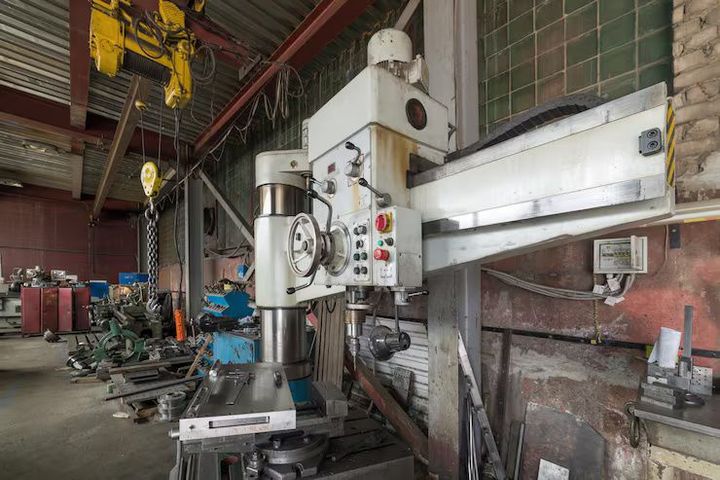
Turret Milling Machines Guide: Types, Working Principles & Industrial Uses
Turret milling machines are among the most widely used machine tools in modern manufacturing and precision engineering. They are designed to remove material from a workpiece by using rotating cutting tools, allowing manufacturers to produce accurate shapes, slots, holes, and complex surfaces. Their flexible design enables the cutting head to move in multiple directions, making them suitable for a wide range of machining operations.
The concept of milling has evolved significantly over the last century. Early milling equipment focused mainly on basic material removal, while modern turret milling machines combine precision, efficiency, and versatility. Today, they are commonly found in industries such as automotive manufacturing, aerospace engineering, metal fabrication, educational workshops, tool rooms, and maintenance facilities.
A turret milling machine differs from other milling machines because its spindle remains stationary while the table moves in different directions. This design allows operators to machine components with greater flexibility and precision. Whether producing prototypes, repair parts, or complex industrial components, turret milling machines continue to play an important role in manufacturing environments.
As industries increasingly demand precision machining, improved productivity, and consistent quality, turret milling machines remain an essential solution for both traditional and advanced manufacturing processes.
Importance
Turret milling machines have become essential because industries require precise machining of metal, plastic, composite, and other engineering materials. They provide reliable performance for manufacturing parts with tight dimensional tolerances and high-quality surface finishes.
Their importance extends across numerous industrial sectors, including:
- Automotive component manufacturing
- Aerospace engineering
- Tool and die production
- Industrial machinery manufacturing
- Medical equipment manufacturing
- Educational institutions and technical training centers
- Research and development laboratories
- Maintenance and repair workshops
One of the major advantages of turret milling machines is their versatility. A single machine can perform drilling, slotting, boring, facing, contouring, and precision milling without requiring multiple specialized machines.
Common Problems They Help Address
- Improving machining accuracy
- Reducing material waste
- Producing complex component geometries
- Supporting small-batch and prototype production
- Enhancing manufacturing efficiency
- Achieving consistent product quality
- Increasing flexibility during machining operations
Their ability to perform multiple machining operations makes them valuable for manufacturers seeking efficient production processes while maintaining high precision.
Types of Turret Milling Machines
Different turret milling machines are designed to meet various industrial requirements.
| Type | Primary Characteristics | Common Applications |
|---|---|---|
| Vertical Turret Milling Machine | Vertical spindle orientation | Precision machining and general manufacturing |
| Horizontal Turret Milling Machine | Horizontal spindle design | Heavy-duty cutting operations |
| Manual Turret Milling Machine | Operator-controlled machining | Training, repair work, prototype development |
| Digital Readout (DRO) Milling Machine | Electronic measurement display | Precision engineering applications |
| CNC Turret Milling Machine | Computer-controlled operations | Automated manufacturing and complex components |
Each type offers unique advantages depending on production requirements, material type, and machining complexity.
Working Principles
Turret milling machines operate by rotating a cutting tool while moving the workpiece along different axes. Material is gradually removed through controlled cutting movements until the desired shape or dimensions are achieved.
The basic working process includes:
- Securing the workpiece on the machine table
- Selecting the appropriate cutting tool
- Setting spindle speed and feed rate
- Moving the workpiece along the X, Y, and Z axes
- Removing material through controlled cutting
- Measuring dimensions to ensure machining accuracy
- Performing finishing operations where required
Because the spindle head can rotate and adjust to different angles, operators can machine various component features without repositioning the workpiece repeatedly.
Industrial Uses
Turret milling machines support a wide variety of manufacturing operations.
Automotive Industry
They produce engine parts, transmission components, brackets, housings, and precision mechanical parts that require accurate machining.
Aerospace Manufacturing
Aircraft components demand strict dimensional accuracy. Turret milling machines help manufacture structural components, fixtures, and precision assemblies.
Tool and Die Manufacturing
They are widely used for creating molds, dies, punches, fixtures, and custom tooling.
Metal Fabrication
Industrial workshops use turret milling machines for shaping metal plates, producing slots, drilling holes, and machining custom components.
Educational Institutions
Engineering colleges and technical institutes use turret milling machines to teach machining fundamentals and practical manufacturing techniques.
Maintenance Workshops
Repair facilities rely on turret milling machines for restoring worn machine components and fabricating replacement parts.
Recent Updates
The past year has seen continued improvements in milling machine technology as manufacturers focus on greater efficiency, digital monitoring, and sustainability.
Digital Manufacturing Trends (2025–2026)
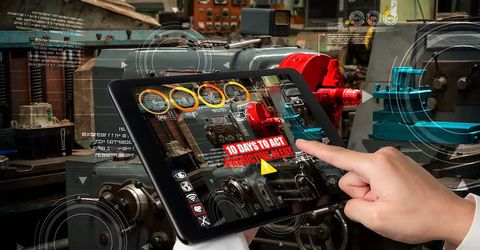
Manufacturers increasingly integrate digital monitoring systems to improve machining accuracy and reduce production downtime.
Improved Automation
Many modern turret milling machines now support advanced positioning systems, automatic lubrication, and enhanced control interfaces that improve operational consistency.
Energy-Efficient Designs
Newer machine designs emphasize reduced power consumption while maintaining machining performance, supporting broader industrial sustainability goals.
Predictive Maintenance
Industrial facilities increasingly use machine condition monitoring to identify maintenance requirements before equipment failures occur, improving operational reliability.
Smart Factory Integration
Turret milling machines are becoming part of connected manufacturing environments where production data supports better planning, quality control, and process optimization.
These developments reflect the growing adoption of Industry 4.0 principles across manufacturing sectors.
Laws or Policies
The use of turret milling machines is influenced by workplace safety regulations, machinery standards, and manufacturing quality frameworks. While requirements differ by country, several common principles apply.
Workplace Safety Regulations
Industrial facilities are generally required to:
- Provide operator safety training
- Maintain machine guarding systems
- Follow safe operating procedures
- Use appropriate personal protective equipment
- Conduct regular equipment inspections
Machine Safety Standards
Manufacturing equipment typically follows internationally recognized safety standards covering machine design, emergency stop systems, electrical protection, and operational safety.
Environmental Regulations
Many countries encourage manufacturers to:
- Reduce industrial waste
- Improve energy efficiency
- Properly manage metal chips and coolant fluids
- Minimize environmental impact during production
Quality Management Frameworks
Manufacturers often implement quality management systems that support:
- Process consistency
- Equipment maintenance
- Product traceability
- Continuous improvement
- Documentation of manufacturing procedures
Following applicable regulations helps improve workplace safety, operational reliability, and product quality.
Tools and Resources
Several general resources can help operators, engineers, and students better understand turret milling machines and machining processes.
| Resource Type | Purpose |
|---|---|
| CNC simulation software | Practice machining operations virtually |
| Feed and speed calculators | Estimate cutting parameters |
| Technical drawing templates | Interpret engineering designs |
| CAD learning materials | Understand component design |
| Manufacturing handbooks | Learn machining principles |
| Machine maintenance checklists | Support preventive maintenance |
| Safety inspection templates | Improve workplace safety practices |
| Engineering unit converters | Assist machining calculations |
These resources improve learning, planning, and operational efficiency without replacing practical experience.
Frequently Asked Questions
What is a turret milling machine?
A turret milling machine is a machine tool used to remove material from a workpiece using rotating cutting tools. Its movable table and adjustable spindle head allow precise machining of different component shapes.
What materials can be machined using a turret milling machine?
Depending on tooling and machine specifications, turret milling machines can machine steel, aluminum, brass, copper, cast iron, plastics, composites, and various engineering materials.
What is the difference between a turret milling machine and a bed milling machine?
A turret milling machine typically has a stationary spindle with a movable table, offering greater flexibility for smaller and more detailed machining tasks. Bed milling machines usually feature a fixed table with a moving spindle, making them suitable for heavier machining operations.
Which industries commonly use turret milling machines?
Automotive, aerospace, industrial manufacturing, tool making, educational institutions, repair workshops, medical equipment manufacturing, and metal fabrication industries frequently use turret milling machines.
Why are turret milling machines important in manufacturing?
They provide accurate machining, versatility, efficient material removal, and the ability to manufacture complex components while maintaining consistent quality across various production applications.
Conclusion
Turret milling machines continue to be one of the most versatile and reliable machine tools used in modern manufacturing. Their ability to perform multiple machining operations with high precision makes them valuable across industries ranging from automotive and aerospace to education and maintenance.