Understanding Modern Car Safety Technology: Systems, Features and How They Work
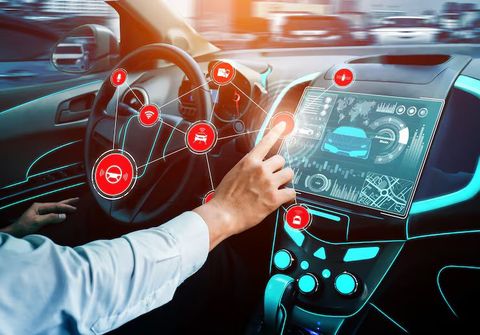
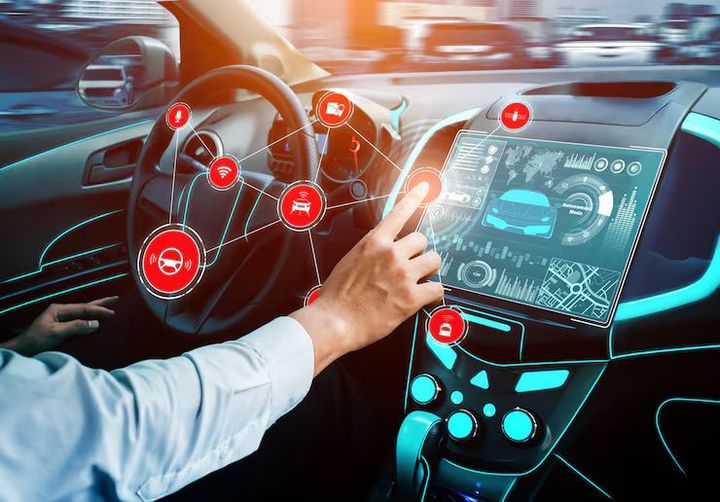
Modern car safety technology combines sensors, cameras, radar, computers, and mechanical systems. These technologies help protect drivers, passengers, pedestrians, and other road users.
Vehicle safety has evolved beyond seat belts and airbags. Modern vehicles can monitor surrounding traffic and identify potential hazards. Some systems can also provide warnings or automatically assist the driver.
Quick Answer: What Is Modern Car Safety Technology?
- Modern car safety technology helps prevent crashes and reduce injury risks.
- Active safety systems help drivers avoid dangerous situations.
- Passive safety systems protect occupants during a collision.
- Cameras, radar, and ultrasonic sensors monitor vehicle surroundings.
- Advanced Driver Assistance Systems (ADAS) provide automated safety functions.
- Automatic emergency braking can respond to certain collision risks.
- Driver monitoring systems can identify signs of distraction or inattention.
- Safety technologies support drivers rather than replacing attentive driving.
What Is Modern Car Safety Technology?
Modern car safety technology includes systems designed to prevent accidents or reduce their consequences.
These technologies generally fall into two categories:
- Active safety technology
- Passive safety technology
Active systems operate before or during dangerous driving situations. Passive systems primarily protect occupants when a collision occurs.
Many modern vehicles combine both approaches.
How Does Modern Car Safety Technology Work?
Modern safety systems continuously collect information from the vehicle and its surroundings.
Electronic control units analyze this information. They can then warn the driver or activate specific vehicle functions.
A typical safety process includes:
- Sensors monitor surrounding conditions.
- Computers process sensor information.
- Algorithms identify potential hazards.
- Warning systems alert the driver.
- Certain systems automatically provide assistance.
Response capabilities depend on the vehicle and system design.
What Are Active Car Safety Systems?
Active safety systems aim to reduce the likelihood of collisions.
They monitor driving conditions and help drivers maintain vehicle control.
Common technologies include:
- Anti-lock braking systems
- Electronic stability control
- Traction control
- Automatic emergency braking
- Lane departure warning
- Lane keeping assistance
- Blind spot monitoring
- Forward collision warning
These technologies address different driving risks.
What Are Passive Car Safety Systems?
Passive safety systems become especially important during collisions.
Their purpose is to reduce forces acting on vehicle occupants.
Important examples include:
- Seat belts
- Airbags
- Head restraints
- Crumple zones
- Reinforced passenger compartments
- Side-impact structures
- Energy-absorbing interior materials
Vehicle structure plays a major role in passive safety.
What Are Advanced Driver Assistance Systems?
Advanced Driver Assistance Systems, commonly called ADAS, use electronic technologies to support driving tasks.
ADAS can interpret information from multiple sensors.
Common ADAS features include:
- Forward collision warning
- Automatic emergency braking
- Adaptive cruise control
- Lane departure warning
- Lane keeping assistance
- Blind spot monitoring
- Rear cross-traffic alerts
- Traffic sign recognition
- Parking assistance
Different vehicles provide different combinations of these features.
How Does Automatic Emergency Braking Work?
Automatic Emergency Braking (AEB) monitors the road ahead for potential collisions.
The system may use cameras, radar, or both.
When a collision risk is detected, the system may first warn the driver. Braking assistance can activate when necessary.
AEB performance can vary with:
- Vehicle speed
- Road conditions
- Sensor visibility
- Object type
- Weather
- System configuration
Drivers should remain prepared to brake manually.
How Does Forward Collision Warning Work?
Forward Collision Warning (FCW) monitors vehicles or obstacles ahead.
The system estimates whether the vehicle is approaching another object dangerously.
Warnings may include:
- Dashboard indicators
- Audible alerts
- Steering wheel vibration
- Head-up display notifications
FCW primarily provides warnings rather than taking complete control.
How Does Lane Departure Warning Work?
Lane departure systems use cameras to identify road markings.
A Lane Departure Warning (LDW) system alerts drivers when the vehicle unintentionally leaves its lane.
Warnings can include:
- Audible alerts
- Dashboard indicators
- Steering vibration
- Seat vibration
Performance may decrease when road markings are unclear.
What Is Lane Keeping Assistance?
Lane Keeping Assistance (LKA) goes beyond simple lane departure warnings.
It can apply limited steering input when the vehicle approaches lane boundaries unintentionally.
The driver remains responsible for steering and road awareness.
How Does Blind Spot Monitoring Work?
Blind spot monitoring detects vehicles in areas difficult to see through mirrors.
Radar sensors commonly monitor the sides and rear of the vehicle.
The system may display an indicator near the side mirror. Additional warnings may appear when the driver activates a turn signal.
What Is Rear Cross-Traffic Alert?
Rear cross-traffic systems monitor approaching vehicles during reversing.
They are particularly useful when visibility is restricted by nearby vehicles or objects.
The system may provide visual and audible warnings.
Some vehicles can also apply braking assistance.
How Does Adaptive Cruise Control Improve Driving Safety?
Adaptive Cruise Control (ACC) automatically adjusts vehicle speed.
It uses sensors to monitor traffic ahead.
The system can reduce acceleration when approaching slower traffic. It may increase speed again when sufficient space becomes available.
Drivers must still monitor traffic conditions.
How Do Anti-Lock Braking Systems Work?
An Anti-lock Braking System (ABS) helps prevent wheel lock during heavy braking.
Wheel-speed sensors continuously monitor individual wheels.
When locking is detected, ABS rapidly adjusts brake pressure.
This helps drivers maintain steering control during emergency braking.
What Is Electronic Stability Control?
Electronic Stability Control (ESC) helps maintain vehicle stability.
The system monitors factors such as:
- Steering direction
- Wheel speed
- Vehicle rotation
- Lateral movement
ESC can selectively apply braking to individual wheels.
It may also adjust engine output.
How Does Traction Control Work?
Traction control helps prevent excessive wheel spin.
Wheel-speed sensors detect differences between driven wheels.
The system may reduce engine output or apply braking to improve traction.
It can be useful on slippery surfaces.
How Do Airbags Protect Vehicle Occupants?
Airbags provide additional protection during certain collisions.
Crash sensors detect rapid changes in vehicle movement.
The system determines whether airbag deployment is required.
Modern vehicles may include:
- Front airbags
- Side airbags
- Curtain airbags
- Knee airbags
- Center airbags
Airbags work together with seat belts.
Why Are Seat Belts Still Essential?
Seat belts remain a fundamental vehicle safety technology.
They restrain occupants during sudden deceleration.
Modern seat belt systems can include:
- Pretensioners
- Load limiters
- Adjustable anchor points
- Seat belt reminders
Seat belts and airbags are designed to work together.
How Do Crumple Zones Improve Crash Protection?
Crumple zones are structural areas designed to deform during collisions.
Controlled deformation absorbs part of the crash energy.
This helps reduce forces transferred toward the passenger compartment.
Vehicle engineers carefully design deformation patterns through structural testing.
How Do Cameras Improve Car Safety?
Cameras provide visual information about the vehicle's surroundings.
They can support:
- Lane detection
- Traffic sign recognition
- Pedestrian detection
- Parking assistance
- Driver monitoring
- Surround-view systems
- Collision warning
Some vehicles use several cameras simultaneously.
How Does Automotive Radar Work?
Radar sends electromagnetic signals toward surrounding objects.
Reflected signals provide information about distance and relative movement.
Radar supports functions such as:
- Adaptive cruise control
- Collision warning
- Blind spot detection
- Automatic braking
- Rear cross-traffic monitoring
Radar can complement camera-based detection.
What Are Ultrasonic Sensors Used For?
Ultrasonic sensors measure nearby objects using sound waves.
They are commonly positioned around vehicle bumpers.
Typical applications include:
- Parking assistance
- Low-speed obstacle detection
- Parking distance measurement
Their effective range is generally shorter than automotive radar.
What Is Driver Monitoring Technology?
Driver Monitoring Systems (DMS) evaluate driver attention.
Many systems use an interior camera.
They may analyze:
- Eye position
- Head movement
- Gaze direction
- Driver engagement
The system can provide warnings when attention appears reduced.
How Can Cars Detect Pedestrians and Cyclists?
Modern vehicles can combine cameras, radar, and computer vision.
Algorithms analyze sensor information to identify vulnerable road users.
Detection systems may recognize:
- Pedestrians
- Cyclists
- Motorcyclists
- Other vehicles
Some systems can activate collision warnings or emergency braking.
What Is a Surround-View Camera System?
A surround-view system combines images from multiple cameras.
Processing creates a composite view around the vehicle.
This technology can help drivers identify:
- Curbs
- Nearby vehicles
- Parking boundaries
- Low obstacles
- Restricted spaces
It primarily supports low-speed maneuvering.
How Does Vehicle-to-Everything Communication Improve Safety?
Vehicle-to-Everything (V2X) communication allows vehicles to exchange safety-related information.
The broader concept can include:
- Vehicle-to-vehicle communication
- Vehicle-to-infrastructure communication
- Vehicle-to-pedestrian communication
- Vehicle-to-network communication
V2X could provide earlier awareness of hazards beyond direct sensor visibility.
How Is Artificial Intelligence Used in Vehicle Safety?
Artificial intelligence can help interpret complex sensor information.
Modern safety systems use computational models for:
- Object classification
- Lane recognition
- Driver monitoring
- Traffic sign recognition
- Collision risk assessment
- Sensor data interpretation
These systems depend heavily on reliable sensor inputs.
What Can Affect Car Safety Sensor Performance?
Sensors have operational limitations.
Performance can be affected by:
- Heavy rain
- Snow
- Fog
- Dirt
- Ice
- Direct sunlight
- Damaged sensors
- Covered cameras
- Poor road markings
Drivers should understand the limitations described for their vehicle.
Why Is Sensor Calibration Important?
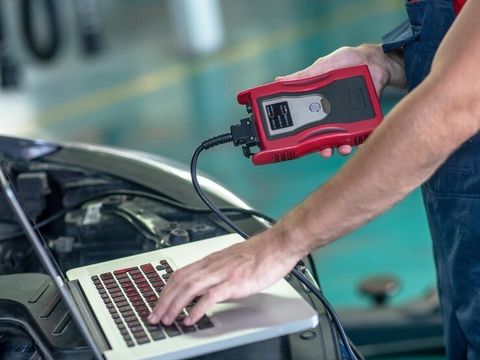
ADAS technologies depend on accurate sensor alignment.
Calibration may become necessary after certain vehicle changes or repairs.
Examples can include:
- Windshield replacement
- Camera replacement
- Collision repair
- Suspension changes
- Sensor replacement
Incorrect alignment can affect system performance.
Can Modern Safety Technology Prevent Every Accident?
No safety technology can eliminate every collision.
Road conditions, weather, vehicle speed, system limitations, and human behavior remain important factors.
Modern safety features should be viewed as driver assistance technologies. Drivers remain responsible for monitoring the road and controlling the vehicle.
What Is the Future of Modern Car Safety Technology?
Vehicle safety continues to evolve through greater sensor integration.
Important developments include:
- Advanced sensor fusion
- Improved driver monitoring
- Enhanced pedestrian detection
- Vehicle-to-everything communication
- Predictive collision analysis
- Intelligent lighting systems
- More advanced emergency braking
- Connected safety alerts
- Improved occupant monitoring
- Automated emergency assistance
Future systems are expected to combine more information from multiple sources.
Frequently Asked Questions
What is the main purpose of modern car safety technology?
Its purpose is to prevent collisions and reduce injuries when accidents occur.
What does ADAS mean?
ADAS means Advanced Driver Assistance Systems. These technologies support drivers with warnings and automated assistance.
Can automatic emergency braking prevent collisions?
It can reduce certain collision risks. Its effectiveness depends on driving and environmental conditions.
Does lane keeping assistance control the vehicle completely?
No. It provides limited steering assistance. The driver remains responsible for vehicle control.
Why do modern cars use cameras and radar together?
Each sensor provides different information. Combining sensors can improve environmental awareness.
Do safety sensors require maintenance?
Sensors should remain clean, correctly positioned, and properly calibrated.
Key Takeaways
Modern Car Safety Technology Summary
- Modern car safety technology combines active and passive protection systems.
- ADAS helps drivers recognize and respond to road hazards.
- Automatic emergency braking can respond to certain collision risks.
- Lane assistance helps monitor vehicle position.
- Blind spot systems monitor difficult-to-see areas.
- ABS and stability control help maintain vehicle control.
- Airbags and structural systems provide collision protection.
- Cameras, radar, and ultrasonic sensors monitor vehicle surroundings.
- Driver monitoring technology supports attention awareness.
- Sensor calibration is important for reliable ADAS operation.
- Safety technologies assist drivers rather than replacing attentive driving.