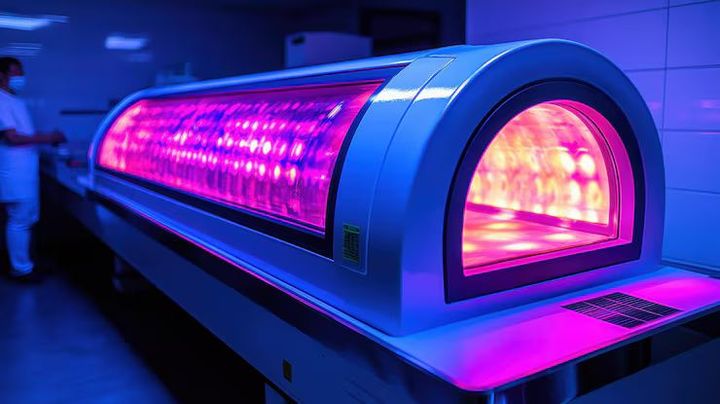
UV Curing System Guide: Explore Types, Components, Applications, Benefits, and Selection Factors
A UV curing system is equipment that uses ultraviolet light to harden or cure specially formulated materials such as inks, coatings, adhesives, and resins. A UV curing system guide helps explain how ultraviolet energy interacts with these materials, the main equipment types, important components, common applications, and factors that influence system selection.
UV curing is based on photochemical reactions. A formulation contains substances called photoinitiators that respond to specific wavelengths of UV light. When sufficient UV energy reaches the formulation, these photoinitiators initiate a chemical reaction that changes the material from a liquid or soft state into a more solid and stable form.
UV curing technology is used in printing, electronics, optical products, industrial coatings, wood finishing, adhesives, packaging, and other manufacturing processes. Systems may use traditional arc lamps or ultraviolet light-emitting diodes (UV LEDs), depending on the application.
How UV Curing Differs From Conventional Drying
Conventional drying often depends on evaporation, heat, air movement, or a combination of these processes. UV curing is different because ultraviolet energy initiates a chemical reaction within a specially formulated material.
This distinction can allow curing to take place without relying primarily on evaporation. The actual curing behavior depends on the formulation, wavelength, irradiance, exposure time, material thickness, and surface characteristics.
Basic UV Curing Process
A typical process involves several stages:
- The UV-curable material is applied to a substrate or placed between components.
- A UV source produces radiation within a specified wavelength range.
- Photoinitiators absorb suitable UV energy.
- A chemical reaction begins within the formulation.
- The material progressively forms a cured structure.
- The finished surface or bonded area is inspected according to the application requirements.
The process is influenced by the relationship between UV wavelength and the formulation's photoinitiator system. A wavelength that does not adequately interact with the formulation may result in incomplete curing.
Importance
UV curing systems are important because many industrial processes require controlled hardening of coatings, inks, adhesives, and resins. Surface quality, bonding strength, chemical resistance, appearance, and dimensional stability can all depend on how effectively a formulation cures.
The technology also matters for applications where conventional thermal processes could expose sensitive materials to excessive heat. UV LED systems, in particular, can provide a concentrated wavelength range and can be designed with thermal management for processes involving heat-sensitive substrates.
Major Applications
UV curing systems are used across several industries:
- Printing and packaging for curing inks and protective coatings
- Electronics for bonding, encapsulation, and conformal coatings
- Wood processing for surface coatings and finishing
- Optical manufacturing for selected adhesives and coatings
- Automotive manufacturing for coatings, adhesives, and component assembly
- Fiber optics for curing specialized protective coatings
- Industrial manufacturing for paints, coatings, sealants, and bonding materials
- Product assembly for UV-curable adhesives used with suitable substrates
The appropriate system depends heavily on the chemistry and geometry of the application.
Benefits of UV Curing
UV curing can provide several process advantages when the formulation and equipment are properly matched. These include rapid chemical curing, controlled exposure, reduced dependence on long thermal cycles, and compatibility with certain heat-sensitive substrates.
UV LED systems can also provide instant switching and concentrated spectral output. Compared with some conventional lamp technologies, LEDs can generate less unwanted heat at the curing surface and can have long operational lifetimes under appropriate thermal conditions.
Another benefit is process control. UV irradiance, exposure duration, wavelength, and energy density can be measured and controlled as separate factors, helping operators understand the conditions under which a formulation cures.
Recent Updates
From 2024 through 2026, UV curing technology has continued to move toward LED-based systems, improved optical design, better thermal management, and greater process monitoring. UV LED systems are being developed for applications that require controlled wavelength output, uniform exposure, and integration with automated manufacturing equipment.
Recent technical discussions emphasize that UV LED curing cannot be evaluated using a single parameter. Spectral output, peak irradiance, energy density, system reliability, thermal management, and compatibility between the LED wavelength and the formulation all influence curing performance.
Growth of UV LED Systems
UV LEDs produce light within relatively narrow wavelength ranges compared with many traditional lamp sources. This can make wavelength matching particularly important because photoinitiators must absorb the appropriate UV energy.
LED systems can also be switched on and off rapidly, which can simplify process control. Their thermal characteristics differ from traditional lamps, so equipment design must still account for heat generated by the LEDs and their electronics.
Improved Cooling and Monitoring
Modern systems increasingly incorporate air or liquid cooling, optical control, irradiance monitoring, and electronic process controls. In 2025, new UV LED curing equipment was introduced for high-speed wood-coating applications with integrated cooling and attention to UV dose and uniformity.
This development reflects a broader trend toward matching the UV source, optical system, cooling arrangement, and formulation as one integrated process rather than treating the light source as an isolated component.
Greater Process Measurement
UV dose is generally related to irradiance and exposure duration. Modern systems may therefore include radiometers, sensors, displays, or digital monitoring tools that help verify whether the intended exposure conditions are being maintained.
Measurement becomes particularly important when curing uniformity affects the final characteristics of a coating, adhesive, or printed layer.
Laws or Policies
In India, the use of UV curing equipment in industrial workplaces is influenced by occupational safety requirements, electrical safety considerations, machinery safeguards, and applicable environmental or workplace regulations. The exact requirements depend on the workplace, equipment, formulation, and industrial activity.
The Ministry of Labour and Employment maintains information on India's occupational safety framework, including the Occupational Safety, Health and Working Conditions Code, 2020 and associated Central Rules. Its current resources also contain 2026 material relating to occupational safety and working conditions.
UV radiation can present hazards to the eyes and skin, so equipment should be designed or operated to prevent unnecessary exposure. Enclosures, interlocks, shielding, warning indicators, and appropriate personal protective equipment may be relevant depending on the system design and workplace assessment.
The Ministry of Labour and Employment also identifies industrial safety and health regulations among the areas handled by its relevant division. Historically, factory safety requirements have also involved rules framed by individual state governments.
BIS documents also contain technical requirements concerning UV radiation and UV-emitting equipment in specific applications. For example, BIS technical documentation includes requirements relating to UV radiation, lamp control equipment, electrical protection, and safety devices for certain lighting equipment.
These references do not mean that one rule applies to every UV curing installation. The applicable requirements should be determined from the specific machine, workplace, electrical configuration, formulation, and industrial process.
Tools and Resources
Several technical resources can help readers understand UV curing systems and evaluate process conditions.
UV Radiometers
A UV radiometer measures UV irradiance and can help determine whether a curing system is producing the intended radiation level. Regular measurements can identify changes caused by aging lamps, contamination, optical degradation, or LED performance changes.
Spectroradiometers
A spectroradiometer measures the spectral distribution of a light source. This can be useful when determining whether the emitted wavelength range corresponds with the absorption characteristics of the formulation.
UV Dose Calculations
UV dose can generally be expressed as the product of irradiance and exposure time:
UV Dose = Irradiance × Exposure Time
For example, if irradiance is expressed in milliwatts per square centimeter and exposure time is expressed in seconds, the resulting dose can be expressed in millijoules per square centimeter.
This calculation is useful for understanding exposure conditions, although actual curing also depends on formulation chemistry, wavelength, optical geometry, material thickness, and other process variables.
Equipment Manuals and Technical Data Sheets
Machine manuals provide information about operating limits, electrical requirements, cooling arrangements, maintenance, safety controls, and installation conditions. Formulation technical data sheets can provide information about recommended wavelength ranges, exposure conditions, substrate compatibility, and curing characteristics.
BIS and Government Resources
BIS resources can help readers identify applicable Indian Standards and technical documents. BIS also publishes documents involving UV testing equipment and UV-related measurement requirements, including specifications for UV solar simulation and irradiance measurement.
Selection Factors
Choosing a UV curing system involves more than comparing the light source alone. The system needs to match the formulation, substrate, production process, and required curing conditions.
Wavelength
Wavelength is one of the most important factors. Common UV LED systems are designed around specific wavelength bands, while traditional lamps can produce broader spectral output.
The selected wavelength should correspond with the absorption range of the photoinitiator used in the formulation. A mismatch can result in incomplete or uneven curing.
Irradiance and UV Dose
Irradiance describes the intensity of UV radiation reaching the surface, while UV dose represents the accumulated energy delivered over a period of exposure. Both measurements can affect the curing process.
A system with high irradiance is not automatically appropriate for every formulation. The exposure must correspond to the chemistry, substrate, thickness, and process speed.
Working Distance and Coverage
The distance between the UV source and workpiece affects the amount and distribution of UV energy reaching the surface. Optical design also determines how evenly the curing area is illuminated.
For large surfaces, uniformity becomes particularly important because variations in exposure can produce differences in the cured material.
Cooling Requirements
UV curing equipment generates heat, including heat associated with the UV source and its electronic components. Cooling may involve fans, heat sinks, air circulation, or liquid systems.
The required cooling method depends on the source power, operating environment, duty cycle, equipment design, and substrate sensitivity.
Lamp or LED Technology
Traditional mercury-based and other arc-lamp systems can provide broad-spectrum UV output. UV LED systems generally provide narrower spectral output and rapid electronic switching.
The appropriate technology depends on formulation compatibility, process speed, exposure geometry, maintenance requirements, thermal conditions, and production needs.
| Selection factor | Why it matters |
|---|---|
| Wavelength | Determines compatibility with photoinitiator absorption |
| Irradiance | Indicates UV intensity reaching the curing surface |
| UV dose | Represents accumulated UV energy |
| Exposure time | Influences the amount of delivered energy |
| Coverage | Determines the area receiving UV radiation |
| Cooling | Controls heat generated during operation |
| Formulation | Determines curing response and wavelength requirements |
| Substrate | Influences heat sensitivity and UV transmission |
| Automation | Determines how the curing process integrates with production |
| Monitoring | Helps verify exposure and process consistency |
FAQs
What is a UV curing system?
A UV curing system uses ultraviolet radiation to initiate a chemical reaction that hardens specially formulated inks, coatings, adhesives, or resins. The system generally consists of a UV source, optical components, controls, cooling equipment, and safety features.
How does a UV curing system work?
The UV source produces radiation at selected wavelengths. Photoinitiators in the UV-curable formulation absorb suitable radiation and initiate a chemical reaction that transforms the material into a cured state.
What are the main types of UV curing systems?
Common types include mercury or other arc-lamp systems, UV LED flood systems, UV LED spot-curing systems, conveyor-based systems, and specialized curing chambers. The design varies according to the material and application.
What are UV curing systems used for?
UV curing systems are used for printing inks, industrial coatings, wood coatings, adhesives, electronics, optical components, fiber optics, and other applications involving UV-reactive formulations.
What factors should be considered when selecting a UV curing system?
Important factors include wavelength, irradiance, UV dose, exposure time, curing area, working distance, formulation chemistry, substrate characteristics, cooling requirements, automation, and process monitoring.
Conclusion
A UV curing system uses ultraviolet energy to initiate chemical reactions in specially formulated inks, coatings, adhesives, and resins. Its performance depends on factors such as wavelength, irradiance, UV dose, exposure time, optical coverage, formulation chemistry, and thermal management. Recent developments have increased the use of UV LED sources, improved cooling, automated controls, and process monitoring. Applicable workplace safety requirements and technical standards should be considered according to the specific equipment and industrial environment.