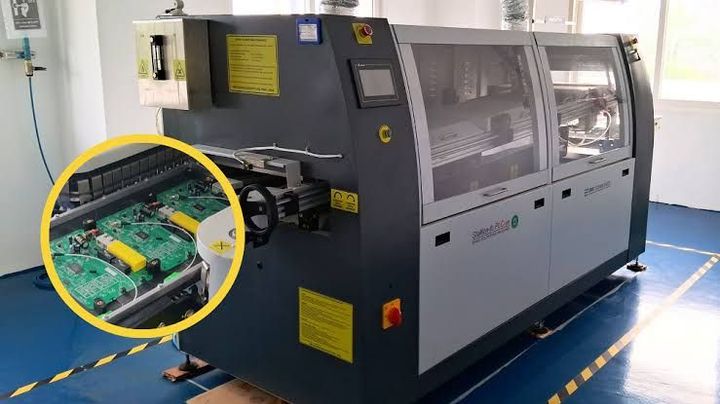
Wave Soldering Machine Overview: Important Details for Efficient PCB Assembly
Printed circuit boards (PCBs) are found in many electronic products, including household appliances, communication devices, medical equipment, and industrial systems.
One of the most common methods used to connect electronic components to these circuit boards is wave soldering. A wave soldering machine is designed to create consistent solder joints during large-scale PCB assembly while reducing manual work.
Modern electronics manufacturing relies on automated production methods to improve consistency and reduce production errors. As a result, the automatic wave soldering machine has become an important part of many assembly lines. Whether used as a PCB wave soldering machine for standard boards or combined with other electronic assembly equipment, these systems support efficient and repeatable manufacturing processes.
Context
Understanding Wave Soldering Technology
Wave soldering is a manufacturing process used to attach electronic components to printed circuit boards. During the process, the PCB passes over a controlled wave of molten solder. The solder bonds component leads to copper pads on the board, creating reliable electrical connections.
The process became widely used as electronic products grew more complex and production volumes increased. Instead of soldering each connection individually, manufacturers could complete many solder joints simultaneously, improving consistency and reducing production time.
How a Wave Soldering Machine Works
A typical wave soldering system follows several production stages.
| Process Stage | Purpose |
|---|---|
| Flux Application | Cleans metal surfaces and prepares them for soldering |
| Preheating | Gradually warms the PCB to reduce thermal stress |
| Wave Soldering | The board passes over molten solder to form joints |
| Cooling | Allows solder joints to solidify properly |
| Inspection | Checks solder quality and identifies defects |
Most electronics manufacturing machinery includes sensors and automated controls that help maintain stable temperatures and conveyor speeds throughout the process.
Types of Wave Soldering Equipment
Several types of equipment are commonly used depending on production requirements.
- Automatic wave soldering machine for continuous production.
- Selective wave soldering machine for soldering only specific parts of a PCB.
- PCB wave soldering machine designed for through-hole electronic components.
- Integrated soldering automation systems combined with inspection equipment.
- Industrial wave soldering equipment used in larger manufacturing environments.
Each type supports different production goals while maintaining consistent solder quality.
Importance
Supporting Modern PCB Manufacturing
Electronic products continue to become smaller, faster, and more capable. Reliable solder joints are essential because poor connections can affect the performance and lifespan of electronic devices.
A soldering machine for PCB production helps maintain consistent solder quality across many circuit boards while reducing variations that may occur during manual assembly.
Improving Production Consistency
Automation allows manufacturers to control important process variables, including:
- Conveyor speed
- Solder temperature
- Flux application
- Preheating duration
- Cooling conditions
Careful control of these factors helps reduce defects such as solder bridges, insufficient solder, and cold joints.
Role in Electronic Manufacturing
Wave soldering remains widely used for through-hole components even as surface-mount technology continues to grow. Many production facilities combine both manufacturing methods to assemble complete electronic products.
Electronic manufacturing services frequently use automated soldering systems when producing circuit boards for industries such as:
- Consumer electronics
- Automotive electronics
- Industrial automation
- Telecommunications
- Medical technology
- Energy systems
Supporting Large-Scale Production
Industrial wave soldering equipment enables manufacturers to process many PCBs with repeatable quality. Automated handling systems also reduce direct contact with heated materials, improving overall workplace safety.
Because modern production often includes thousands of circuit boards, consistent solder quality remains an important part of reliable electronics manufacturing machinery.
Recent Updates
Greater Automation
Recent developments have focused on expanding automation throughout PCB production. Modern wave soldering systems increasingly include programmable controls that automatically adjust operating conditions based on production requirements.
These systems help improve repeatability while simplifying equipment setup for different PCB designs.
Smart Manufacturing Integration
Many production facilities now connect soldering equipment with factory monitoring software.
Common features include:
- Production tracking
- Temperature monitoring
- Equipment diagnostics
- Digital process records
- Predictive maintenance alerts
These capabilities support broader smart manufacturing initiatives within electronics production.
Improved Process Monitoring
New inspection technologies can detect solder defects more quickly during manufacturing.
Some facilities combine wave soldering with:
- Automated optical inspection
- X-ray inspection
- Statistical process monitoring
- Digital production reporting
These inspection methods help identify production issues before final product assembly.
Energy Efficiency Improvements
Manufacturers of electronics manufacturing machinery continue to improve heating systems and insulation materials.
Modern equipment often focuses on:
- Better thermal control
- Reduced energy consumption
- Stable solder temperatures
- Improved heat recovery systems
These improvements support more efficient production without changing the basic wave soldering process.
Growth of Selective Soldering
As electronic assemblies become more complex, the selective wave soldering machine has gained wider use. Rather than exposing an entire PCB to molten solder, selective systems solder only specific locations.
This approach supports mixed-technology boards containing both surface-mounted and through-hole components.
Laws or Policies
Product Safety Standards
Wave soldering equipment used in electronics manufacturing generally operates within internationally recognized quality and safety standards. Organizations often follow quality management systems that define manufacturing procedures and inspection requirements.
These standards help maintain consistent production across different industries.
Environmental Regulations
Many countries regulate materials used during electronic manufacturing.
Common environmental requirements address:
- Lead usage restrictions
- Waste disposal
- Recycling of electronic materials
- Chemical handling procedures
Manufacturers often follow internationally recognized environmental guidelines when selecting solder materials and production methods.
Workplace Safety Requirements
Government workplace safety regulations typically require manufacturers to provide:
- Ventilation systems
- Protective equipment
- Temperature safety controls
- Emergency shutdown procedures
- Equipment maintenance schedules
These practices help reduce workplace risks associated with heated machinery.
Industry Compliance
Electronics manufacturers may also follow standards related to:
- Product reliability
- Process documentation
- Traceability
- Inspection procedures
- Quality verification
Specific compliance requirements depend on the country, industry sector, and intended application of the electronic product.
Tools and Resources
Various software platforms and production tools support wave soldering operations throughout the manufacturing process.
PCB Design Software
Engineers commonly use PCB design software to create circuit board layouts before manufacturing begins. These programs help optimize component placement for efficient soldering.
Process Simulation Software
Simulation tools allow engineers to evaluate production settings before manufacturing starts. Virtual testing may reduce production adjustments during initial setup.
Temperature Profiling Equipment
Temperature profiling instruments record heat distribution as PCBs move through the production process.
These tools help verify:
- Preheating performance
- Solder temperature
- Cooling conditions
- Thermal consistency
Inspection Equipment
Modern electronic assembly equipment often includes inspection systems that evaluate solder quality after assembly.
Examples include:
- Automated optical inspection systems
- X-ray inspection equipment
- Digital microscopes
- Electrical testing systems
Industry Standards and Documentation
Manufacturers frequently reference internationally recognized technical standards and process documentation when establishing soldering procedures.
Engineering documentation commonly includes:
- Process specifications
- Equipment manuals
- Maintenance schedules
- Quality inspection checklists
- Production records
These resources help maintain consistent manufacturing practices.
FAQs
What is a wave soldering machine?
A wave soldering machine is manufacturing equipment that connects electronic components to printed circuit boards by passing the board over a controlled wave of molten solder. It is commonly used for through-hole PCB assembly.
What is the difference between an automatic wave soldering machine and a selective wave soldering machine?
An automatic wave soldering machine processes an entire PCB through the solder wave, while a selective wave soldering machine applies solder only to specific areas of the circuit board where through-hole components require connections.
Where is a PCB wave soldering machine commonly used?
A PCB wave soldering machine is widely used in industries producing consumer electronics, automotive electronics, industrial control systems, communication equipment, and medical electronics.
What other electronic assembly equipment works with wave soldering systems?
Wave soldering systems are often integrated with PCB conveyors, automated optical inspection equipment, testing systems, temperature profiling instruments, and soldering automation systems within complete electronics manufacturing machinery production lines.
Why is wave soldering still important in electronic manufacturing services?
Electronic manufacturing services continue using wave soldering because many electronic products still contain through-hole components that require reliable solder joints. Automated wave soldering supports consistent assembly while maintaining repeatable manufacturing quality.
Conclusion
Wave soldering remains an important manufacturing process for assembling printed circuit boards containing through-hole electronic components. Modern wave soldering systems combine automation, process monitoring, and inspection technologies to support consistent PCB production. Advances in electronics manufacturing machinery continue to improve efficiency, process control, and integration with digital manufacturing environments. As electronic products continue to evolve, wave soldering continues to play an important role within many PCB assembly processes.