Wire Cut EDM Machines Guide: Explore Types, Components, Applications, Benefits, and Planning Factors
Wire Cut EDM machines are precision manufacturing systems that use electrical discharges to cut electrically conductive materials. Unlike conventional cutting equipment, a wire cut EDM machine does not rely on a traditional cutting blade. Instead, it uses a thin electrically conductive wire and controlled electrical sparks to remove material from a workpiece.
Wire electrical discharge machining, commonly called Wire EDM or WEDM, developed from the broader electrical discharge machining process. The technology became important for producing intricate shapes, narrow slots, small openings, and complex profiles that can be difficult to create using mechanical cutting methods.
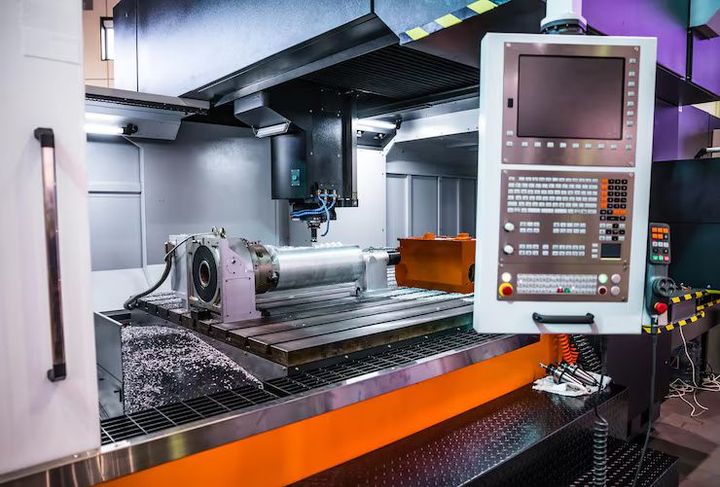
A typical wire cut EDM machine includes a worktable, wire electrode, wire-feeding mechanism, dielectric system, power supply, numerical control system, and workpiece-holding arrangement. During operation, the wire moves along a programmed path while controlled electrical discharges occur between the wire and conductive workpiece.
Basic Working Principle
The wire does not normally make direct physical contact with the workpiece. Instead, a small controlled gap is maintained between the wire and the material. Electrical pulses create sparks across this gap, generating localized heat that melts or vaporizes very small amounts of material.
A dielectric fluid, commonly deionized water in wire EDM systems, helps control the electrical discharge and flushes eroded particles away from the cutting zone. The machine continuously manages wire movement, electrical conditions, fluid flow, and the programmed cutting path.
Materials Used With Wire EDM
Wire EDM is generally intended for electrically conductive materials. Common examples include hardened steels, tool steels, carbide-based materials, titanium alloys, nickel-based alloys, copper, aluminum, and other conductive metals.
Material thickness, electrical properties, hardness, geometry, and required surface condition all influence the machining process. Non-conductive materials generally cannot be processed through conventional wire EDM because the electrical discharge requires a conductive workpiece.
Importance
Wire cut EDM machines are important in manufacturing because they can produce complex two-dimensional and three-dimensional profiles with controlled electrical erosion. They are particularly useful when conventional cutting tools could experience significant wear or when the workpiece is difficult to machine mechanically.
The technology is used in industries such as mold and die manufacturing, aerospace, automotive production, medical-device manufacturing, electronics, toolmaking, and precision engineering.
Applications of Wire Cut EDM
Typical applications include:
- Punches and dies
- Precision slots and openings
- Complex profiles
- Mold components
- Cutting hardened tool materials
- Small gears and intricate components
- Prototype components
- Aerospace and engineering parts
- Tool and fixture components
Wire EDM can also be used after heat treatment because the process does not depend on the mechanical hardness of the material in the same way as many conventional cutting tools.
Benefits of Wire EDM Machines
Wire EDM provides several characteristics that can be useful for precision machining. It can create intricate profiles without requiring a conventional rotating cutting tool, and the thin wire can follow narrow programmed paths.
Another characteristic is low mechanical cutting force. Since the wire and workpiece are separated by an electrical discharge gap, the process does not apply the same direct cutting forces associated with many conventional machining methods.
This can be useful for delicate workpieces or components where mechanical deformation needs to be controlled. However, the actual result depends on machine configuration, material, programming, flushing conditions, wire type, and operating parameters.
Recent Updates
From 2024 through 2026, wire EDM development has continued to focus on automation, machine intelligence, improved process monitoring, energy management, and greater integration with digital manufacturing workflows.
Modern systems increasingly combine numerical control with automatic wire threading, process monitoring, programmable cutting conditions, and automated machining sequences. These features can reduce manual intervention during repeated machining operations.
Automation and Automatic Wire Threading
Automatic wire threading has become an important feature in many contemporary wire EDM systems. If a wire breaks during machining, automated threading mechanisms can help reconnect the wire and resume the programmed operation.
This is particularly relevant for unattended or extended machining cycles. The exact level of automation varies among machines and configurations.
Digital Monitoring
Machine controls are increasingly designed to monitor machining conditions such as electrical discharge behavior, wire movement, cutting parameters, and flushing conditions. Monitoring can help identify process changes and support more consistent operation.
Some manufacturers are also incorporating data collection and connectivity features that allow machine information to be integrated with broader manufacturing-management systems.
Energy and Resource Considerations
Energy consumption and process efficiency have become more significant considerations in manufacturing planning. Wire EDM requires electrical power, dielectric fluid management, wire electrode consumption, filtration, and other operating resources.
Manufacturers are therefore developing systems with improved power management, fluid handling, automatic filtration, and process controls. These developments are part of the wider movement toward more resource-aware manufacturing.
Laws or Policies
In India, the operation of wire cut EDM machines is affected primarily by workplace safety requirements, electrical safety provisions, environmental rules, and applicable industrial regulations.
The Occupational Safety, Health and Working Conditions Code, 2020 provides a national framework covering occupational safety and working conditions. Depending on the implementation status and applicable rules, workplaces must consider requirements related to worker safety, machinery, workplace conditions, and employer responsibilities.
Electrical safety requirements can also apply because wire EDM machines contain electrical power systems, control equipment, pumps, and other electrically operated components. Installation and maintenance should follow applicable electrical standards and workplace procedures.
Environmental requirements may become relevant to the management of used dielectric water, filtration residues, metal particles, and other waste generated during machining. The exact requirements depend on the facility, location, waste characteristics, and applicable state and national regulations.
The Bureau of Indian Standards provides standards and technical references relevant to industrial machinery and electrical equipment. Specific requirements should be checked against the exact machine, workplace, and application rather than assumed from general information.
Tools and Resources
Several technical resources can help readers understand and plan wire EDM operations.
Machine Manuals
The machine manual provides information about operating limits, wire specifications, electrical settings, worktable capacity, dielectric requirements, maintenance procedures, alarms, and safety precautions. It is the primary reference for a particular machine model.
CAD and CAM Software
CAD software is commonly used to create the geometry of a component, while CAM software can convert that geometry into machining instructions. Wire EDM programming may include information about cutting paths, offsets, workpiece geometry, taper requirements, and cutting sequences.
Wire EDM Parameter Charts
Parameter charts provide reference information for selecting machining conditions based on factors such as material type, thickness, wire diameter, and required surface condition. These values should be treated as starting references because actual conditions depend on the machine and application.
Planning Checklist
A basic planning checklist can include:
- Workpiece material and electrical conductivity
- Material thickness
- Required profile
- Wire diameter
- Required dimensional tolerance
- Surface-finish requirements
- Taper requirements
- Number of machining passes
- Workholding method
- Dielectric-fluid condition
- Wire consumption
- Programming requirements
- Inspection method
Wire EDM Planning Factors
| Planning factor | Why it matters |
|---|---|
| Material | Determines electrical machining behavior |
| Thickness | Influences cutting conditions and flushing |
| Wire diameter | Affects achievable geometry and cutting path |
| Workpiece size | Determines table and travel requirements |
| Tolerance | Influences programming and finishing passes |
| Surface condition | Helps determine machining strategy |
| Taper | Determines required machine-axis control |
| Flushing | Supports removal of eroded particles |
| Wire quality | Can influence process stability |
| Automation | Affects operator involvement and cycle management |
FAQs
What is a wire cut EDM machine?
A wire cut EDM machine is a machining system that uses controlled electrical discharges between a thin wire electrode and an electrically conductive workpiece to remove material along a programmed path.
How does a wire cut EDM machine work?
The machine moves a continuously fed wire close to the workpiece while electrical pulses create controlled sparks across a small gap. The resulting heat removes tiny amounts of material, while dielectric fluid helps control the discharge and remove particles.
What are the main components of wire EDM machines?
Common components include the power supply, CNC control, worktable, wire electrode, wire-feeding system, upper and lower wire guides, dielectric-fluid system, filtration system, and workholding equipment.
What materials can wire EDM machines cut?
Wire EDM machines can process many electrically conductive materials, including tool steel, hardened steel, carbide, titanium alloys, nickel-based alloys, copper, and aluminum. Material properties and thickness affect the machining process.
What factors should be considered when planning wire EDM machining?
Important planning factors include material, thickness, component geometry, dimensional tolerance, surface requirements, wire diameter, taper, flushing conditions, workholding, programming, and inspection requirements.
Conclusion
Wire cut EDM machines use controlled electrical discharges to remove material from electrically conductive workpieces without conventional mechanical cutting contact. Their applications include complex profiles, molds, dies, precision components, and hardened materials. Current developments increasingly involve automation, automatic wire threading, digital monitoring, and improved process management. Proper planning requires attention to material properties, geometry, machine capacity, wire selection, dielectric conditions, tolerances, safety requirements, and applicable industrial regulations.