A Professional Guide to Asphalt Milling Machines: Advanced Techniques and Best Practices
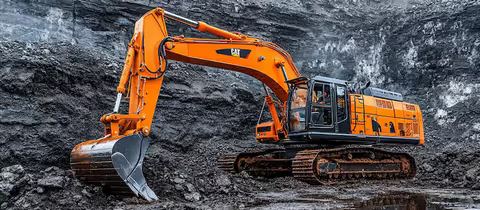
Asphalt milling machines are specialized construction equipment used to remove the top layers of asphalt pavement before resurfacing or rehabilitation.
These machines help prepare roads, highways, parking areas, airport runways, and industrial surfaces for new pavement by removing worn or damaged material while preserving the underlying structure whenever possible. Asphalt milling has become an important part of modern road maintenance because it supports smoother surfaces and efficient reuse of existing pavement materials.
The use of asphalt milling machines has expanded as transportation infrastructure ages and regular maintenance becomes more important. Instead of replacing an entire pavement structure, milling allows specific layers to be removed with precision, making road rehabilitation more systematic and reducing unnecessary material waste.
Context
What Are Asphalt Milling Machines?
Asphalt milling machines, sometimes called cold planers or pavement milling machines, are heavy construction machines designed to remove asphalt from road surfaces. A rotating drum equipped with numerous cutting teeth grinds the pavement into small pieces, which are then collected on a conveyor and transferred into transport vehicles for further processing.
Unlike complete road reconstruction, asphalt milling removes only the required depth of pavement. This allows engineers to preserve stable lower layers while preparing the surface for a new asphalt overlay.
How Asphalt Milling Developed
Road maintenance has evolved significantly over the past several decades. Earlier methods often involved removing large sections of pavement through extensive demolition. Advances in machine design introduced controlled milling techniques that remove pavement with greater accuracy.
Modern asphalt milling machines include automated depth controls, digital monitoring systems, and efficient material handling equipment. These improvements help construction teams maintain consistent milling depth across long road sections.
Main Components
Several parts work together during milling operations:
- Milling drum with carbide cutting teeth removes asphalt.
- Conveyor system transfers milled material into transport vehicles.
- Hydraulic controls adjust operating functions.
- Grade and slope control systems maintain the required milling depth.
- Dust suppression systems help reduce airborne particles.
- Operator cabin contains monitoring displays and machine controls.
Types of Asphalt Milling Machines
Different projects require different machine sizes.
| Machine Type | Typical Application | Common Working Width |
|---|---|---|
| Compact milling machine | Urban roads, sidewalks, small repairs | Up to 1 meter |
| Medium milling machine | Municipal streets and regional roads | 1–2 meters |
| Large milling machine | Highways, airports, major infrastructure | Above 2 meters |
| Micro milling machine | Surface texture improvement | Varies by project |
Importance
Why Asphalt Milling Machines Matter
Roads naturally experience wear from weather conditions, traffic loads, and environmental changes. Asphalt milling machines help remove damaged pavement while preserving suitable lower layers, making rehabilitation more efficient than complete reconstruction in many situations.
Removing only deteriorated pavement also helps maintain proper road elevations around bridges, drainage systems, and utility covers.
Applications Across Infrastructure
Asphalt milling machines are commonly used in many infrastructure projects, including:
- Highways
- Urban roads
- Rural roads
- Airport runways
- Parking facilities
- Industrial yards
- Bridge approaches
- Bicycle paths
These projects often require accurate surface preparation before new asphalt layers are installed.
Benefits of Asphalt Recycling
One important feature of asphalt milling is the recovery of reclaimed asphalt pavement (RAP). The removed material can often be processed and incorporated into new asphalt mixtures according to engineering specifications.
This approach supports efficient use of construction materials and reduces disposal requirements.
Challenges Addressed by Milling
Asphalt milling machines help manage several pavement issues, including:
- Surface cracking
- Rutting caused by repeated traffic
- Uneven pavement
- Surface polishing that reduces skid resistance
- Drainage problems resulting from worn pavement
- Height adjustments before resurfacing
By correcting these issues before resurfacing, engineers can create a more uniform foundation for the next pavement layer.
Recent Updates
Increased Automation
Recent developments have introduced more automated functions into asphalt milling machines. Digital control systems assist operators in maintaining consistent milling depth and surface profile throughout the project.
These systems reduce unnecessary adjustments during operation and improve overall precision.
Machine Guidance Technologies
Many modern machines now integrate satellite positioning, laser guidance, and three-dimensional control systems. These technologies help maintain accurate cutting depths across long roadway sections.
Digital mapping also allows project teams to compare planned and completed milling depths.
Improved Fuel Efficiency
Manufacturers continue developing engines and hydraulic systems that improve fuel efficiency while maintaining machine performance. Updated power management systems adjust engine output according to operating conditions.
This contributes to lower fuel consumption during extended milling operations.
Enhanced Dust Management
Dust suppression systems continue to improve through more effective water distribution and enclosed material transfer designs. These developments help reduce airborne particles around construction areas.
Dust management remains an important consideration for worker safety and nearby communities.
Data Collection and Machine Monitoring
Many asphalt milling machines now record operational information such as working hours, fuel usage, production rates, and maintenance intervals. Digital monitoring assists project planning and equipment management without changing the basic milling process.
Laws or Policies
Road Construction Standards
Road construction and pavement rehabilitation projects generally follow national and regional engineering standards. These standards establish acceptable milling depths, surface tolerances, and material specifications for roadway projects.
Engineering agencies publish technical guidance to support consistent construction practices.
Environmental Regulations
Construction projects involving asphalt milling must comply with environmental regulations related to dust control, noise management, waste handling, and recycled materials.
Many jurisdictions encourage the use of reclaimed asphalt pavement where engineering requirements allow.
Workplace Safety Requirements
Construction equipment operators work under occupational safety regulations that address machine operation, protective equipment, traffic management, and hazard awareness.
Safety procedures help reduce risks associated with heavy equipment operating near active roadways.
Government Infrastructure Programs
Many governments include pavement rehabilitation within transportation infrastructure programs. These initiatives support maintenance of highways, bridges, municipal roads, and public transportation corridors through planned resurfacing and rehabilitation activities.
Tools and Resources
Various tools and digital platforms support asphalt milling projects before, during, and after construction.
Surveying Equipment
Common surveying tools include:
- GPS receivers
- Total stations
- Laser leveling equipment
- Digital measuring devices
- Grade control systems
These tools assist engineers in determining pavement elevations and milling requirements.
Pavement Management Software
Infrastructure agencies commonly use pavement management software to evaluate road conditions, prioritize maintenance projects, and monitor pavement performance over time.
These platforms organize inspection records and rehabilitation planning.
Material Testing Equipment
Laboratories evaluate reclaimed asphalt pavement using specialized testing equipment that measures aggregate properties, asphalt content, moisture levels, and material consistency.
Testing supports quality evaluation before recycled material is incorporated into new pavement mixtures.
Technical References
Road authorities, transportation departments, engineering associations, and infrastructure research organizations publish technical manuals, pavement design guides, and maintenance references that explain milling methods and pavement rehabilitation practices.
FAQs
What are asphalt milling machines used for?
Asphalt milling machines remove worn or damaged asphalt layers from roads, highways, airport runways, parking facilities, and other paved surfaces before resurfacing or rehabilitation.
How do asphalt milling machines work?
A rotating drum fitted with cutting teeth grinds the asphalt surface into small pieces. A conveyor then transfers the removed material into transport vehicles while the machine maintains a controlled milling depth.
Can asphalt removed by asphalt milling machines be reused?
Yes. The removed material, commonly called reclaimed asphalt pavement, can often be processed and incorporated into new asphalt mixtures according to engineering specifications and project requirements.
What is the difference between asphalt milling and complete road reconstruction?
Asphalt milling removes selected pavement layers while preserving suitable underlying layers. Complete reconstruction involves removing and rebuilding much more of the pavement structure.
Which industries commonly use asphalt milling machines?
Construction companies, transportation agencies, airport authorities, municipal infrastructure departments, and highway maintenance organizations commonly use asphalt milling machines during pavement rehabilitation projects.
Conclusion
Asphalt milling machines play an important role in maintaining transportation infrastructure by removing damaged pavement with precision. They support road rehabilitation, pavement recycling, and efficient preparation for resurfacing projects. Advances in automation, digital controls, and machine monitoring continue to improve milling accuracy while supporting modern construction practices. As infrastructure maintenance remains an ongoing priority, asphalt milling continues to be an important process within road engineering.