Automatic Mould Handling Systems: Explore Modern Automation Trends
Automatic mould handling systems are automated technologies designed to move, position, store, transfer, and manage moulds used in manufacturing. They are commonly associated with injection molding, die casting, compression molding, plastic processing, and other industrial production environments.
A mould can be heavy, large, delicate, and difficult to position manually. Repeated movement can also introduce risks such as dropping, misalignment, equipment damage, or operator exposure to moving machinery.
Automatic mould handling addresses these challenges by combining mechanical equipment with automation technologies. Depending on the production layout, a system may include:
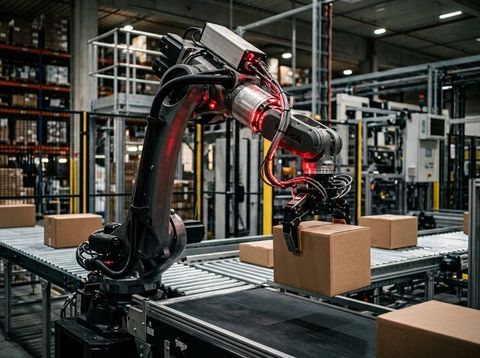
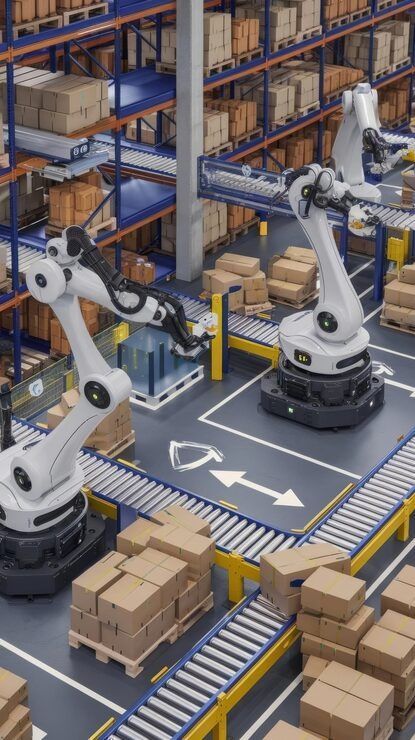
- Industrial robots and robotic arms
- Automated guided vehicles
- Motorized conveyors
- Hydraulic or electric lifting equipment
- Mould positioning units
- Sensors and machine-vision systems
- Programmable logic controllers
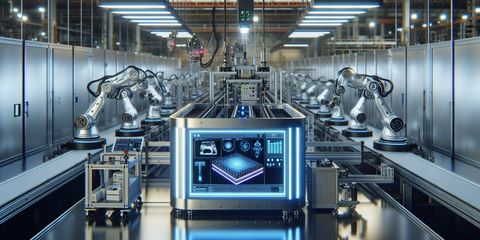
- Human-machine interfaces
- Automated storage systems
- Safety monitoring equipment
The basic idea is straightforward. Instead of relying entirely on manual movement, an automated system follows programmed instructions to transport or position moulds at specific stages of production.
This technology forms part of the wider industrial automation and smart manufacturing movement. Modern factories increasingly connect machines, sensors, controllers, and software so that production activities can be monitored and coordinated more consistently.
How an Automatic Mould Handling System Works
A typical system begins when a mould needs to be transferred from one location to another.
Sensors can detect the mould's position, while a controller receives information from the manufacturing equipment. A robotic mechanism, conveyor, lifting unit, or automated vehicle can then perform the required movement.
A simplified process can include:
- Mould identification
- Position detection
- Automated gripping or lifting
- Controlled movement
- Alignment and positioning
- Confirmation through sensors
- Transfer to the next production stage
- Data recording and monitoring
The exact configuration depends on mould dimensions, weight, production layout, machine type, and the required level of automation.
Importance: Why Mould Handling Automation Matters
Modern manufacturing environments place greater emphasis on repeatability, workplace safety, production monitoring, and efficient use of equipment. Automatic mould handling systems can contribute to these goals when correctly designed and integrated.
One important advantage is repeatable movement. Automated equipment can follow predefined movement paths and positioning instructions, reducing variation between handling cycles.
Safety is another major consideration. Large moulds may require lifting, turning, or positioning. Automation can reduce the need for people to remain directly involved in every movement, although appropriate safeguards and human oversight remain essential.
Automatic mould handling can also help manufacturers manage increasingly connected production environments. Data from sensors and controllers can be integrated into manufacturing monitoring systems to provide information about equipment activity.
The technology can affect several groups, including:
- Manufacturing engineers
- Production managers
- Automation engineers
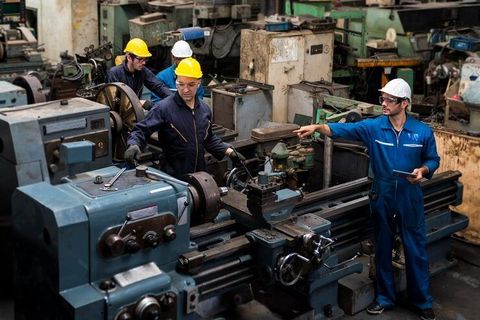
- Machine operators
- Maintenance teams
- Safety professionals
- Mould designers
- Industrial equipment planners
Problems Addressed by Automated Mould Handling
Manual mould movement can create several operational challenges. These may include inconsistent positioning, difficult lifting procedures, equipment congestion, and unnecessary handling steps.
Automation can help address these issues through:
- Controlled movement paths
- Repeatable positioning
- Automated transfer sequences
- Sensor-based detection
- Programmable handling procedures
- Production data collection
- Integration with manufacturing equipment
However, automation is not automatically safer simply because a robot or controller is involved. Risk assessment, guarding, emergency stopping, safe access, maintenance procedures, and operator training remain important parts of the overall system.
Automatic Mould Handling and Smart Manufacturing
Automatic mould handling systems are increasingly connected with Industry 4.0 technologies.
A modern setup may collect information about:
| Technology | Typical Role |
|---|---|
| Sensors | Detect position and operating conditions |
| PLC | Controls machine sequences |
| Robotics | Performs automated movement |
| Machine vision | Identifies position or orientation |
| HMI | Allows human interaction with controls |
| Industrial networks | Connects machines and controllers |
| Data platforms | Supports monitoring and analysis |
| Digital systems | Helps coordinate production information |
These technologies can create a more connected manufacturing environment in which mould movement becomes part of a broader automated production workflow.
Recent Updates: Automation Trends in 2025 and 2026
Industrial robotics and machine automation continued to develop rapidly during 2025 and into 2026. One particularly important development was the publication of updated international robot safety standards.
In February 2025, ISO published ISO 10218-1:2025, covering safety requirements for industrial robots. The updated standard replaced the earlier 2011 edition and focuses on safe robot design, risk reduction, and information for use.
At the same time, ISO 10218-2:2025 was published for industrial robot applications and robot cells. It addresses areas such as integration, commissioning, operation, maintenance, and decommissioning of robotic applications.
These developments are relevant to automatic mould handling because robotic systems frequently form part of automated material and mould movement.
Another trend is the increasing use of machine vision. Cameras and image-processing technologies can help automated equipment identify object position, orientation, and handling conditions.
Predictive maintenance is also becoming more important. Sensors can monitor factors such as vibration, temperature, motor activity, and operating cycles. This information can help maintenance teams identify unusual conditions before equipment failure becomes more disruptive.
Automation Trends to Watch
Important trends include:
- Robot-assisted mould transportation
- Machine vision for positioning
- Connected PLC and HMI systems
- Automated storage and retrieval
- Digital production monitoring
- Predictive maintenance
- Energy monitoring
- Flexible manufacturing cells
- Improved robot safety systems
- Data-driven production planning
The European Union is also preparing for a major machinery regulatory change. Regulation (EU) 2023/1230 on machinery is scheduled to apply from 20 January 2027, creating an important compliance milestone for machinery placed within its scope in the EU market.
Laws or Policies: Safety and Regulatory Considerations
Automatic mould handling equipment can fall under several different regulatory frameworks depending on its location, configuration, and intended application.
There is no single worldwide law covering every automatic mould handling system. Manufacturers and users generally need to consider machinery safety, workplace safety, electrical safety, environmental requirements, and relevant technical standards applicable to their location.
International Robot Safety Standards
ISO 10218-1:2025 focuses on industrial robots themselves, while ISO 10218-2:2025 addresses industrial robot applications and robot cells. These standards are particularly relevant when automatic mould handling uses robotic equipment.
Important safety considerations can include:
- Risk assessment
- Protective guarding
- Emergency stopping
- Safe access
- Interlocking systems
- Robot operating zones
- Maintenance procedures
- Operator information
- System validation
European Union Machinery Regulation
For machinery within its scope in the European Union, Regulation (EU) 2023/1230 is an important upcoming framework. Its general application date is 20 January 2027.
Organizations planning automated machinery for the European market should therefore consider regulatory requirements early during system design.
India: Environmental and Manufacturing Considerations
In India, manufacturing facilities may also need to consider environmental regulations depending on their activities and materials.
The Ministry of Environment, Forest and Climate Change maintains rules covering areas such as plastic waste, solid waste, hazardous waste, batteries, and electronic waste. The Plastic Waste Management Rules have undergone several amendments, including changes notified in 2024.
These rules do not specifically regulate mould handling equipment. However, they can affect manufacturing facilities that process plastics or generate regulated waste.
Therefore, compliance should be considered at the facility level as well as at the machine level.
Tools and Resources for Automatic Mould Handling Systems
Several categories of tools can help engineers and manufacturing teams understand, plan, monitor, and evaluate automatic mould handling systems.
Useful Technical Tools
- PLC programming environments
- Robot simulation software
- CAD design platforms
- Manufacturing layout tools
- Digital twin platforms
- Machine-vision development software
- Industrial network diagnostic tools
- Safety risk assessment templates
- Preventive maintenance schedules
- Equipment monitoring dashboards
Useful Calculation Areas
Engineers may need to evaluate:
- Mould weight
- Payload requirements
- Robot reach
- Centre of gravity
- Lifting capacity
- Conveyor capacity
- Cycle time
- Acceleration and deceleration
- Floor loading
- Energy consumption
- Storage capacity
A clear specification sheet can make system planning easier. It can include mould dimensions, maximum weight, handling points, required movement distance, cycle frequency, environmental conditions, and safety requirements.
FAQs About Automatic Mould Handling Systems
What is an automatic mould handling system?
It is an automated arrangement of equipment used to move, position, transfer, store, or manage moulds during manufacturing. It may use robots, conveyors, lifting equipment, sensors, PLCs, or automated vehicles.
Where are automatic mould handling systems used?
They can be used in injection molding, die casting, plastic processing, compression molding, automotive manufacturing, consumer-product manufacturing, and other industrial production environments where moulds require repeated movement.
Can robots be used for mould handling?
Yes. Industrial robots can be integrated into mould handling applications when their payload, reach, gripping method, movement speed, and safety configuration are suitable for the application.
What are the main safety considerations?
Important considerations include risk assessment, guarding, emergency stopping, safe robot zones, interlocks, maintenance procedures, appropriate lifting mechanisms, and operator training. The relevant requirements depend on the equipment and jurisdiction.
Are automatic mould handling systems part of Industry 4.0?
They can be. When handling equipment is connected to sensors, PLCs, industrial networks, production-monitoring platforms, and data systems, it can become part of a broader Industry 4.0 manufacturing environment.
Conclusion
Automatic mould handling systems are becoming an important part of modern manufacturing automation. By combining robotics, sensors, controllers, conveyors, lifting equipment, and monitoring technologies, these systems can coordinate mould movement with greater consistency.