Bio Waste Shredders Guide: Explore Types, Components, Capacity, Applications, and Safety Factors
Bio waste shredders are machines designed to cut, tear, or reduce biodegradable and biological waste into smaller pieces. Depending on their design, they can process materials such as food waste, garden waste, agricultural residues, and certain forms of treated biomedical waste. A bio waste shredders guide helps explain the machine types, components, processing capacity, applications, and safety factors involved in shredding operations.
The basic idea behind shredding is straightforward. A motor drives one or more cutting shafts fitted with blades or cutting elements, while waste passes through a feed opening and is reduced into smaller pieces. The resulting material can then be directed toward composting, anaerobic digestion, recycling-related processing, or another approved waste-management process.
Bio waste shredders are not all designed for the same materials. Organic waste from kitchens and gardens differs considerably from biomedical waste, which can contain contaminated materials and sharps. Therefore, machine design, treatment requirements, and applicable regulations must be considered according to the specific waste stream.
How Bio Waste Shredding Works
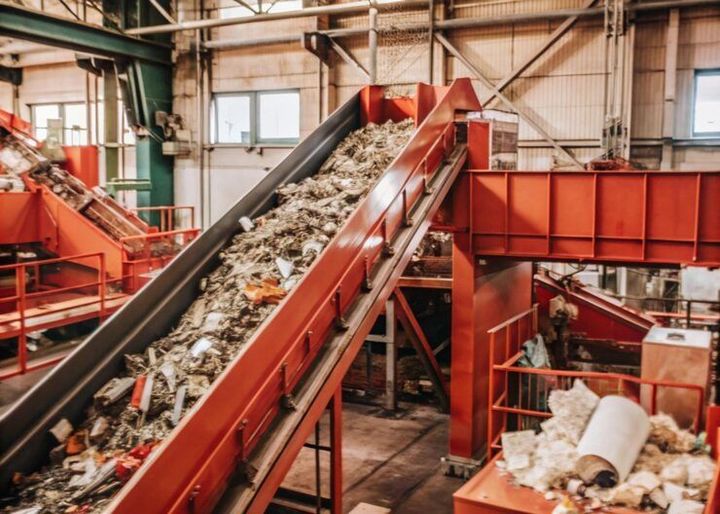
A typical shredder has a hopper where material is introduced. The waste moves toward rotating cutting components that apply tearing, shearing, or compression forces.
Some machines use two counter-rotating shafts, while others use a single shaft, rotary knives, discs, or other cutting arrangements. Screens may also be incorporated when a more controlled particle size is required.
The output size depends on blade configuration, shaft speed, screen openings, material characteristics, and the time the material remains inside the cutting chamber.
Common Waste Materials
Bio waste shredders can be designed for several organic materials, including:
- Food and kitchen waste
- Fruit and vegetable residues
- Garden and green waste
- Leaves and plant materials
- Agricultural residues
- Certain animal-processing residues
- Selected treated biomedical waste
Organic waste is generally biodegradable and can originate from household, agricultural, commercial, or industrial activities. Shredding organic material into a more consistent size can support subsequent composting or biogas processes.
Importance
Waste volume, handling requirements, and processing methods are important considerations for municipalities, institutions, farms, food-processing facilities, healthcare facilities, and other organizations that generate biological or organic waste.
Reducing the size of suitable waste can make subsequent handling more manageable and can help create a more uniform feedstock for certain biological treatment processes. For example, appropriately prepared organic material may be used as an input for composting or anaerobic digestion.
Why Size Reduction Matters
Large pieces of organic waste can take different amounts of time to break down. Shredding can create smaller and more consistent pieces, increasing the exposed surface area of suitable material.
The effect depends on the waste type and the downstream process. Shredding alone does not make unsuitable or contaminated material safe, and it does not replace required treatment methods.
Who Uses Bio Waste Shredders?
Applications can be found in several areas:
- Municipal organic-waste processing
- Food and vegetable waste processing
- Agricultural operations
- Landscaping and green-waste management
- Composting facilities
- Anaerobic digestion facilities
- Certain biomedical-waste treatment facilities
For biomedical waste, shredding is generally part of a controlled treatment process rather than an independent disposal method. CPCB guidelines describe shredding as a process that changes treated biomedical waste into smaller, unrecognizable pieces.
Types of Bio Waste Shredders
Different machine configurations are used according to material characteristics, throughput requirements, and the required output size.
Single-Shaft Shredders
A single-shaft shredder generally uses a rotating cutting rotor together with stationary counter-knives. A screen can control the approximate size of material leaving the cutting chamber.
This arrangement can be suitable for applications where controlled particle reduction is required. The exact capacity depends on the machine's rotor design, motor power, feed material, and operating conditions.
Twin-Shaft Shredders
Twin-shaft shredders use two rotating shafts that work together to pull and tear material. They can handle many types of bulky organic waste and are often associated with relatively slow-speed, high-torque operation.
The cutting action can help process irregular materials, although the machine must still be matched with the waste type and permitted feed materials.
Rotary Shredders
Rotary designs use rotating cutting elements to reduce incoming material. Their construction can vary significantly, ranging from compact equipment for limited quantities to larger systems integrated into processing lines.
Specialized Biomedical Shredders
Biomedical shredders have additional requirements because the waste may include sharps, plastics, contaminated materials, and other regulated items. CPCB guidance specifies features such as covered cutting areas, hardened and corrosion-resistant blades, automatic stopping when certain access points are opened, overload protection, and reverse movement during jams.
Components and Capacity
A bio waste shredder contains several mechanical and electrical components that work together to control feeding, cutting, discharge, and safety.
Main Components
Common components include:
- Hopper or feed chamber
- Cutting chamber
- Rotor or rotating shafts
- Blades or cutting knives
- Counter-knives
- Electric motor
- Gearbox or drive system
- Frame and support structure
- Discharge opening
- Control panel
- Safety guards
- Emergency-stop system
- Overload protection
Some systems also include screens, conveyors, dust-control arrangements, sensors, reversing mechanisms, or automatic feeding equipment.
Understanding Capacity
Shredder capacity is commonly expressed as kilograms per hour or tonnes per hour. However, a stated capacity should not be interpreted as a universal figure because actual throughput depends on material density, moisture, size, composition, blade condition, feed method, and required output size.
For biomedical waste, CPCB's revised guidelines provide examples of motor capacities associated with specific processing rates: 3 kW for 50 kg/hour, 5 kW for 100 kg/hour, and 7.5 kW for 200 kg/hour. These figures apply to the specified biomedical-waste treatment context and should not be generalized to every organic-waste shredder.
| Capacity example | Motor specification in CPCB biomedical guidance | Application context |
|---|---|---|
| 50 kg/hour | 3 kW | Biomedical waste shredding |
| 100 kg/hour | 5 kW | Biomedical waste shredding |
| 200 kg/hour | 7.5 kW | Biomedical waste shredding |
Capacity selection should therefore consider the actual waste stream rather than relying only on motor power.
Applications
Bio waste shredders are used at different stages of biological waste management. Their role is primarily mechanical size reduction, while the next processing stage depends on the material and facility.
Composting
Shredded garden and food-related organic materials can provide a more uniform feedstock for composting. Particle size influences aeration, moisture distribution, and decomposition behavior.
However, excessively fine material can restrict airflow, while very large pieces may break down more slowly. The appropriate size depends on the composting process.
Anaerobic Digestion
Organic waste can also be prepared for anaerobic digestion. A consistent particle size can support more uniform feeding and processing.
The suitability of a particular waste stream depends on contamination, moisture, composition, and the requirements of the digestion facility.
Agricultural Waste
Agricultural residues such as plant stalks, leaves, and other suitable biomass can be reduced in size before further processing. The output may be directed toward composting, digestion, biomass processing, or another permitted application.
Biomedical Waste Treatment
In biomedical applications, shredding can follow an approved disinfection or treatment process. CPCB guidelines describe shredding equipment designed for materials including treated sharps, syringes, scalpels, plastics, catheters, intravenous sets, blood bags, gloves, and bandages.
This application requires specialized equipment and compliance with applicable biomedical-waste requirements.
Recent Updates
Waste management practices in India have undergone significant regulatory development. The Solid Waste Management Rules, 2026 were notified by the Ministry of Environment, Forest and Climate Change and came into effect on April 1, 2026. The new framework introduced mandatory four-stream segregation at the source covering wet, dry, sanitary, and special-care waste.
The revised framework places greater emphasis on source segregation, processing, digital monitoring, and responsibilities for bulk waste generators. Wet waste such as kitchen waste, vegetables, fruit peels, meat, and flowers is directed toward appropriate biological processing such as composting or bio-methanation.
These developments increase the importance of separating waste before mechanical processing. A shredder should receive only material that its design and applicable waste-management requirements allow it to process.
Automation and Monitoring
Modern waste-processing equipment is increasingly being integrated with sensors, programmable controls, automatic feeding, overload protection, and process-monitoring systems.
Such features can help operators monitor equipment conditions and respond to problems such as excessive loads or blockages. Their availability varies by machine design and installation.
Laws or Policies
In India, waste management is regulated through different legal frameworks depending on the waste category. Municipal and biodegradable solid waste is governed under the applicable solid-waste framework, while biomedical waste is subject to separate requirements.
The Solid Waste Management Rules, 2026 establish source segregation into four streams and provide responsibilities for waste generators and local authorities. The CPCB's centralized portal provides information concerning the 2026 framework and bulk waste generators.
Biomedical waste is treated separately under the Bio-Medical Waste Management Rules and related CPCB guidance. Operators of common biomedical-waste treatment facilities are required to establish appropriate treatment equipment, which can include shredders as part of the treatment system.
For biomedical shredding, CPCB guidance includes specific technical and safety provisions. These include automatic stopping when access doors are opened, protection against shock loading, reverse operation during jams, low rotational speed, suitable discharge arrangements, and appropriate motor capacity.
Requirements can vary according to the waste category, facility type, state-level implementation, and processing method. Operators should therefore consult the applicable central and state requirements before establishing or modifying a waste-processing system.
Safety Factors
Shredders contain moving cutting components and can present mechanical, electrical, noise, dust, and material-handling hazards. Safe operation depends on equipment design, proper installation, worker training, and adherence to operating procedures.
Mechanical Safety
Guards should prevent unintended contact with rotating shafts and cutting components. Access points should be secured, and emergency-stop controls should be accessible to operators.
CPCB biomedical-waste guidance specifically identifies automatic stopping when a hopper lid or collection-box door is opened. It also describes automatic stopping under shock-loading conditions and reverse shaft movement during overload or jamming.
Electrical and Operational Safety
Electrical connections should be appropriate for the machine and installation. Operators should follow the manufacturer's instructions for starting, stopping, cleaning, inspection, and maintenance.
Hands or tools should not be inserted into a cutting chamber while the machine is energized. A jam should be addressed according to the machine's shutdown and isolation procedure.
Dust, Noise, and Vibration
Some dry organic materials can generate dust during mechanical processing. Adequate enclosure, ventilation, housekeeping, and appropriate respiratory protection may be required depending on the workplace.
CPCB guidance for biomedical shredders calls for designs that limit dust, excessive noise, and vibration.
Waste Segregation
Material segregation is an important safety factor. Items that are unsuitable for a particular shredder can damage blades, overload the motor, or create a hazard.
For biomedical waste, segregation and treatment must follow the applicable biomedical-waste framework. Mechanical shredding should not be treated as a substitute for required disinfection or other treatment processes.
Tools and Resources
Several resources can help readers understand bio waste shredding and waste-processing requirements.
Machine Manuals
The machine manual provides information about rated capacity, permitted materials, operating speed, electrical requirements, maintenance procedures, blade replacement, and safety controls. It is the primary reference for a specific shredder model.
Capacity Worksheets
A basic capacity worksheet can record:
- Waste type
- Average daily quantity
- Peak quantity
- Moisture level
- Bulk density
- Desired output size
- Operating hours
- Required processing rate
- Downstream treatment method
These factors provide a clearer picture of processing requirements than motor power alone.
CPCB Resources
The Central Pollution Control Board maintains an online Solid Waste Management portal containing information on the SWM Rules, 2026, source segregation, bulk waste generators, and related regulatory resources.
CPCB's technical guidance for common biomedical-waste treatment facilities is also relevant when a shredder is used within a biomedical-waste treatment system.
FAQs
What is a bio waste shredder?
A bio waste shredder is a machine that mechanically cuts or tears suitable biological or organic waste into smaller pieces. Its design varies according to the type of waste being processed.
How does a bio waste shredder work?
The waste enters a hopper and moves toward rotating blades or cutting shafts. The cutting elements apply mechanical force until the material reaches a suitable size for discharge or passes through a screen.
What is the capacity of a bio waste shredder?
Capacity varies by machine and material. It may be expressed in kilograms per hour or tonnes per hour, but actual throughput depends on waste composition, moisture, density, feed size, machine configuration, and required output size.
What are the main components of a bio waste shredder?
Common components include a hopper, cutting chamber, blades, rotor or shafts, motor, gearbox, frame, discharge opening, control panel, guards, and safety systems. Some machines also use screens, conveyors, sensors, and automatic reversing mechanisms.
Are bio waste shredders safe for biomedical waste?
Only appropriately designed equipment should be used for biomedical waste, and shredding must be part of an applicable treatment process. CPCB guidance includes specific requirements for biomedical shredders, including guarding, automatic stopping, overload protection, reverse operation, and suitable cutting components.
Conclusion
Bio waste shredders reduce suitable biological and organic materials into smaller pieces for subsequent waste-processing activities. Their performance depends on machine type, cutting system, capacity, material characteristics, and downstream processing requirements. Recent developments in India have placed greater emphasis on source segregation and organized processing under the Solid Waste Management Rules, 2026. Safety features, appropriate waste classification, and compliance with the relevant regulatory framework are particularly important when shredders are used for specialized waste streams such as biomedical waste.