Crimping machines are designed to create secure and reliable connections between wires and connectors. They are widely used in industries where precision and safety are critical.
These machines vary in size and functionality, from simple handheld tools to advanced automated systems. Increasing complexity in electronics has driven the need for highly accurate and repeatable crimping solutions.
Common Types
-
Manual crimping tools
-
Hydraulic crimping machines
-
Pneumatic crimping systems
-
Electric and battery-powered crimping tools
-
Fully automated crimping machines for assembly lines
Each type serves specific operational needs depending on production scale and required precision.
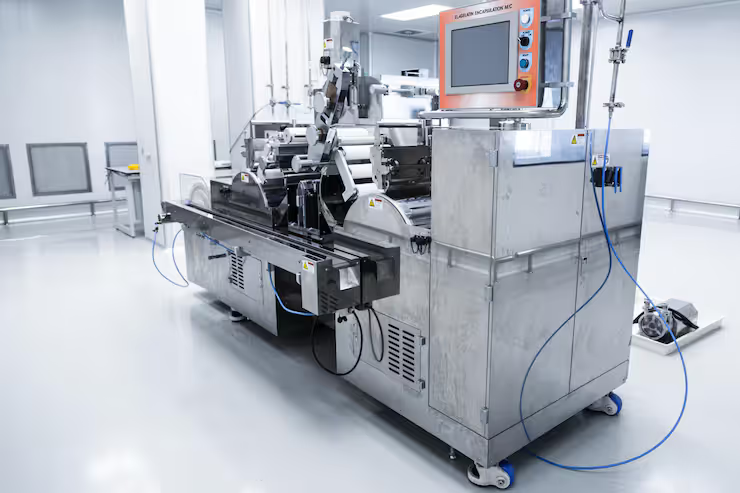
Why Crimping Machines Matter Today
Crimping machines play a key role in ensuring durability, safety, and efficiency in electrical and mechanical systems. As automation and electronics grow, reliable connections have become more important than ever.
They are widely used in industries such as:
-
Electrical and electronics manufacturing
-
Automotive and electric vehicle production
-
Aerospace engineering
-
Telecommunications infrastructure
-
Construction and industrial equipment
Key Benefits
-
Ensures strong electrical conductivity
-
Reduces risk of loose connections
-
Improves production efficiency
-
Maintains consistency in manufacturing
-
Supports compact product designs
Crimped connections are often preferred over soldering because they offer better vibration resistance and mechanical stability. This is especially important in dynamic environments like automotive and aerospace systems.
Renewable energy systems, including solar and wind installations, also rely heavily on crimping machines for reliable cable connections.
Recent Developments and Industry Trends
Crimping technology has advanced significantly in 2025, driven by automation, digitalization, and sustainability goals. Manufacturers are focusing on improving precision and efficiency.
Key Trends
-
Integration of smart sensors for real-time monitoring
-
Adoption of Industry 4.0 systems
-
Development of micro-precision crimping tools
-
Energy-efficient hydraulic systems
-
Automated wire processing machines
Modern systems can now detect defects during operation using force monitoring and digital feedback. This ensures that every crimp meets quality standards.
Digital twin technology is also being used to simulate and optimize crimping processes before production. Additionally, the rise of electric vehicles has increased demand for specialized high-voltage crimping solutions.
Regulatory Framework and Compliance Considerations
Crimping machines must comply with safety, quality, and environmental regulations. These standards help ensure consistent performance and reduce risks.
Key Regulatory Areas
-
Workplace safety standards
-
Electrical safety regulations
-
Quality certifications such as ISO 9001
-
Environmental compliance
-
Industry-specific standards
Important Standards
-
IEC standards for electrical connections
-
IPC standards for electronics manufacturing
-
OSHA guidelines for workplace safety
In India, manufacturers must follow guidelines set by the Bureau of Indian Standards (BIS) and occupational safety requirements. Compliance ensures reliability and minimizes hazards.
Governments are also encouraging advanced manufacturing technologies through automation and digital transformation initiatives.
Tools and Resources for Crimping Applications
A range of tools and digital resources support efficient crimping operations. These tools help improve accuracy and streamline workflows.
Common Tools
-
Wire stripping tools
-
Crimping dies and interchangeable jaws
-
Cable testing equipment
-
Digital force measurement tools
-
Automated wire processing systems
Software and Digital Resources
-
CAD software for connector design
-
CAM systems for process planning
-
Quality control software
-
Industrial IoT platforms
Comparison of Crimping Machine Types
| Machine Type | Power Source | Precision Level | Typical Application |
|---|
| Manual | Human force | Moderate | Small-scale wiring tasks |
| Hydraulic | Fluid power | High | Heavy-duty cable connections |
| Pneumatic | Air pressure | High | Repetitive industrial operations |
| Electric | Motor-driven | Very High | Precision electronics assembly |
| Automated | Integrated | Extremely High | Large-scale production lines |
Basic Crimping Workflow
The crimping process follows a structured sequence to ensure accuracy and reliability.
Steps Involved
-
Select appropriate connector and wire size
-
Strip insulation from the wire
-
Insert wire into connector
-
Position connector in crimping die
-
Apply controlled force
-
Inspect the connection for quality
Monitoring tools are increasingly used to maintain consistency and reduce defects during production.
Frequently Asked Questions
What is the primary function of a crimping machine?
A crimping machine joins wires and connectors by deforming them to create a secure mechanical and electrical connection.
How is crimping different from soldering?
Crimping does not require heat, while soldering uses molten metal. Crimping provides better durability and vibration resistance.
What industries use crimping machines the most?
They are widely used in automotive, electronics, telecommunications, aerospace, and renewable energy sectors.
Why is precision important in crimping?
Precision ensures reliable conductivity and prevents failures such as loose connections or system breakdowns.
Can crimping processes be automated?
Yes, modern systems integrate automated crimping with wire processing to improve efficiency and consistency.
Additional Insights on Performance and Efficiency
Modern crimping machines focus on delivering consistent force and alignment. This ensures high-quality connections across all applications.
Advanced systems use sensors to monitor performance and detect anomalies in real time. Predictive maintenance is also becoming common, helping reduce downtime and improve efficiency.
Industry Priorities
| Focus Area | Importance Level |
|---|
| Connection Reliability | High |
| Automation Integration | High |
| Energy Efficiency | Moderate |
| Manual Error Reduction | High |
Automation has significantly reduced human error, allowing machines to perform repetitive tasks with high precision.
Conclusion
Crimping machines are essential in modern manufacturing, enabling secure and reliable connections across various industries. They support both precision engineering and efficient production processes.
Recent advancements in automation, smart monitoring, and energy-efficient technologies have enhanced their capabilities. As industries continue to evolve, crimping machines will remain a critical component in building reliable and high-performance systems.