Depth Sensing Technologies Overview: Basics, Insights, and Practical Guide
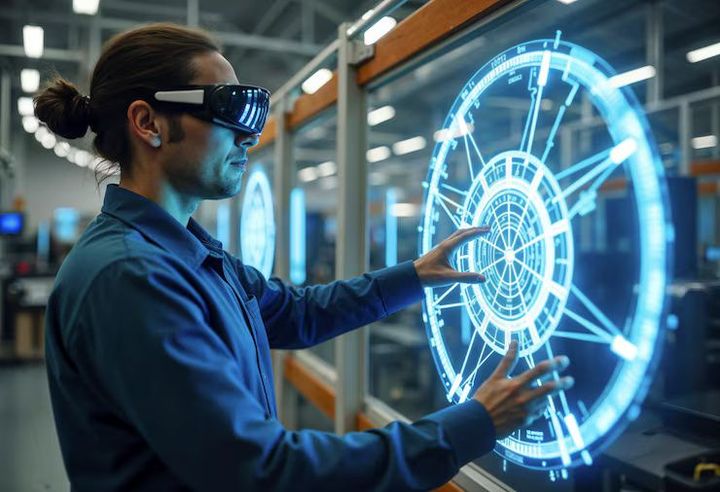
Depth sensing technologies refer to systems that measure the distance between objects and sensors in a three-dimensional (3D) space. These technologies enable devices to understand depth, shape, and spatial relationships, which are essential for applications like augmented reality (AR), robotics, autonomous vehicles, and industrial automation.
Depth sensing is a technology that measures the distance between a sensor and objects in its environment. It uses signals such as light, sound, or infrared to capture spatial information. This data is then converted into depth maps or 3D models for analysis and visualization.
Common Types of Depth Sensing Technologies
-
Stereo Vision
Uses two cameras to replicate human vision and calculate depth through image differences. -
Time-of-Flight (ToF)
Measures the time taken for light to reflect back from objects to determine distance. -
Structured Light
Projects patterns onto surfaces and analyzes distortions to calculate depth. -
LiDAR (Light Detection and Ranging)
Uses laser pulses to generate highly accurate 3D maps.
Depth sensing is widely used in smartphones, gaming systems, healthcare devices, and advanced driver-assistance systems (ADAS).
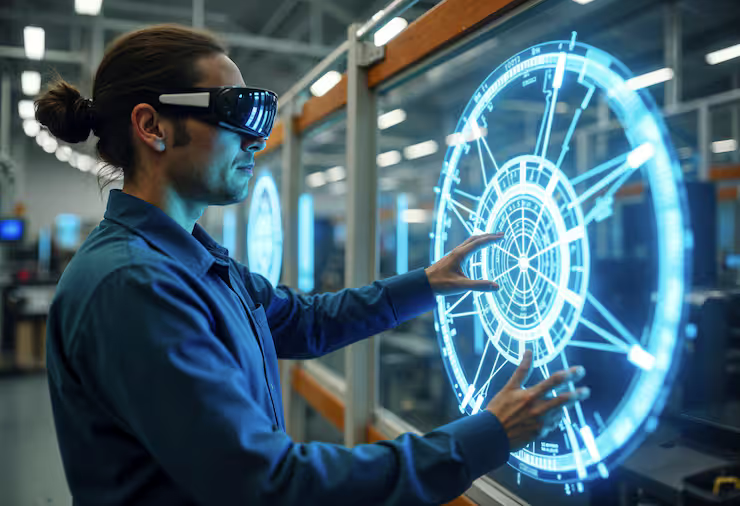
Importance – Why Depth Sensing Matters Today
Depth sensing plays a key role in enhancing accuracy, safety, and interaction in modern technology. As systems become more automated and environments more digital, spatial awareness becomes essential.
Key Benefits of Depth Sensing
-
Enhanced Machine Vision
Helps AI and robotics understand spatial environments more effectively. -
Improved Safety Systems
Enables features like collision detection and pedestrian recognition in vehicles. -
Better User Experience
Supports applications like facial recognition, gesture control, and augmented reality. -
Healthcare Advancements
Assists in diagnostics, surgical imaging, and patient monitoring. -
Industrial Efficiency
Improves automation, quality control, and object detection in manufacturing.
Industry Applications
| Industry | Application Example |
|---|---|
| Automotive | Autonomous driving and parking assistance |
| Consumer Electronics | Facial recognition and AR features |
| Healthcare | 3D imaging and rehabilitation tracking |
| Retail | Smart checkout and inventory scanning |
| Manufacturing | Robotics and inspection systems |
Depth sensing helps solve real-world challenges such as navigation, object detection, and reducing human error in automated systems.
Recent Updates – Trends and Developments (2025–2026)
Depth sensing technologies have evolved rapidly due to advancements in artificial intelligence, semiconductor design, and edge computing. These developments are making systems more efficient and accessible.
Key Trends
-
Miniaturization of Sensors (2025)
Compact sensors are now integrated into smartphones and wearable devices. -
AI Integration (2025–2026)
Machine learning enhances object recognition and scene understanding. -
Automotive LiDAR Advancements (2025)
Improved range and resolution support safer autonomous driving. -
Energy Efficiency Improvements (Early 2026)
New designs reduce power consumption for battery-operated devices. -
Edge Computing Expansion (2025)
Processing is done locally on devices, improving speed and privacy.
Comparison of System Improvements
| Feature | Earlier Systems | Recent Developments (2025–2026) |
|---|---|---|
| Sensor Size | Larger modules | Compact and lightweight |
| Processing Speed | Moderate | Real-time edge processing |
| Accuracy | Limited in low light | AI-enhanced accuracy |
| Power Consumption | High | Energy-efficient designs |
These trends highlight the shift toward smarter, faster, and more efficient sensing systems.
Laws or Policies – Regulations and Compliance
Depth sensing technologies are governed by regulations related to privacy, safety, and data protection. These laws ensure responsible use, especially in sensitive applications like facial recognition and healthcare.
Key Regulatory Areas
-
Data Protection Regulations
Systems must comply with laws like the Digital Personal Data Protection Act (India, 2023). -
Automotive Safety Standards
Must meet guidelines such as Automotive Industry Standards (AIS) in India. -
Medical Device Regulations
Require certification from authorities like CDSCO. -
Surveillance Policies
Public use must respect privacy and data usage regulations. -
Technology Compliance
Some systems are subject to import/export regulations.
Compliance Requirements
- Transparent data usage policies
- Secure storage of biometric and 3D data
- Adherence to industry-specific certifications
Regulatory frameworks are continuously evolving as the technology becomes more widespread.
Tools and Resources – Helpful Platforms and Technologies
Various tools and platforms support the development and implementation of depth sensing technologies. These resources make it easier for developers and researchers to build applications.
Popular Tools
-
OpenCV
Used for image processing and depth mapping. -
MATLAB (Image Processing Toolbox)
Helps in simulation and algorithm development. -
Intel RealSense SDK
Provides tools for depth camera integration. -
ROS (Robot Operating System)
Supports robotics applications with sensor integration. -
Unity and Unreal Engine
Used for AR/VR development. -
Google ARCore and Apple ARKit
Enable mobile augmented reality experiences.
Tools Overview Table
| Tool/Platform | Purpose |
|---|---|
| OpenCV | Depth mapping and vision tasks |
| MATLAB | Algorithm simulation |
| RealSense SDK | Depth camera development |
| ROS | Robotics integration |
| ARCore / ARKit | Mobile AR applications |
These tools provide accessible ways to explore and implement depth sensing solutions.
FAQs – Common Questions About Depth Sensing
What is the difference between LiDAR and Time-of-Flight?
LiDAR uses laser pulses for long-range, high-precision measurements. Time-of-Flight uses light signals for shorter distances and is commonly used in consumer devices.
Is depth sensing used in smartphones?
Yes, modern smartphones use depth sensing for facial recognition, portrait photography, and augmented reality features.
How accurate are depth sensing systems?
Accuracy depends on the technology used. LiDAR offers high precision, while stereo vision may be less reliable in low-light conditions.
Can depth sensing work in darkness?
Yes, infrared-based technologies like ToF and LiDAR work in low-light or dark environments.
What are the limitations of depth sensing?
- Sensitivity to reflective surfaces
- Environmental interference
- High computational requirements
These factors can affect performance depending on the use case.
Conclusion – Key Takeaways and Future Outlook
Depth sensing is a critical component of modern digital systems, enabling machines to better understand and interact with their surroundings. It enhances safety, accuracy, and user experience across multiple industries.
Advancements in AI, sensor design, and energy efficiency indicate strong future growth. At the same time, evolving regulations will shape how the technology is implemented responsibly.
In the future, depth sensing is expected to drive innovation in smart cities, healthcare, and immersive digital environments.