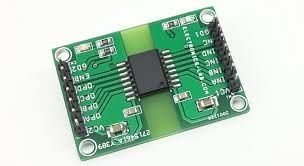
Digital Isolators Insights: Key Applications and Modern Design Considerations
Digital isolators are electronic components that allow digital signals to pass between different parts of a system while preventing direct electrical contact.
They are designed to improve safety, reduce electrical noise, and protect sensitive equipment from voltage differences and electrical faults.
The concept of isolation has existed for many years in electronics. Traditional isolation methods often relied on optocouplers, which use light to transfer signals across an isolation barrier. As electronic systems became faster and more complex, digital isolators emerged as an alternative that could support higher data rates, lower power consumption, and improved reliability in many applications.
Today, digital isolators are found in a wide range of products and industries. They are used in factory automation, renewable energy systems, transportation technologies, communication equipment, healthcare devices, and consumer electronics. Many digital isolator manufacturers continue to develop solutions that support modern requirements for speed, efficiency, and safety.
How Digital Isolators Work
A digital isolator transfers information between circuits without creating a direct conductive path. Instead of electrical connections, it uses technologies such as:
- Capacitive coupling
- Magnetic coupling
- Radio-frequency coupling
These methods enable signals to cross an isolation barrier while maintaining electrical separation between circuits.
Common Types of Digital Isolators
Several categories of digital isolators are available depending on application requirements:
| Type | Signal Transfer Method | Typical Applications |
|---|---|---|
| Capacitive isolators | Electric field coupling | Communication systems, industrial equipment |
| Magnetic isolators | Magnetic field coupling | Power electronics, automation systems |
| RF isolators | Radio-frequency transmission | Specialized communication circuits |
| Multi-channel isolators | Multiple isolated channels | Complex control systems |
Different designs support varying isolation voltages, data rates, channel counts, and environmental conditions.
Importance
Digital isolation has become increasingly important because modern electronic systems often operate at different voltage levels while exchanging large amounts of data. Without proper isolation, electrical disturbances can spread between circuits and affect system performance.
Supporting Industrial Safety
Industrial digital isolators play an important role in manufacturing facilities and automation environments. Machinery, sensors, and controllers often operate at different voltage levels. Isolation helps prevent electrical faults from spreading through connected equipment.
Industrial control system isolation is especially important in environments where motors, high-voltage drives, and switching equipment generate electrical noise. Isolated signal paths help maintain accurate communication between devices.
Enhancing Communication Reliability
Many modern systems depend on isolated communication interfaces. Communication protocols such as SPI, UART, RS-485, and CAN frequently require isolation when devices operate under different electrical conditions.
By separating communication circuits, digital isolators help reduce signal corruption caused by ground loops and electromagnetic interference.
Supporting Medical Equipment
Medical grade digital isolators are commonly used in healthcare devices that interact with patients. Isolation helps separate patient-connected circuits from power sources and other electronic subsystems.
Applications may include:
- Patient monitoring systems
- Diagnostic equipment
- Medical imaging devices
- Laboratory instruments
These systems often require compliance with strict safety standards intended to reduce electrical risks.
Enabling Modern Transportation Technologies
Digital isolation for EV systems has become increasingly important as electric vehicles incorporate high-voltage battery systems alongside low-voltage control electronics.
Isolation helps protect communication links between:
- Battery management systems
- Charging systems
- Motor controllers
- Vehicle control units
As electric transportation expands globally, isolation technology continues to play an important role in system safety and performance.
Recent Updates
Growth of High-Speed Communication Requirements
One of the most significant trends is the increasing demand for high speed digital isolators. Modern industrial networks, battery management systems, and communication platforms require faster data transmission than earlier generations of equipment.
Manufacturers have introduced devices capable of supporting increasingly complex communication architectures while maintaining isolation performance.
Expansion of Electric Mobility Applications
The growth of electric vehicles, charging infrastructure, and energy storage systems has increased the use of digital isolation for EV systems. Designers often require compact isolation solutions that can operate reliably in demanding electrical environments.
New product developments focus on improved efficiency, reduced electromagnetic emissions, and support for advanced vehicle communication networks.
Integration with Smart Manufacturing
Industrial automation continues to evolve through connected sensors, robotics, and data-driven monitoring systems. Industrial digital isolators are being integrated into equipment that supports smart manufacturing initiatives.
Current trends include:
- Higher channel density
- Reduced power consumption
- Smaller component footprints
- Enhanced noise immunity
These features help support increasingly connected industrial environments.
Improved Power Management Integration
Many modern designs combine isolation functions with power-related features. Power supply isolation components are increasingly being integrated into compact electronic systems where space and efficiency are important considerations.
This trend supports simplified circuit designs and improved system integration across various industries.
Laws or Policies
Digital isolators themselves are not usually regulated as standalone consumer products. However, they often help manufacturers comply with safety and performance standards that apply to finished equipment.
Industrial Safety Standards
Industrial equipment frequently follows standards developed by organizations such as:
- International Electrotechnical Commission
- International Organization for Standardization
These standards may include requirements related to electrical isolation, equipment safety, and electromagnetic compatibility.
Medical Device Regulations
Medical devices that use medical grade digital isolators must often comply with healthcare safety regulations. Requirements vary by country and region but generally focus on patient protection and electrical safety.
Regulatory frameworks may require manufacturers to demonstrate that isolation barriers meet specified performance criteria.
Automotive Standards
Automotive electronics, including systems used for digital isolation for EV systems, are commonly designed according to industry standards addressing reliability, safety, and environmental performance.
These standards help manufacturers evaluate component performance under temperature extremes, vibration, and electrical stress.
Electromagnetic Compatibility Requirements
Many countries maintain electromagnetic compatibility (EMC) regulations that limit unwanted electrical emissions and susceptibility to interference.
Digital isolators can contribute to compliance efforts by helping separate sensitive circuits from noise-producing components.
Tools and Resources
Engineers, students, researchers, and procurement teams often use a variety of resources when evaluating digital isolation technologies.
Technical Documentation
Digital isolator manufacturers typically provide:
- Datasheets
- Application notes
- Design guides
- Evaluation documentation
- Reference designs
These resources help explain operating characteristics and integration considerations.
Design and Simulation Software
Electronic design software can assist with:
- Circuit simulation
- Signal integrity analysis
- Power management evaluation
- PCB layout planning
Such tools help designers assess isolation requirements before building physical prototypes.
Standards Reference Resources
Organizations that publish technical standards provide documentation related to:
- Electrical safety
- Industrial automation
- Automotive electronics
- Medical equipment design
These references help designers understand compliance requirements.
Procurement and Component Databases
Digital isolator procurement activities often involve online component databases that allow users to compare specifications such as:
| Evaluation Factor | Description |
| Isolation voltage | Maximum voltage separation supported |
| Data rate | Signal transmission speed |
| Channel count | Number of isolated signal paths |
| Operating temperature | Supported environmental range |
| Package type | Physical component format |
| Power consumption | Electrical efficiency characteristics |
These databases help users identify suitable components for specific applications.
FAQs
What are digital isolators used for?
Digital isolators are used to transfer digital signals between circuits while maintaining electrical separation. Common applications include industrial automation, communication systems, healthcare equipment, renewable energy systems, and electric vehicles.
How do high speed digital isolators differ from traditional isolation methods?
High speed digital isolators can support faster data transmission rates than many traditional optocoupler-based solutions. They are commonly used in systems that require rapid communication between isolated circuits.
Why are industrial digital isolators important in factories?
Industrial digital isolators help protect control systems from electrical noise, voltage differences, and fault conditions. They contribute to industrial control system isolation by separating sensitive electronics from high-power equipment.
What are isolated communication interfaces?
Isolated communication interfaces are communication links that include electrical isolation between connected devices. They help reduce the effects of ground loops, interference, and voltage differences in communication networks.
What factors are considered during digital isolator procurement?
Digital isolator procurement often involves evaluating isolation voltage, communication speed, channel count, environmental ratings, package size, and compatibility with system requirements.
Conclusion
Digital isolators have become an important part of modern electronic systems by enabling signal transfer while maintaining electrical separation between circuits. Their applications span industrial automation, healthcare equipment, communication systems, renewable energy technologies, and electric vehicles. Recent developments have focused on higher communication speeds, improved integration, and support for increasingly connected devices. As electronic systems continue to evolve, digital isolation remains an important design consideration for safety, reliability, and performance.