Exploring Opportunities in Saudi Arabia’s Electronics Manufacturing Sector
Saudi Arabia’s electronics manufacturing sector is becoming an increasingly important part of the Kingdom’s broader industrial transformation. The sector includes activities such as electronic components, computers, telecommunications equipment, industrial electronics, automation systems, control equipment, and other digital technologies.
The development of local electronics manufacturing is closely connected with Saudi Vision 2030, which aims to diversify the economy and strengthen domestic industrial capabilities. The National Industrial Strategy places emphasis on advanced manufacturing, stronger supply chains, localization, innovation, and the adoption of modern production technologies.
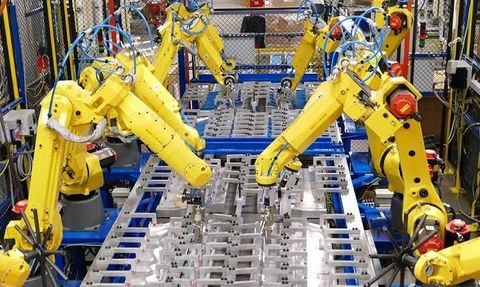
Electronics manufacturing also connects several industries. Manufacturing plants require electronic control systems, sensors, automation equipment, power electronics, communications systems, and digital monitoring tools. As factories become more automated, demand for these technologies can increase across different industrial sectors.
The Kingdom is also developing a wider technology ecosystem around electronics. Digital infrastructure, artificial intelligence, cloud computing, data centers, research, and advanced manufacturing can support the development of more sophisticated electronics production.
Saudi Arabia’s industrial cities are another important part of this development. In 2024, the Saudi Authority for Industrial Cities and Technology Zones reported SAR 24 billion in new domestic and foreign investments across its industrial cities, while the number of operational industrial, logistics, investment, and data-center facilities reached 8,616.
Importance
Electronics manufacturing matters because modern economies depend heavily on electronic systems. Electronics are used in factories, vehicles, healthcare equipment, telecommunications networks, energy infrastructure, buildings, logistics systems, and consumer devices.
For Saudi Arabia, developing local capabilities can support several objectives:
- Strengthening domestic manufacturing
- Developing local industrial supply chains
- Increasing technology knowledge
- Supporting advanced manufacturing
- Improving industrial resilience
- Encouraging research and innovation
- Developing specialized technical skills
- Supporting the wider digital economy
The opportunity extends beyond conventional electronic products. Industrial automation, semiconductor technologies, artificial intelligence hardware, sensors, robotics, telecommunications equipment, and data-center infrastructure are relevant areas for future development.
Saudi Arabia’s digital economy has also expanded significantly. A Saudi Press Agency report published in April 2025 cited a digital economy size of approximately SAR 495 billion, equivalent to about 15% of national GDP, while the ICT market exceeded SAR 180 billion in 2024.
Data-center development is particularly relevant because modern data centers require sophisticated electrical and electronic equipment, power-management systems, networking hardware, cooling controls, monitoring devices, and automation technologies.
In April 2026, Saudi Arabia reported that operational data-center capacity had grown to more than 440 megawatts in 2025, compared with 68 megawatts in 2021. More than 60 data centers were reported to be operating, developed by more than 20 companies.
This broader digital infrastructure creates potential demand for electronics manufacturing and related industrial capabilities.
Key Electronics Manufacturing Areas
Saudi Arabia’s developing electronics ecosystem can be viewed across several technology categories.
| Area | Examples | Industrial relevance |
|---|---|---|
| Electronic components | Sensors, circuit assemblies, control boards | Automation and equipment |
| Computing hardware | Computers and related systems | Digital infrastructure |
| Industrial electronics | Controllers, monitoring equipment | Smart manufacturing |
| Telecommunications | Network and communication equipment | Connectivity |
| Semiconductors | Semiconductor-related technologies | Advanced electronics |
| Power electronics | Converters and control systems | Energy applications |
| Automation | Robotics, sensors and control systems | Factory modernization |
| Data-center electronics | Networking and power-management equipment | Digital infrastructure |
These categories do not represent a single market. Each has different technical requirements, regulations, supply-chain needs, and levels of local production.
Recent Updates
Recent developments show that electronics manufacturing is increasingly connected with Saudi Arabia’s advanced manufacturing strategy.
In October 2025, SAMI Advanced Electronics announced the Remal computer manufacturing project through a strategic partnership involving HP and Foxconn. The project was presented as part of efforts to develop local technology manufacturing capabilities and strengthen production engineering, quality control, and digital system integration.
In December 2025, the Ministry of Industry and Mineral Resources highlighted semiconductor production and the localization of smart manufacturing technologies during Industrial Transformation Saudi Arabia 2025. The ministry also discussed industrial innovation and workforce development.
Another important development is the continued modernization of factories. The Future Factories Program has targeted the transformation of more than 4,000 factories toward smart manufacturing approaches involving automation and advanced technologies.
Saudi Arabia also reported strong overall industrial activity for 2025. In March 2026, the Ministry of Industry and Mineral Resources reported that 1,660 new industrial licenses had been issued during 2025, with announced investments exceeding SAR 76 billion. A further 1,201 factories began production during the year.
Research and deep technology are another part of the emerging ecosystem. In January 2025, a national deep-tech roadmap highlighted investment, infrastructure, talent, research, policies, regulations, and government incentives as important components of the Kingdom’s technology ecosystem.
Together, these developments indicate that electronics manufacturing is being considered within a broader transformation involving automation, computing, semiconductors, artificial intelligence, and industrial digitalization.
Laws and Policies
Electronics manufacturing in Saudi Arabia operates within the country’s wider industrial, investment, standards, environmental, labor, and technology frameworks.
The National Industrial Strategy is one of the main policy frameworks. It emphasizes world-class supply chains, advanced manufacturing, localization, local content, industrial infrastructure, innovation, and improved quality standards.
Saudi Vision 2030 provides the broader economic direction. Industrial localization is an important element of the strategy, with government programs intended to strengthen domestic production and local value chains. The 2025 Vision 2030 annual report described continued efforts to reduce dependence on imports and strengthen local manufacturing capabilities.
Local-content requirements can also be relevant, particularly when electronics companies participate in government-related procurement. Saudi Arabia has developed policies that encourage government entities and contractors to consider locally manufactured products in procurement activities.
Electronics manufacturers may also need to consider:
- Industrial licensing requirements
- Product conformity requirements
- Electrical and safety standards
- Environmental regulations
- Import and customs procedures
- Data and cybersecurity requirements where applicable
- Local-content requirements
- Intellectual-property regulations
- Workplace and industrial safety rules
Specific requirements can vary according to the product, manufacturing activity, location, and intended market. Companies planning an electronics manufacturing project should therefore verify the applicable requirements with the relevant Saudi authorities before beginning production.
Tools and Resources
Researchers, manufacturers, students, and industry professionals can use several general resources when studying Saudi Arabia’s electronics manufacturing environment.
Useful resources include:
- Industrial market research databases
- Manufacturing productivity calculators
- Electronic component databases
- Semiconductor technology learning platforms
- Supply-chain mapping templates
- Factory automation assessment tools
- Energy-efficiency calculators
- Industrial safety checklists
- Product conformity guides
- Manufacturing quality-management templates
- Technology-readiness assessment frameworks
- Industrial investment and regulatory information portals
A useful research process begins with identifying the specific electronics category. The next step is to examine its technology requirements, supply chain, regulatory environment, manufacturing processes, workforce needs, and potential industrial applications.
For advanced manufacturing projects, it is also useful to evaluate automation levels, production data requirements, quality-control procedures, cybersecurity considerations, energy consumption, and equipment compatibility.
Frequently Asked Questions
What is electronics manufacturing?
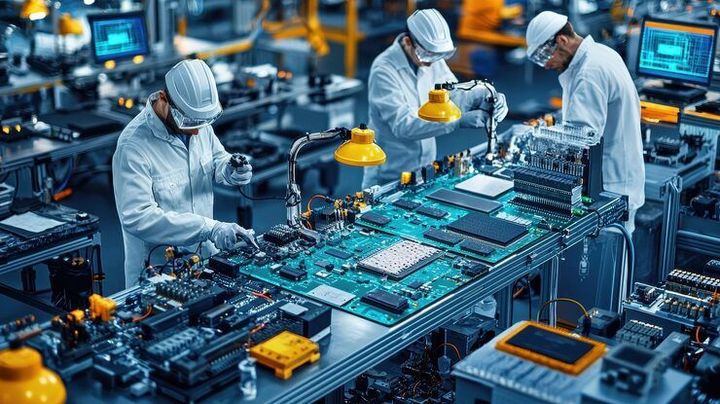
Electronics manufacturing involves producing electronic components, assemblies, devices, systems, or related equipment. It can include activities such as circuit-board assembly, component integration, testing, quality control, and production of finished electronic systems.
Why is Saudi Arabia developing electronics manufacturing?
The development is connected with economic diversification, industrial localization, advanced manufacturing, digital transformation, technology development, and stronger domestic supply chains under Saudi Vision 2030.
Which electronics areas have industrial relevance?
Relevant areas include industrial electronics, automation systems, computing hardware, telecommunications equipment, power electronics, sensors, semiconductor technologies, and electronics used in data-center infrastructure.
How does smart manufacturing affect electronics production?
Smart manufacturing uses technologies such as automation, sensors, industrial software, robotics, connected equipment, and production data. These technologies can improve monitoring, process control, traceability, and production planning when appropriately implemented.
What should researchers examine before studying the Saudi electronics market?
Researchers should examine the specific product category, market demand, industrial applications, regulations, standards, supply chains, manufacturing technologies, workforce requirements, infrastructure, and local-content policies.
Conclusion
Saudi Arabia’s electronics manufacturing sector is developing alongside a broader transformation in advanced manufacturing and the digital economy. Vision 2030, the National Industrial Strategy, industrial localization programs, smart-factory initiatives, and growing digital infrastructure are creating a framework for expanding domestic technological capabilities.