Automated Textile Manufacturing Systems: Fundamentals and Applications
Automated textile manufacturing systems use machines, electronic controls, sensors, and digital software to perform textile production activities with limited manual intervention. These systems support several stages of manufacturing, from preparing raw fibres to producing yarn, weaving fabric, knitting materials, dyeing textiles, and inspecting finished products.
Traditional textile production depends heavily on manual operation and mechanical equipment. Automation introduces programmable controls and connected machinery that help manufacturers maintain consistent production processes.
For example, an automated weaving machine can control yarn movement, fabric formation, and operating speed according to programmed settings. Sensors can detect yarn breaks or unusual machine behaviour, allowing operators to respond before production problems become more serious.
How the Technology Developed
Textile manufacturing has evolved through several stages:
Mechanical production: Early machines increased the speed of spinning and weaving.
Electronic control: Electrical systems improved machine timing and operational consistency.
Programmable automation: Digital controllers enabled repeatable production sequences.
Connected manufacturing: Networked equipment began sharing production and maintenance information.
Intelligent manufacturing: Artificial intelligence, machine vision, and predictive analytics expanded automated monitoring and decision-making.
These developments help textile facilities respond to changing production requirements while maintaining reliable manufacturing standards.
Importance of Automation in the Textile Industry
Improving Production Consistency
Textile products require consistent dimensions, yarn strength, colour, texture, and finishing characteristics. Small variations in machine settings can create defects across large quantities of fabric.
Automated controls help maintain repeatable operating conditions. They can monitor machine speed, temperature, tension, moisture, and other process variables.
This consistency is important for apparel manufacturing, technical textiles, home furnishings, automotive fabrics, and industrial textile applications.
Reducing Material Waste
Fabric defects, broken yarns, incorrect dyeing conditions, and inaccurate cutting can create unnecessary material waste.
Automated inspection systems identify certain defects during production. Programmable cutting equipment can follow digital patterns to improve material placement, while process sensors help maintain appropriate operating conditions.
Automation cannot eliminate every defect, but it can help identify problems earlier and support more efficient material use.
Supporting Worker Safety
Textile machinery contains moving components, heated surfaces, electrical equipment, and rotating parts. Manual handling around these areas may expose workers to physical risks.
Safety-focused automation can include:
Machine guards and interlocking access doors.
Emergency-stop controls.
Automatic shutdown when specific faults occur.
Sensors that detect unsafe operating conditions.
Material-handling systems that reduce repetitive lifting.
Workers still need appropriate training, protective equipment, and safe operating procedures. Automation should support these measures rather than replace them.
Meeting Changing Production Requirements
Modern textile facilities often manufacture different fabric types, patterns, colours, and technical materials. Programmable machinery allows operators to adjust production settings for different specifications.
This flexibility is useful for manufacturers producing smaller batches, specialised fabrics, or products with demanding quality requirements.
Main Technologies Used in Automated Textile Manufacturing
Automated Spinning and Yarn Production
Spinning systems convert prepared fibres into yarn. Automated equipment controls fibre feeding, drafting, twisting, winding, and package formation.
Sensors can monitor yarn tension, detect breaks, and identify variations in production. Automatic winding systems transfer yarn onto packages with controlled tension and consistent formation.
These functions are particularly important when yarn quality affects downstream weaving, knitting, or technical fabric production.
Computer-Controlled Weaving and Knitting
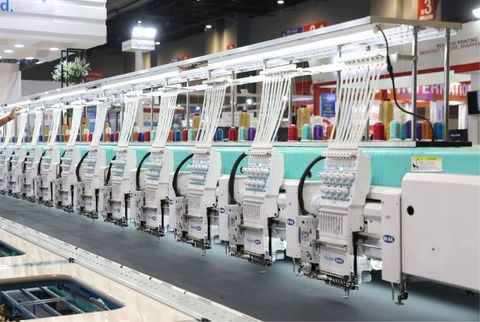
Automated weaving machines interlace warp and weft yarns to create woven fabrics. Electronic controls coordinate yarn insertion, shedding, fabric movement, and machine timing.
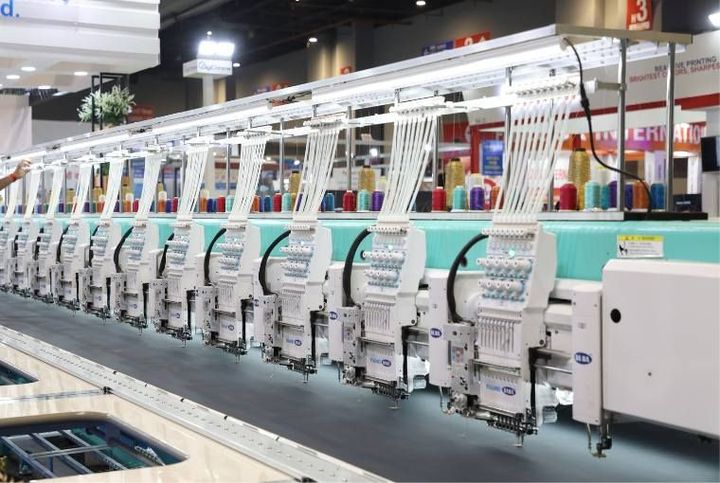
Computerised knitting systems form loops of yarn according to programmed patterns. They can produce fabrics with different structures, dimensions, and surface characteristics.
Digital pattern controls also make it easier to repeat designs and modify production settings when specifications change.
Automated Dyeing and Finishing
Dyeing and finishing involve several variables, including temperature, chemical concentration, processing time, water movement, and fabric speed.
Automated systems use sensors, dosing controls, and programmable sequences to maintain selected process conditions. This helps improve repeatability across production batches.
The actual results depend on fabric composition, dye chemistry, equipment condition, and the accuracy of process settings.
Machine Vision and Quality Inspection
Machine vision uses cameras and image-processing software to examine fabric surfaces. Depending on the equipment, it can identify holes, stains, broken threads, colour variations, and irregular patterns.
Automated inspection supports faster defect detection than visual inspection alone in many applications. However, specialised fabric characteristics and subtle defects may still require human review.
Industrial Robots and Material Handling
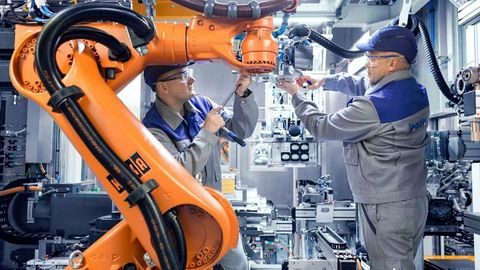
Robotic systems and automated material-handling equipment can move yarn packages, transport fabric rolls, position components, and support packaging operations.
Their usefulness depends on material weight, product dimensions, workplace layout, and the need for human intervention.
Applications Across Textile Manufacturing
Automated textile manufacturing systems support several industrial sectors.
Application | Typical automated equipment | Main purpose |
|---|---|---|
Apparel textiles | Cutting machines and sewing controls | Improve pattern accuracy and repeatability |
Home textiles | Weaving and finishing equipment | Maintain fabric consistency |
Automotive textiles | Technical weaving and inspection systems | Produce controlled material specifications |
Medical textiles | Knitting, coating, and inspection equipment | Support defined product requirements |
Industrial fabrics | Heavy-duty weaving and winding systems | Process specialised textile materials |
Recycled textiles | Sorting, fibre opening, and blending systems | Process recovered textile materials |
Apparel and Garment Production
Garment manufacturing uses automated cutting, fabric spreading, pattern alignment, and selected sewing operations. Digital patterns can help coordinate measurements and cutting sequences.
Some sewing tasks remain difficult to automate completely because fabrics stretch, fold, and behave differently during handling. Human supervision remains important for complex garments and delicate materials.
Technical and Industrial Textiles
Technical textiles are developed for specific performance requirements rather than appearance alone. They are used in filtration, construction, transport, agriculture, protective clothing, and industrial reinforcement.
Automated production helps control fibre orientation, fabric density, coating thickness, and other characteristics that influence performance.
Sustainable Textile Processing
Automation can support resource management by monitoring water use, energy consumption, chemical dosing, and process duration.
For example, controlled dyeing systems can help maintain repeatable recipes and reduce unnecessary batch corrections. Their environmental performance depends on the complete production process, including energy sources, chemicals, wastewater treatment, and material selection.
Recent Developments in Textile Manufacturing Automation
During 2025 and 2026, several technology trends continued to influence textile manufacturing. Adoption differs between facilities, and not every development is suitable for every production environment.
Artificial Intelligence and Predictive Maintenance
AI-based analysis can use machine operating data to identify unusual patterns. These systems may help maintenance teams detect developing problems before equipment failure interrupts production.
Predictive maintenance is most useful when reliable sensor data, suitable analytical models, and clear maintenance procedures are available.
Digital Twins and Virtual Process Models
A digital twin is a digital representation of a physical machine, production line, or manufacturing process. Depending on its design, it may use real-time operating data to examine performance and test potential adjustments.
Textile manufacturers can use process models to study machine settings, production flow, and energy use before implementing changes on operating equipment.
Connected Production Monitoring
Industrial Internet of Things technology connects selected machines, sensors, and production software. Supervisors can use dashboards to monitor machine status, output, downtime, and quality indicators.
Connected systems can also create cybersecurity risks, so access controls, network protection, and software maintenance are important.
Improved Material Traceability
Digital records can help track fibre origins, production batches, processing steps, and quality checks. Interest in traceability is increasing as manufacturers respond to sustainability expectations and product information requirements.
Reliable traceability depends on accurate data collection and consistent recordkeeping across the supply chain.
Laws, Regulations, and Manufacturing Policies
Textile automation must comply with applicable workplace, machinery, environmental, and product regulations. Requirements vary by country, industry, and the type of equipment being used.
Machinery and Workplace Safety
Manufacturers should assess machinery risks, provide suitable guards, maintain emergency-stop systems, and train workers in safe operation.
Depending on the jurisdiction, relevant requirements may cover:
Machinery design and safe installation.
Electrical equipment and industrial controls.
Worker training and protective equipment.
Maintenance procedures and hazardous energy isolation.
Safe integration of industrial robots and automated handling equipment.
International machinery safety standards can provide useful technical guidance, but a standard is not automatically a legal requirement in every country.
Environmental Compliance
Dyeing, washing, bleaching, and finishing may generate wastewater, chemical residues, and air emissions.
Facilities must follow applicable environmental permits, discharge limits, chemical-handling requirements, and waste-management rules. Automated monitoring can support compliance, but it does not replace required inspections or environmental controls.
Textile Manufacturing Regulations in India
In India, textile facilities must assess the central and state rules that apply to their location and activities. Depending on the facility, relevant frameworks may include factory and occupational safety legislation, environmental protection requirements, electrical safety rules, and applicable Bureau of Indian Standards requirements.
Manufacturers should verify the legal provisions currently in force for their state and industry. Export-oriented facilities may also need to consider destination-market rules, restricted chemicals, product safety requirements, and customer-specific standards.
Tools and Resources for Textile Automation
Choosing appropriate tools begins with understanding the production process, available equipment, workforce skills, and manufacturing objectives.
Industrial Control and Monitoring Tools
Common tools include programmable logic controllers, human-machine interfaces, industrial sensors, machine-vision systems, and supervisory control software.
These technologies help operators monitor equipment, adjust settings, record production information, and respond to alarms.
Production Planning and Quality Tools
Manufacturing teams may use:
Production planning templates to organise machine schedules.
Quality checklists to record defects and inspection results.
Maintenance logs to track repairs and recurring faults.
Energy monitoring calculators to compare consumption over time.
Statistical process control charts to identify production variation.
Digital inventory records to track yarn, fabric, and other materials.
A Simple Automation Performance Table
Manufacturers can track several indicators to understand whether an automated system is meeting its intended objectives.
Indicator | What it measures |
|---|---|
Production output | Units or metres produced during a defined period |
Defect rate | Proportion of inspected output that fails requirements |
Machine downtime | Time equipment is unavailable for production |
Energy intensity | Energy used per unit of production |
Material waste | Material discarded or rejected during processing |
Maintenance frequency | Number of maintenance events over a defined period |
Comparisons should use consistent measurement periods and product specifications. A change in fabric type or production volume may affect the results.
Frequently Asked Questions
What Is an Automated Textile Manufacturing System?
It is a combination of textile machinery, sensors, electronic controls, and software that automates selected production activities, such as spinning, weaving, knitting, dyeing, cutting, and inspection.
How Does Automation Improve Textile Quality?
Automation helps maintain repeatable machine settings, monitor process conditions, and identify defects. The level of improvement depends on equipment capability, material quality, maintenance, and operator supervision.
Can Small Textile Manufacturers Use Automation?
Yes. Automation can be introduced gradually, beginning with selected tasks such as winding, cutting, machine monitoring, or fabric inspection. The appropriate approach depends on production needs, technical skills, and available infrastructure.
Does Textile Automation Replace Human Workers?
Automation changes the tasks people perform rather than removing the need for human involvement. Workers remain important for machine setup, maintenance, quality decisions, process improvement, and safety oversight.
What Is the Role of AI in Textile Manufacturing?
AI can analyse production data, assist with defect detection, identify unusual machine behaviour, and support predictive maintenance. Its effectiveness depends on data quality, appropriate testing, and human supervision.
Conclusion
Automated textile manufacturing systems are an important part of modern industrial production. They combine machinery, sensors, software, and process controls to improve consistency, monitor equipment, manage material use, and support safer working practices.