Modern Construction Equipment Guide : Smart Machines, AI & Industry Trends
Construction equipment includes the machinery used to move materials, prepare land, build structures, handle concrete, improve roads, and complete other infrastructure activities. Common examples include excavators, wheel loaders, bulldozers, cranes, graders, compactors, concrete equipment, and material-handling machines.
Modern construction equipment exists because large infrastructure and building projects require greater productivity, precision, safety, and operational control than traditional manual methods can provide. As construction projects have become more complex, machinery has evolved from mechanically controlled equipment into connected systems that can collect information and support better decisions.
Today, construction machinery can include GPS positioning, telematics, machine-control technology, sensors, cameras, automated functions, and artificial intelligence. These technologies can help operators understand machine conditions, working environments, fuel or energy usage, and equipment performance.
The transition is also changing the meaning of heavy equipment. A modern excavator, for example, may combine hydraulic systems with digital controls, positioning technology, object detection, and data monitoring. Similarly, construction cranes and lifting equipment increasingly use electronic systems to improve operational visibility.
The overall direction is toward smart construction equipment, where mechanical power and digital technology work together.
Why Modern Construction Equipment Matters Today
Construction companies, infrastructure developers, contractors, equipment operators, engineers, and project managers are all affected by developments in construction machinery. Better equipment can address several common construction challenges, including difficult working conditions, limited project visibility, safety risks, material handling requirements, and productivity pressures.
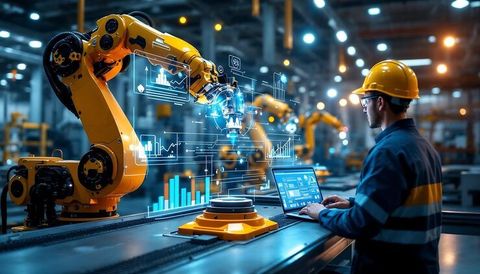
One important development is construction automation. Automated machine functions can assist with repetitive activities and help maintain consistent operating parameters. Depending on the equipment and application, automated controls may support grading, excavation, positioning, compaction, or material movement.
Another major area is construction equipment telematics. Telematics systems can collect information about machine location, operating hours, fuel or energy consumption, maintenance indicators, and utilization. This information can help project teams understand how equipment is being used.
AI in construction is also attracting attention. Artificial intelligence can analyze large amounts of operational data and identify patterns that may be difficult to detect manually. Potential applications include equipment monitoring, site analysis, productivity assessment, safety support, and predictive maintenance.
Electrification is another important trend. Battery-electric construction equipment is being developed for applications where reduced direct emissions and lower noise levels can be beneficial. Electric mini excavators, compact loaders, and other smaller machines are among the equipment categories receiving attention.
However, technology does not automatically make every project more efficient. Equipment selection still depends on project conditions, terrain, material type, operating environment, machine capacity, operator skills, infrastructure, and regulatory requirements.
Major Equipment Categories
Modern construction projects use many different types of machinery:
- Earthmoving equipment: Excavators, bulldozers, loaders, and trenchers.
- Road construction equipment: Motor graders, asphalt equipment, rollers, and milling machines.
- Material-handling equipment: Cranes, telehandlers, forklifts, and lifting systems.
- Concrete equipment: Concrete mixers, pumps, batching equipment, and placing machinery.
- Compaction equipment: Vibratory rollers, compactors, and soil-compaction machines.
- Utility equipment: Compact excavators, loaders, drilling equipment, and specialized machines.
Selecting equipment according to the actual application remains more important than simply choosing the newest technology.
Recent Construction Equipment Trends in 2025 and 2026
The construction equipment industry has continued moving toward connected, automated, energy-efficient, and data-driven machinery.
India provides a useful example of this development. According to an industry update published in May 2026, India's construction equipment industry recorded 140,191 units of sales during 2025–26, representing approximately 3% growth from the previous year. Exports increased 31.5% year over year to 16,885 units. The growth was associated with infrastructure development, mechanization, and demand from sectors including roads, railways, mining, urban development, and energy.
Infrastructure investment is another significant factor. An industry overview updated in February 2026 reported that India's infrastructure capital investment outlay in the Union Budget 2026–27 was increased to ₹12.22 lakh crore. This creates a broader environment for demand for earthmoving, road-building, lifting, and material-handling machinery.
At the same time, growth is not uniform across every equipment category. A November 2025 analysis citing CRISIL projected moderate domestic construction equipment volume growth of 2–4% for FY25 and FY26, while highlighting continued dependence on infrastructure activity.
AI and Machine Intelligence
AI is increasingly being incorporated into construction technology. Machine-learning systems can analyze equipment data, identify unusual operating patterns, and support maintenance planning.
Computer vision and sensors can also provide information about people, vehicles, obstacles, and working areas. These systems are particularly relevant to construction-site safety and machine awareness.
The practical value depends on the quality of the data, sensor configuration, software design, site conditions, and human supervision.
Telematics and Connected Equipment
Connected machinery allows equipment information to be transferred to digital platforms. Project teams can use this information to understand machine utilization and maintenance indicators.
The growing use of telematics is also supporting fleet management technology. Instead of assessing every machine independently, organizations can view information from multiple pieces of equipment through centralized dashboards.
Electrification and Alternative Power
Electric construction equipment is developing alongside conventional diesel-powered machinery. Battery technology is particularly relevant to compact equipment and applications where charging infrastructure can be arranged.
Hybrid power systems are another pathway. These can combine conventional engines with electrical components to manage energy more efficiently in certain operating conditions.
Automation and Remote Operation
Machine control systems can assist operators with positioning, grading, excavation depth, and other repetitive tasks. Remote operation is also being explored for hazardous environments and locations where direct operator access can be difficult.
These technologies are not a complete replacement for skilled operators. Human judgment remains important, particularly when site conditions change unexpectedly.
Laws, Standards, and Policies Affecting Construction Equipment in India
Construction equipment in India can be affected by several regulatory areas, including road-vehicle requirements, machinery safety, environmental rules, occupational safety requirements, and applicable Indian Standards.
A significant recent development concerns the Machinery and Electrical Equipment Safety (Omnibus Technical Regulation) framework. The Ministry of Heavy Industries has published amendments and subsequent regulatory updates, while the official ministry page records the withdrawal of the 2024 order in January 2026 alongside the Second Amendment Order of November 2025. Therefore, organizations should verify the latest applicable notification rather than relying on older summaries.
The Bureau of Indian Standards maintains standards covering machinery safety. Its material on earth-moving equipment includes requirements addressing general machinery safety as well as specific categories such as hydraulic excavators, bulldozers, graders, rollers, trenchers, and other equipment.
Construction Equipment Vehicles that operate on public roads can also fall under relevant provisions of the Central Motor Vehicles Rules and associated requirements. Historical regulatory updates have addressed areas including operator safety, emissions, and noise requirements for construction equipment vehicles.
For manufacturers, importers, contractors, and project operators, the practical lesson is simple: regulatory requirements can vary according to machine category and application. Current government notifications and applicable Indian Standards should be checked before equipment is introduced or modified.
Useful Tools and Resources for Construction Equipment
Several general-purpose tools can help users understand and manage modern construction machinery.
- Equipment selection calculators: Useful for comparing machine capacity with project requirements.
- Excavation and earthwork calculators: Help estimate material quantities and productivity assumptions.
- Fuel and energy monitoring tools: Useful for tracking equipment operating patterns.
- Telematics dashboards: Provide machine location, operating-hour, utilization, and maintenance information.
- Digital maintenance templates: Help organize inspection schedules and equipment records.
- Machine-control systems: Support accurate grading, excavation, positioning, and site work.
- Safety checklists: Help operators review machine condition before operation.
- Equipment specification sheets: Useful for comparing dimensions, operating capacity, attachments, power systems, and working ranges.
- Government regulatory portals: Provide current information about applicable rules, notifications, and standards.
- Training resources: Operator manuals, technical documentation, safety guidance, and equipment-specific training materials can improve understanding.
The most useful resource is usually one that matches the equipment category and actual project conditions.
Frequently Asked Questions
What is modern construction equipment?
Modern construction equipment refers to machinery designed for construction and infrastructure activities that may incorporate advanced hydraulic systems, digital controls, telematics, sensors, automation, GPS, AI, or alternative power technologies.
How is AI used in construction machinery?
AI can analyze equipment and site data to support functions such as predictive maintenance, machine monitoring, object detection, productivity analysis, and automated or assisted machine control. The exact capabilities vary by equipment and technology.
Is electric construction equipment replacing diesel machinery?
Not completely. Electric equipment is expanding, particularly in compact and selected applications, but diesel and other power systems remain important for many heavy-duty construction operations. Equipment choice depends on the application, operating conditions, charging infrastructure, and required performance.
What equipment is commonly used in infrastructure projects?
Infrastructure projects commonly use excavators, bulldozers, wheel loaders, graders, rollers, cranes, concrete equipment, asphalt equipment, drilling machinery, and material-handling equipment. The specific combination depends on the project.
Why are machinery safety standards important?
Safety standards establish technical requirements and risk-reduction principles for machinery design and use. They can help address hazards involving machine movement, controls, stability, operator protection, electrical systems, and other operating risks.
Conclusion
Modern construction equipment is moving beyond traditional mechanical machinery toward connected, intelligent, automated, and increasingly energy-efficient systems. Excavators, loaders, cranes, graders, compactors, and other machines are being enhanced with telematics, sensors, machine-control technology, AI, and alternative power systems.