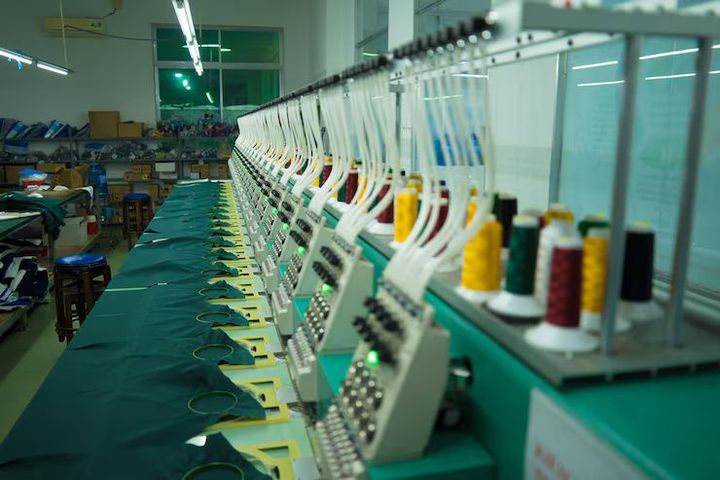
How Do Sewing, Knitting & Embroidery Machines Work? Types, Applications, and Benefits
Modern textile production depends on advanced machinery that improves accuracy, consistency, and efficiency. Among the most widely used textile equipment are sewing, knitting, and embroidery machines. These machines help produce clothing, home furnishings, technical textiles, fashion accessories, and decorative fabrics with greater precision than manual methods. They have become an important part of textile manufacturing, fashion design, educational institutions, and small-scale production environments.
As technology continues to evolve, these machines now include computerized controls, digital pattern creation, automation, and smart monitoring features. Understanding how they work helps students, manufacturers, designers, and anyone interested in textile technology better appreciate their role in today's industry.
Sewing, knitting, and embroidery machines
A sewing machine joins two or more pieces of fabric using thread and a moving needle. A knitting machine forms fabric by creating interconnected loops of yarn. An embroidery machine decorates fabric with stitched patterns, logos, lettering, and artistic designs.
These machines exist because manual textile production requires significant time and skilled labor. Mechanization has made it possible to produce consistent, high-quality textile products while supporting growing global demand.
Today, computerized systems allow users to create complex patterns, automate stitching sequences, and reduce production errors.
Importance
Textile machinery plays an essential role across numerous industries.
It supports:
- Apparel manufacturing
- Fashion design
- Home textile production
- Medical textile manufacturing
- Automotive interiors
- Sportswear production
- Industrial fabric manufacturing
- Educational training centers
These machines help solve several common manufacturing challenges, including:
| Challenge | Machine Solution |
|---|---|
| Slow manual stitching | High-speed automated sewing |
| Uneven fabric quality | Consistent stitch accuracy |
| Complex decorative work | Computer-controlled embroidery |
| Large-scale fabric production | Continuous knitting systems |
| Pattern consistency | Digital programming |
Modern machines also reduce material waste through improved precision and automated controls. Many systems include programmable settings that simplify repetitive production tasks while maintaining consistent quality.
Because textile production contributes significantly to global manufacturing, improvements in machinery continue to influence productivity, sustainability, and innovation.
How Sewing Machines Work
A sewing machine operates through the coordinated movement of several mechanical components.
The basic process includes:
- A motor drives the main shaft.
- The needle moves vertically through the fabric.
- Thread passes through the needle eye.
- A hook mechanism catches the thread loop.
- The bobbin thread interlocks with the upper thread.
- Feed dogs move the fabric forward.
- The presser foot keeps fabric stable.
- Continuous stitching forms a secure seam.
Modern computerized sewing machines automatically control stitch length, speed, thread tension, and decorative stitch selection.
How Knitting Machines Work
Knitting machines create fabric by forming loops instead of joining separate fabric pieces.
Their operation involves:
- Yarn feeds into multiple needles.
- Needles create loops.
- New loops pass through previous loops.
- Continuous looping produces knitted fabric.
- Rollers collect finished material.
Different needle arrangements produce various fabric structures, including:
- Jersey knit
- Rib knit
- Interlock knit
- Jacquard knit
- Circular knit
Computer-controlled knitting machines can automatically switch patterns, colors, and fabric designs.
How Embroidery Machines Work
Embroidery machines decorate finished fabric using digitally programmed stitch patterns.
The embroidery process generally includes:
- Digital design creation
- Pattern transfer to machine software
- Automatic hoop positioning
- Needle movement following programmed coordinates
- Thread color changes
- Finished decorative stitching
Modern embroidery systems can create:
- Company logos
- Names
- Monograms
- Decorative artwork
- Traditional textile patterns
- Fashion embellishments
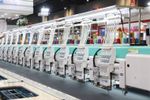
Multiple needles allow automatic thread color changes without manual intervention.
Common Types
| Machine Type | Primary Purpose |
| Mechanical Sewing Machine | Basic stitching |
| Electronic Sewing Machine | Automated stitch selection |
| Computerized Sewing Machine | Digital programming |
| Overlock Machine | Edge finishing |
| Flatlock Machine | Stretch garments |
| Circular Knitting Machine | Tubular fabrics |
| Flat Knitting Machine | Panels and garments |
| Warp Knitting Machine | Technical textiles |
| Single-Head Embroidery Machine | Individual designs |
| Multi-Head Embroidery Machine | Large production |
| Industrial Embroidery Machine | High-volume decoration |
Applications
These machines are widely used in numerous sectors.
Fashion Industry
- Garment production
- Designer clothing
- Custom apparel
Home Textiles
- Curtains
- Upholstery
- Bedding
- Cushion covers
Medical Industry
- Surgical textiles
- Protective garments
- Specialized fabrics
Automotive Industry
- Seat covers
- Interior fabrics
- Decorative stitching
Sports Industry
- Performance apparel
- Athletic uniforms
- Sports accessories
Educational Institutions
- Textile engineering
- Fashion technology
- Vocational training
Recent Updates
The textile machinery industry has experienced several important developments during the past year.
Recent trends include:
- Increased adoption of AI-assisted stitching optimization.
- Greater use of IoT-enabled machine monitoring for predictive maintenance.
- Improved energy-efficient motors that reduce electricity consumption.
- Expansion of digital embroidery software supporting cloud-based pattern management.
- Growth of automated fabric handling systems within modern manufacturing facilities.
- Continued development of sustainable textile production technologies that minimize material waste.
Many equipment manufacturers introduced enhanced automation features throughout 2025 and early 2026, allowing higher production accuracy while simplifying machine operation.
Laws and Policies
Textile machinery is influenced by various regulations that promote workplace safety, product quality, environmental protection, and international trade.
Common regulatory areas include:
- Occupational workplace safety standards.
- Electrical equipment safety regulations.
- Industrial machinery certification requirements.
- Environmental emission guidelines.
- Energy efficiency initiatives.
- Textile product quality standards.
- Waste management regulations.
- Worker protection requirements.
Many countries also encourage sustainable manufacturing through policies supporting reduced energy consumption and environmentally responsible production methods.
Manufacturers operating internationally often comply with recognized safety and quality standards to support consistent production practices.
Tools and Resources
Several digital tools help improve machine operation, design creation, and production planning.
| Tool Category | Purpose |
| CAD Software | Pattern creation |
| Embroidery Design Software | Digital embroidery files |
| Stitch Simulation Programs | Design preview |
| Fabric Measurement Calculators | Material estimation |
| Machine Maintenance Logs | Service scheduling |
| Textile Design Templates | Production planning |
| Production Monitoring Software | Workflow tracking |
| Learning Platforms | Technical education |
Useful resources include:
- Textile engineering publications
- Industry standards documentation
- Machine operation manuals
- Fashion design learning materials
- Digital pattern libraries
- Professional textile associations
Frequently Asked Questions
What is the difference between sewing and knitting machines?
A sewing machine joins separate fabric pieces using thread, while a knitting machine creates fabric directly by interlocking loops of yarn.
Can embroidery machines sew clothing?
Most embroidery machines are designed primarily for decorative stitching. Some combination machines can perform both sewing and embroidery functions.
Why are computerized machines becoming popular?
Computerized systems improve precision, automate repetitive tasks, reduce human error, and support complex digital pattern creation.
Which industries commonly use these machines?
Fashion, healthcare, automotive, sportswear, home textiles, education, and industrial textile manufacturing all rely on these machines.
Do modern textile machines improve sustainability?
Many modern machines include energy-efficient motors, precision controls, and automated processes that help reduce material waste and improve production efficiency.
Conclusion
Sewing, knitting, and embroidery machines have transformed textile production by combining mechanical engineering with digital technology. They improve manufacturing efficiency, produce consistent quality, and support a wide range of industries from fashion and healthcare to automotive and technical textiles.