Hydraulic Press Machine Guide: Explore Types, Capacity, Components, Applications, and Safety Factors
A hydraulic press machine is equipment that uses fluid pressure to generate controlled mechanical force. It is used to compress, shape, form, bend, straighten, punch, compact, or assemble materials. The basic principle is based on Pascal’s law, which states that pressure applied to a confined fluid is transmitted throughout the fluid.
The concept of hydraulic pressing developed from early hydraulic systems that used water and later hydraulic fluids to transmit force. As mechanical engineering developed, hydraulic systems became more practical for industrial machinery because they could produce substantial force through relatively controlled movement.
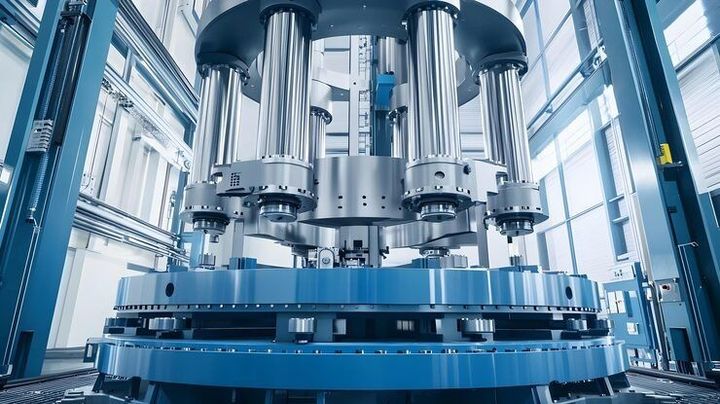
A hydraulic press machine generally consists of a hydraulic pump, fluid reservoir, cylinders, valves, piping or hoses, controls, and a rigid frame. Depending on its design, it may operate vertically or horizontally and may use one or more cylinders.
How Hydraulic Presses Generate Force
The hydraulic system sends pressurized fluid into a cylinder. The pressure acts on the cylinder piston, producing linear movement and force. A simplified relationship is:
Force = Pressure × Piston Area
For example, increasing the piston area can increase the available force at the same hydraulic pressure. Actual machine performance depends on pressure limits, cylinder dimensions, mechanical design, fluid conditions, and other factors.
Common Types of Hydraulic Press Machines
Hydraulic presses can be classified according to their frame design, movement, application, and method of operation. Common types include:
- Four-column presses, which use multiple vertical columns to support the working structure.
- C-frame presses, which have an open front that can provide easier access to the working area.
- H-frame presses, which use a rigid frame and are commonly associated with general forming and workshop applications.
- Bench hydraulic presses, which are relatively compact systems designed for smaller tasks.
- Hydraulic forging presses, which are designed for forming metal under high compressive forces.
- Hydraulic punching presses, which apply controlled force for creating holes or other shapes.
- Horizontal hydraulic presses, which perform pressing operations along a horizontal axis.
Importance
Hydraulic presses are important because many manufacturing and maintenance operations require controlled compressive force. Mechanical methods can become difficult when materials are thick, hard, large, or resistant to deformation.
These machines are used in manufacturing facilities, metalworking operations, automotive production, fabrication environments, recycling processes, and maintenance workshops. The exact application depends on the machine's capacity, dimensions, tooling, control system, and material requirements.
Why Press Capacity Matters
Press capacity describes the maximum force a machine is designed to apply under specified conditions. It is commonly expressed in tons or kilonewtons.
A higher capacity does not automatically make a machine suitable for every operation. The required force depends on factors such as material properties, thickness, workpiece dimensions, tooling geometry, and the particular forming or pressing process.
A machine should therefore be evaluated according to the complete application rather than capacity alone.
Hydraulic Press Machine Capacity
Capacity is one of the main technical specifications used when comparing hydraulic presses. A small workshop press may operate at a relatively low force, while industrial forming presses can be designed for forces measured in hundreds or thousands of tons.
The following table illustrates general categories rather than fixed industry limits:
| Press category | Typical relative capacity | Common applications |
|---|---|---|
| Small workshop press | Low | Assembly, bearing work, straightening |
| Medium hydraulic press | Moderate | Bending, forming, punching |
| Industrial forming press | High | Metal forming and component production |
| Heavy forming press | Very high | Large-scale forming and specialized applications |
The appropriate capacity depends on the process and machine design. Operating a press beyond its rated limits can create mechanical and safety hazards.
Benefits of Hydraulic Force Control
Hydraulic systems can provide controlled force and movement. Depending on the design, operators can regulate pressure, piston movement, and pressing speed.
This makes hydraulic presses suitable for processes where gradual force application is required. However, pressure control does not eliminate the need for proper tooling, guarding, inspection, and operating procedures.
Recent Updates
From 2024 through 2026, hydraulic press technology has continued to develop alongside broader trends in industrial automation, energy management, digital monitoring, and workplace safety.
Modern hydraulic systems increasingly incorporate electronic controls, programmable logic controllers, sensors, and human-machine interfaces. These technologies can allow operators to monitor pressure, position, cycle conditions, and other operating parameters.
Automation and Digital Controls
Automated hydraulic presses can integrate sensors and programmable controls to repeat defined pressing cycles. Depending on the system, automated control may regulate piston movement, dwell time, pressure, and return movement.
This is particularly relevant to repetitive manufacturing operations where consistent process parameters are important. Automated systems may also provide diagnostic information when abnormal operating conditions occur.
Energy Efficiency
Hydraulic systems have traditionally used pumps that operate continuously or according to conventional pressure-control methods. Newer systems may use variable-speed drives, variable-displacement pumps, improved hydraulic circuits, or electronic controls to reduce unnecessary energy consumption.
Energy performance varies substantially between machines, so the hydraulic circuit, pump type, operating cycle, load profile, and control method all need to be considered.
Condition Monitoring
Sensors can be used to monitor pressure, temperature, vibration, fluid condition, and other operating parameters. Monitoring can help identify changes in machine behavior before they develop into larger operational problems.
Digital records can also help maintenance teams understand how equipment has been operating over time. However, sensor-based monitoring does not replace physical inspection and established maintenance procedures.
Laws or Policies
Hydraulic press machines are subject to workplace safety requirements that vary according to the country, industry, machine configuration, and workplace conditions. In India, the Factories Act, 1948 contains provisions concerning machinery safety and precautions around dangerous moving parts.
The Act includes requirements related to fencing machinery, protection of workers around moving components, and precautions for specific machinery operations. It also establishes general duties concerning worker safety, training, supervision, and safe systems of work. (labour.gov.in)
India is also implementing the Occupational Safety, Health and Working Conditions Code framework. The Ministry of Labour and Employment provides the Code and associated central rules and explanatory material. Requirements applicable to a particular workplace can depend on the nature of the establishment and the applicable regulatory framework. (labour.gov.in)
The Bureau of Indian Standards also maintains standards covering machinery, hydraulic equipment, electrical equipment, industrial safety, and related subjects. Relevant standards should be identified according to the specific machine and application.
Safety requirements can also arise from electrical regulations, pressure-related equipment requirements, environmental rules, and workplace-specific procedures. The exact legal requirements should be checked for the location and type of installation.
Tools and Resources
Several technical resources can help users understand hydraulic press machines and evaluate their operating requirements.
Hydraulic Force Calculators
Hydraulic force calculations can provide an initial understanding of the relationship between hydraulic pressure and piston area. A basic calculation uses:
Force = Pressure × Area
For example, if pressure is expressed in pascals and piston area in square meters, the resulting force is expressed in newtons. Engineering calculations for an actual machine require consideration of system losses, pressure limits, cylinder design, and other factors.
Machine Manuals
The manufacturer's technical manual is an important reference for operating pressure, rated capacity, hydraulic-fluid requirements, controls, maintenance intervals, and safety procedures.
Manuals can also identify compatible tooling and provide information about inspection points and machine-specific limitations.
Hydraulic Circuit Diagrams
A hydraulic circuit diagram shows how pumps, cylinders, valves, reservoirs, filters, and other components interact. Learning to read these diagrams can help users understand how pressure and fluid movement are controlled.
Standards and Regulatory Resources
Government and standards organizations provide technical and regulatory information related to machinery safety. In India, the Bureau of Indian Standards provides resources for searching applicable Indian Standards, while the Ministry of Labour and Employment provides access to occupational safety legislation and related information.
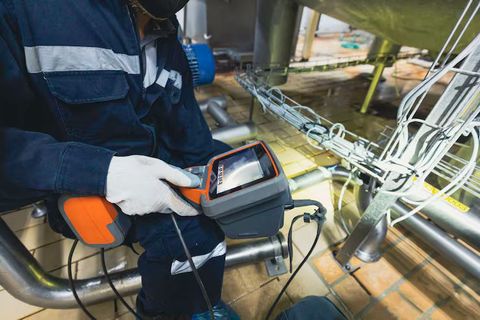
Basic Inspection Checklist
A general hydraulic press inspection may consider:
- Hydraulic hoses and connections
- Fluid level and visible leakage
- Cylinder and piston condition
- Pressure gauges and controls
- Guards and protective devices
- Frame and structural components
- Electrical connections
- Emergency stopping arrangements
- Tooling condition
- Unusual noise, vibration, or temperature
The exact inspection schedule should follow the machine documentation and applicable workplace procedures.
FAQs
What is a hydraulic press machine?
A hydraulic press machine is equipment that uses pressurized fluid to generate mechanical force through a hydraulic cylinder. It can be used for pressing, forming, bending, punching, straightening, compacting, and related operations.
How is hydraulic press machine capacity measured?
Hydraulic press capacity is commonly expressed in tons or kilonewtons and represents the force the machine is designed to apply. The required capacity depends on the material, process, tooling, dimensions, and other operating conditions.
What are the main components of a hydraulic press machine?
Common components include the hydraulic pump, reservoir, hydraulic cylinder, piston, valves, hoses or piping, pressure-control devices, controls, and structural frame. Additional components may include filters, sensors, gauges, cooling equipment, and automated controls.
What are hydraulic press machines used for?
Hydraulic presses are used for metal forming, bending, punching, straightening, assembly, compression, forging, molding, and other processes requiring controlled mechanical force. Applications vary according to the press design and tooling.
What safety factors should be considered when using a hydraulic press machine?
Important factors include rated capacity, guarding, tooling condition, hydraulic pressure, hose and connection integrity, operator training, emergency controls, electrical safety, and protection from moving parts. The machine should be operated according to its technical documentation and applicable workplace requirements.
Conclusion
A hydraulic press machine converts hydraulic pressure into controlled mechanical force for processes such as forming, bending, punching, straightening, and assembly. Its capacity, frame design, hydraulic components, tooling, and control system determine how it can be applied. Recent developments have increased the use of automation, sensors, electronic controls, and energy-management technologies. Safe operation depends on appropriate machine selection, rated operating limits, guarding, inspection, training, and applicable workplace requirements.