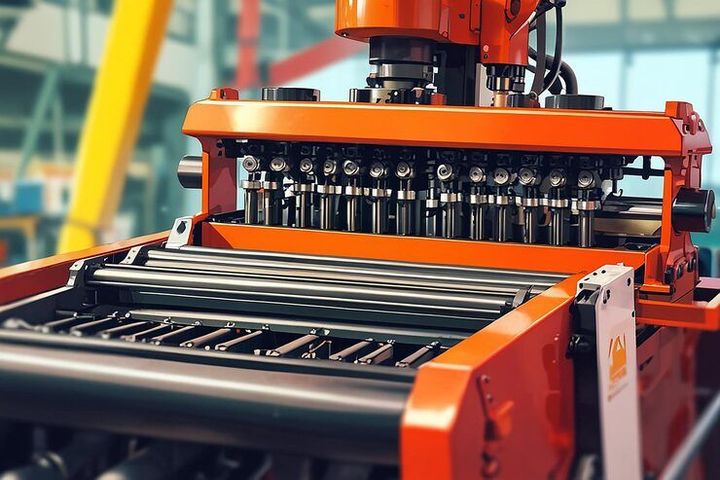
Hydraulic Press Machines Guide: Explore Basics and Industrial Machine Insights
Hydraulic press machines are industrial tools designed to apply pressure through hydraulic force.
These machines use liquid pressure to compress, shape, bend, or form materials such as metal, plastic, rubber, and composite products. The concept is based on Pascal’s Law, which explains how pressure applied to a confined liquid spreads equally in all directions.
The early forms of hydraulic systems appeared during the Industrial Revolution when manufacturers needed equipment capable of producing consistent pressure for heavy industrial tasks. Over time, hydraulic press machines became common in manufacturing plants, workshops, and engineering facilities. Today, industrial hydraulic press machines are used in many sectors including automotive production, aerospace manufacturing, metal fabrication, construction, and electronics.
Modern hydraulic press manufacturers produce different machine types depending on industrial requirements. Some machines are designed for simple workshop tasks, while others support high-tonnage industrial operations involving large metal parts and precision forming processes.
Common Types of Hydraulic Press Machines
Hydraulic press machines are available in several forms:
- C-frame presses are compact machines often used in workshops and small production facilities.
- H-frame presses provide stronger structural support for heavier industrial work.
- Four-column presses distribute pressure evenly across larger surfaces.
- CNC hydraulic press machines use computerized controls for improved accuracy and repeatable production cycles.
- Automatic hydraulic press machines include programmable systems that reduce manual operation during repetitive manufacturing tasks.
Basic Working Principle
A hydraulic press operates using two cylinders connected by hydraulic fluid. When force is applied to a smaller cylinder, pressure transfers through the liquid to a larger cylinder. This process multiplies the applied force and creates powerful compression.
Importance
Hydraulic press machines play a major role in modern industrial production. They help manufacturers shape materials into components used in vehicles, machinery, household products, and infrastructure equipment. Many industries rely on hydraulic systems because they can apply consistent pressure while handling different material thicknesses and shapes.
Role in Metal Forming
A hydraulic press for metal forming is commonly used to shape steel, aluminum, copper, and other metals into industrial parts. The controlled pressure helps reduce material damage and improves dimensional accuracy.
Typical metal-forming applications include:
- Deep drawing
- Punching
- Bending
- Compression molding
- Stamping
- Coining
A hydraulic press for sheet metal is especially useful in manufacturing flat metal components used in construction panels, appliance parts, and industrial enclosures.
Importance in the Automotive Industry
The hydraulic press for automotive industry applications supports the production of body panels, brake components, engine parts, and structural frames. Automotive manufacturers often use automated systems to improve production consistency and reduce material waste.
High-tonnage hydraulic press machines are commonly used for:
| Application Area | Typical Function |
|---|---|
| Vehicle body production | Metal stamping and forming |
| Engine manufacturing | Forging and component shaping |
| Brake systems | Compression and molding |
| Chassis production | Structural metal forming |
| Battery housing production | Precision pressing operations |
Workshop and Small-Scale Manufacturing Use
A hydraulic press machine for workshop environments is often smaller than industrial production units. These machines support repair work, maintenance operations, bearing installation, and light metal shaping tasks.
Workshops frequently use hydraulic presses for:
- Removing or installing bearings
- Straightening bent components
- Press-fitting machine parts
- Small forging operations
The flexibility of hydraulic systems allows one machine to support multiple industrial functions.
Recent Updates
Between 2024 and 2026, hydraulic press technology continued evolving toward automation, energy efficiency, and digital monitoring. Manufacturers increasingly integrated software systems and smart sensors into industrial equipment.
Growth of Automation
Automatic hydraulic press machines became more common in manufacturing facilities focused on reducing repetitive manual operations. Automated systems can monitor pressure, cycle time, and material positioning during production.
These systems may include:
- Programmable logic controllers (PLCs)
- Robotic material handling
- Digital pressure monitoring
- Touchscreen interfaces
- Automated safety controls
Automation also helps reduce inconsistencies in large production environments.
Expansion of CNC Systems
CNC hydraulic press machines gained wider adoption in precision manufacturing industries. Computer numerical control allows operators to program movement, pressure levels, and cycle sequences with greater accuracy.
Industries using CNC systems include:
- Aerospace
- Automotive manufacturing
- Medical device production
- Electronics fabrication
- Industrial machinery manufacturing
CNC systems also support repeatable production, which is important for standardized industrial parts.
Energy Efficiency Developments
Many hydraulic press manufacturers introduced variable-speed pumps and servo-hydraulic systems to improve energy management. Traditional hydraulic systems may consume power continuously, while newer systems adjust energy use according to operational demand.
Recent improvements include:
- Reduced hydraulic fluid consumption
- Lower heat generation
- Improved pressure control
- Noise reduction during operation
- Enhanced machine diagnostics
Increased Focus on Safety
Modern industrial hydraulic press machines increasingly include safety mechanisms designed to reduce workplace risks. Updated systems may include:
- Light curtain sensors
- Emergency stop systems
- Automatic overload protection
- Enclosed operating areas
- Two-hand control activation
Industrial safety regulations continue influencing machine design across global manufacturing sectors.
Laws or Policies
Hydraulic press machines are regulated by workplace safety standards, industrial manufacturing rules, and environmental policies in many countries. Regulations often focus on worker protection, machine operation standards, and hydraulic fluid management.
Workplace Safety Standards
Industrial equipment operators are generally required to follow workplace safety rules related to machine guarding, operator training, and emergency shutdown systems.
Common safety requirements include:
- Proper machine guarding
- Operator instruction programs
- Routine equipment inspection
- Pressure limit controls
- Lockout and tagout procedures during maintenance
Manufacturing facilities may also conduct periodic safety assessments to identify operational risks.
Environmental Regulations
Hydraulic systems use fluids that require controlled handling and disposal procedures. Environmental policies in several regions address:
- Hydraulic fluid leakage prevention
- Waste oil disposal
- Energy consumption management
- Industrial emissions reduction
Manufacturers increasingly use environmentally compatible hydraulic fluids in response to changing industrial regulations.
International Manufacturing Standards
Hydraulic press manufacturers often follow international engineering and quality standards for machine construction and performance testing.
Examples of recognized industrial standards include:
- ISO manufacturing standards
- CE safety requirements in Europe
- OSHA workplace safety rules in the United States
- Electrical compliance standards for industrial machinery
Compliance standards vary depending on the country and industrial application.
Tools and Resources
Several digital tools and industrial resources help engineers, workshop operators, and manufacturers manage hydraulic press operations more effectively.
Hydraulic Pressure Calculators
Online hydraulic calculators help estimate force, pressure, and cylinder size requirements for industrial applications. These tools are commonly used during machine planning and engineering design.
Typical calculations include:
- Tonnage estimation
- Cylinder force calculation
- Pressure conversion
- Hydraulic flow analysis
CAD and Simulation Software
Computer-aided design software allows engineers to create and test hydraulic press components before production. Simulation programs help evaluate pressure distribution and structural strength.
Common software categories include:
- 3D modeling tools
- Finite element analysis software
- Hydraulic circuit simulation platforms
- CNC programming software
Industrial Standards Websites
Engineering organizations and manufacturing associations publish technical references related to industrial hydraulic press machines. These resources may include:
- Safety manuals
- Maintenance guides
- Equipment specifications
- Engineering reference documents
Monitoring and Maintenance Systems
Digital monitoring systems help operators track machine performance. Sensors and software platforms can record:
- Pressure readings
- Hydraulic fluid temperature
- Production cycle counts
- Machine downtime
- Maintenance schedules
These systems support preventive maintenance planning and operational monitoring.
FAQs
What are hydraulic press machines used for?
Hydraulic press machines are used for shaping, compressing, bending, stamping, and forming materials. Industries commonly use them for metalworking, automotive production, forging, and industrial assembly operations.
How do industrial hydraulic press machines work?
Industrial hydraulic press machines work by transferring pressure through hydraulic fluid between connected cylinders. This pressure multiplication creates strong compressive force capable of shaping or forming industrial materials.
What is the difference between CNC hydraulic press machines and manual machines?
CNC hydraulic press machines use computerized controls to automate movement, pressure settings, and production cycles. Manual machines rely more heavily on operator control and mechanical adjustments.
Why is a hydraulic press for sheet metal important in manufacturing?
A hydraulic press for sheet metal helps shape flat metal into industrial parts with controlled pressure and consistent accuracy. It is commonly used in appliance manufacturing, automotive production, and construction material fabrication.
What are high tonnage hydraulic press machines used for?
High tonnage hydraulic press machines are designed for heavy industrial operations such as forging, large-scale metal forming, structural component production, and compression molding of dense materials.
Conclusion
Hydraulic press machines remain an important part of modern manufacturing and industrial production. These systems support metal forming, forging, automotive manufacturing, and workshop operations through controlled hydraulic pressure. Recent developments between 2024 and 2026 focused on automation, CNC integration, energy efficiency, and workplace safety improvements. Industrial regulations and engineering standards continue shaping how hydraulic press manufacturers design and operate these machines across global industries.