Industrial Air Separation Machines Guide: Types, Working Principles & Applications
Industrial air separation machines are systems designed to separate the main components of atmospheric air into useful gases. Air normally contains around 78% nitrogen, 21% oxygen, and small quantities of argon, carbon dioxide, water vapour, and other gases. Air separation technology isolates these components for use in manufacturing, healthcare, metal processing, food preservation, chemical production, electronics, energy, and other industries.
The main purpose of an air separation plant is to produce gases with a specific level of purity and pressure. Depending on the application, a system may generate nitrogen, oxygen, argon, or a combination of these gases. Some systems produce gases directly at the point of use, while larger facilities may separate and store gases in liquid form.
Air separation exists because many industrial processes need a controlled gas environment. Oxygen can support combustion and chemical reactions, while nitrogen is widely used where an inert atmosphere is required. Argon is valued for its low chemical reactivity in specialised processes.
The design of an industrial air separation machine depends on several factors, including required gas purity, production volume, operating pressure, energy efficiency, available space, and the type of industrial process.
Why Air Separation Technology Matters Today
Air separation machines play an important role in modern industrial infrastructure. Many production systems depend on a continuous and reliable supply of industrial gases. Without appropriate gas separation technology, several manufacturing and processing activities would be more difficult to control.
One major advantage is process consistency. Industrial operations often require a stable gas composition. Air separation systems help provide gases with controlled purity and pressure, supporting predictable process conditions.
These systems are also important for safety. Nitrogen can help reduce oxygen levels in certain controlled environments, while oxygen is used in processes that require enhanced combustion or oxidation. The correct gas must be selected and handled according to the requirements of each application.
Air separation technology affects several industries, including:
- Steel and metal manufacturing
- Chemical and petrochemical processing
- Healthcare and medical facilities
- Food packaging and preservation
- Electronics manufacturing
- Glass production
- Oil and gas processing
- Energy and clean fuel development
- Pharmaceutical manufacturing
- Wastewater and environmental processes
Another important issue is energy efficiency. Air separation can require significant electrical energy, especially in large cryogenic plants. This has increased interest in improved compressors, advanced controls, efficient adsorbent materials, membrane systems, and digital monitoring.
The technology also supports emerging industrial sectors. Nitrogen is important in ammonia production, while oxygen and nitrogen can be used in several energy and chemical pathways. Recent research has also explored the use of pressure swing adsorption systems for decentralised nitrogen production in power-to-ammonia applications.
Main Types of Industrial Air Separation Machines
Different separation methods are selected according to production requirements and gas purity targets.
Cryogenic Air Separation Units
Cryogenic air separation is widely used for large-scale production and high-purity gas generation. The process begins with air compression and purification. Moisture, carbon dioxide, and other contaminants are removed before the air enters the low-temperature separation process.
The purified air is cooled until it becomes a liquid or reaches very low temperatures. The components are then separated according to their different boiling points through distillation.
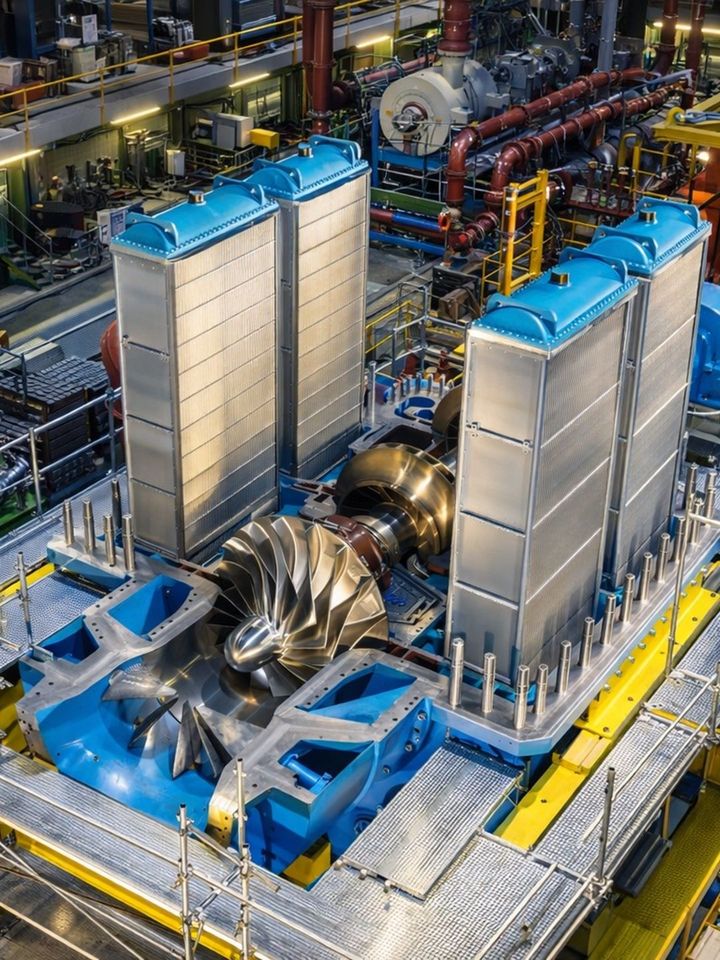
Cryogenic systems can produce large quantities of oxygen, nitrogen, and argon. They are generally associated with large industrial facilities because the equipment involves refrigeration, compressors, distillation columns, heat exchangers, and complex control systems.
Pressure Swing Adsorption Systems
Pressure Swing Adsorption, commonly known as PSA, separates gases using specialised adsorbent materials. These materials selectively retain certain components of compressed air while allowing other gases to pass through.
A PSA system normally uses two or more adsorption vessels. While one vessel is under pressure and producing the desired gas, another vessel is regenerated by reducing pressure. The vessels alternate between adsorption and regeneration.
PSA systems are often used for nitrogen and oxygen generation. Their compact design and flexible operation make them suitable for many medium-scale and decentralised applications.
Digital modelling is becoming increasingly relevant to PSA technology. Recent research has examined digital twin models that simulate adsorption columns, valves, product tanks, pressure changes, and gas movement to support system optimisation and performance analysis.
Vacuum Pressure Swing Adsorption
Vacuum Pressure Swing Adsorption, or VPSA, combines pressure changes with vacuum conditions. The vacuum stage helps regenerate the adsorbent material and can support oxygen generation in specific applications.
VPSA systems are commonly considered where continuous gas production is required and the application needs a different pressure profile from conventional PSA technology.
Membrane Air Separation Systems
Membrane systems use selective membranes that allow certain gases to pass through more quickly than others. The difference in gas permeability creates separate gas streams.
Membrane systems can have a compact design and may be suitable for applications where moderate purity is sufficient. Their performance depends on membrane material, feed pressure, temperature, gas composition, and system design.
Research in membrane technology continues to focus on improved selectivity, lower energy requirements, durability, and scalable industrial applications. Recent developments in advanced membrane materials have also highlighted the broader industrial importance of selective molecular separation and energy-efficient processing.
How Industrial Air Separation Machines Work
Although different technologies use different methods, the overall process usually follows several key stages.
First, atmospheric air enters the system through an intake. The air is then compressed to the pressure required by the separation technology.
Next, contaminants such as moisture, dust, oil vapour, and carbon dioxide are removed. This purification stage is especially important in cryogenic systems because contaminants can freeze at very low temperatures.
The cleaned air then enters the separation stage. Cryogenic systems use low-temperature distillation, PSA systems use adsorbent materials, and membrane systems use selective membranes.
The separated gas is then collected and monitored. Sensors can measure purity, pressure, flow rate, temperature, and other operating conditions.
Depending on the plant design, the gas may be delivered directly through pipelines, compressed into storage vessels, or converted into a liquid for storage and transportation.
A typical system includes:
- Air intake filters
- Air compressors
- Purification units
- Adsorption vessels or membrane modules
- Heat exchangers or refrigeration equipment
- Distillation columns in cryogenic plants
- Gas storage vessels
- Control and monitoring systems
- Safety equipment and pressure protection devices
Industrial Applications of Air Separation Machines
Air separation technology has applications across a wide range of industries.
In steel manufacturing, oxygen can support high-temperature combustion and improve process efficiency. Nitrogen may be used for inerting and controlled atmospheres.
In chemical and petrochemical plants, nitrogen is commonly used to reduce unwanted reactions and protect equipment from oxygen exposure. Oxygen can support selected oxidation and chemical processes.
Healthcare facilities use medical oxygen systems under strict quality and safety requirements. The production and distribution system must be designed according to applicable medical gas standards.
In food processing, nitrogen can help create controlled atmospheres for packaging and storage. The gas environment can support product quality and reduce exposure to oxygen.
Electronics manufacturing often requires controlled environments because oxygen, moisture, and contaminants can affect sensitive materials and production processes.
Glass production and metal fabrication may use oxygen or nitrogen depending on the furnace, cutting, welding, or processing method.
The energy sector is also exploring gas separation technology for applications involving hydrogen, ammonia, carbon capture, and other industrial pathways.
Recent Technology Trends and Developments
The air separation industry has increasingly focused on energy efficiency, automation, digital monitoring, and flexible production.
One major trend is the development of digital twins and advanced process simulations. These tools can model gas flow, pressure changes, adsorption cycles, and equipment performance before changes are made to a physical system. This can support better understanding of operating conditions and maintenance planning.
Another trend is the development of improved adsorbent materials and membranes. Researchers are working to improve separation selectivity and reduce the energy required for gas production.
The integration of artificial intelligence and industrial data analytics is also becoming more important. Monitoring systems can analyse pressure, temperature, purity, vibration, and energy data to identify unusual operating patterns.
During 2026, research attention has continued to examine PSA systems for flexible nitrogen generation in emerging power-to-ammonia processes. This reflects the growing connection between air separation technology and lower-carbon industrial development.
The industry is also moving toward more modular designs. Smaller systems can support decentralised gas generation where transporting gas from a large central facility is less practical.
Laws, Safety Rules, and Industrial Policies
Regulatory requirements depend on the country, gas type, plant size, storage method, pressure level, and industrial application. In India, air separation facilities may need to consider rules covering pressure equipment, gas cylinders, cryogenic storage, environmental protection, workplace safety, and industrial approvals.
The Petroleum and Explosives Safety Organisation, commonly known as PESO, administers rules connected with certain gas cylinders, pressure vessels, and hazardous materials. India has also introduced amendments and regulatory updates related to gas cylinders during 2025 and 2026.
Environmental compliance is another important area. The Air (Prevention and Control of Pollution) Act and related regulatory frameworks can affect industrial operations, including requirements connected with pollution control and environmental permissions. India Code records amendments and updated guidelines during 2025 and January 2026.
Important compliance areas may include:
- Pressure vessel safety
- Cryogenic liquid handling
- Gas cylinder storage and transportation
- Emergency response planning
- Industrial emissions and environmental permissions
- Electrical and fire safety
- Worker training and protective procedures
- Periodic inspection and equipment testing
Specific requirements should always be checked with the relevant national and state authorities before designing or operating an industrial air separation facility.
Helpful Tools and Resources
Professionals, students, engineers, and plant operators can use several types of resources to understand and manage air separation systems.
Useful resources include:
- Process simulation software for gas separation calculations
- Energy monitoring tools for compressor and refrigeration systems
- Gas purity analysers
- Pressure and flow monitoring instruments
- Preventive maintenance checklists
- Process flow diagram templates
- Equipment inspection schedules
- Industrial safety training materials
- Engineering calculation worksheets
- Digital twin and process modelling platforms
- Regulatory compliance checklists
- Technical standards databases
- Industrial gas safety manuals
A basic process calculation may examine air flow, gas purity, recovery rate, pressure, temperature, and energy consumption. These measurements help engineers compare operating conditions and identify areas for improvement.
Frequently Asked Questions
What are industrial air separation machines?
Industrial air separation machines are systems that separate atmospheric air into gases such as nitrogen, oxygen, and argon. Different technologies are used depending on required purity, capacity, pressure, and application.
Which air separation method is used for large-scale gas production?
Cryogenic air separation is commonly used for large-scale production and high-purity gas generation. PSA, VPSA, and membrane systems may be suitable for different capacity and purity requirements.
What is the difference between PSA and cryogenic air separation?
PSA uses adsorbent materials and changing pressure conditions to separate gases. Cryogenic separation uses very low temperatures and distillation. PSA systems are often more compact, while cryogenic plants are commonly associated with large-scale production.
Why is air purification important before separation?
Air purification removes contaminants such as moisture, carbon dioxide, oil vapour, and particles. This helps protect equipment and supports stable separation performance, especially in low-temperature systems.
Are air separation plants regulated?
Yes. Regulatory requirements vary by country and application. They may include rules for pressure equipment, gas storage, cryogenic materials, environmental protection, fire safety, and workplace safety.
Conclusion
Industrial air separation machines are essential technologies for producing controlled supplies of nitrogen, oxygen, argon, and other separated gas streams. Cryogenic systems, PSA, VPSA, and membrane technologies each have different operating principles and application areas.