Industrial Assembly Equipment Guide: AI, Robotics & Smart Automation
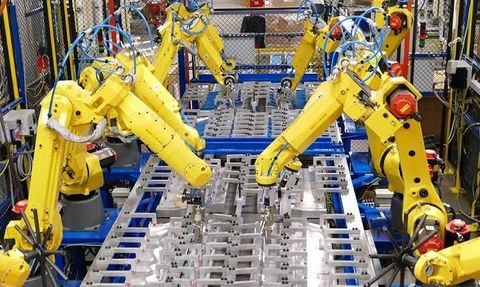
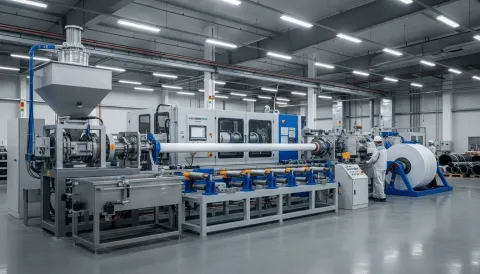
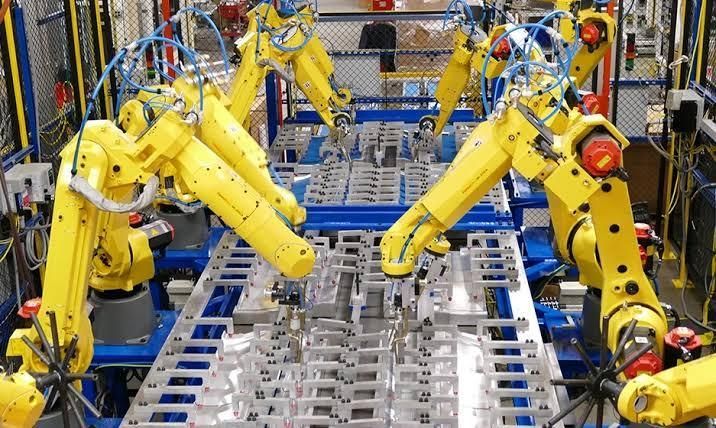
Industrial assembly equipment refers to machines and automated systems used to bring individual parts together to create a finished product. These systems can perform tasks such as positioning, fastening, pressing, welding, inserting, dispensing, testing, and inspection.
Assembly equipment exists because modern manufacturing often involves thousands of repeated operations. Performing every operation manually can create variations in speed, positioning, and accuracy. Automated equipment helps manufacturers establish a consistent process while allowing workers to supervise, program, maintain, and improve production systems.
Common equipment includes:
- Automated assembly machines
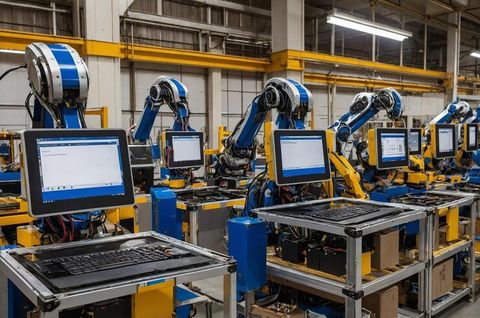
- Robotic arms and collaborative robots
- Pick-and-place systems
- Screwdriving and fastening equipment
- Press-fit machines
- Conveyor and material-handling systems
- Machine-vision inspection systems
- Programmable logic controllers
- Sensors and measurement equipment
- Industrial computers and control systems
A modern assembly line can combine several of these technologies. For example, a product may first be positioned by a conveyor, assembled by a robotic system, checked by a vision camera, and then transferred to another production stage.
The move toward Industry 4.0 has expanded the role of assembly equipment. Instead of operating as isolated machines, equipment can now exchange production data with control systems and manufacturing software.
Why Smart Assembly Matters Today
Manufacturing requirements are changing as products become more complex and production environments become increasingly data-driven. Industrial assembly equipment can address several practical challenges.
One important area is production consistency. Automated equipment can repeat programmed movements and operating sequences with controlled parameters. This is particularly useful when components require accurate positioning or repeatable fastening.
Another area is quality control. Sensors and machine vision can monitor dimensions, component presence, orientation, surface conditions, and assembly results. Automated inspection does not remove the need for human quality expertise, but it can provide additional information during production.
Smart assembly also supports production flexibility. Modern systems may be configured for different products or assembly sequences. Digital controls can make it easier to adjust parameters when production requirements change.
The technology affects several industries, including:
| Industry | Typical Assembly Applications |
|---|---|
| Automotive | Components, electrical systems, interiors |
| Electronics | Circuit boards, connectors, modules |
| Medical equipment | Precision component assembly |
| Appliances | Motors, housings, electrical components |
| Aerospace | Complex structural and electronic assemblies |
| Energy | Battery and power-system components |
| Industrial machinery | Mechanical and electrical assemblies |
AI and robotics are becoming increasingly important within this environment. The International Federation of Robotics reported in January 2026 that the global market value of industrial robot installations had reached an all-time high of US$16.7 billion. Its 2026 trend report highlighted AI and greater robotic autonomy as important developments.
The wider purpose is not simply to place more robots on production floors. The objective is to create systems that can collect useful information, respond to changing conditions, and support better production decisions.
Key Technologies Used in Modern Assembly
Robotics and collaborative automation
Industrial robots can perform repetitive movements involving picking, positioning, fastening, welding, dispensing, and material transfer. Collaborative robots are designed for applications where humans and robots may work in closer proximity, subject to appropriate risk assessment and safeguards.
Artificial intelligence
AI can analyze production information, identify patterns, support visual inspection, and help detect unusual machine behavior. In some systems, AI-based technologies can assist with planning and adapting robotic movements.
Machine vision
Cameras combined with image-processing software can inspect components without relying entirely on manual visual checks. Vision systems can identify missing parts, incorrect orientation, surface differences, and other predefined conditions.
Sensors and industrial controls
Sensors monitor factors such as position, temperature, pressure, force, vibration, and proximity. Programmable logic controllers can use this information to control sequences and coordinate different pieces of equipment.
Digital twins
A digital twin is a digital representation of a physical process, machine, or production environment. It can be used to study process behavior, simulate changes, and support engineering decisions before physical changes are introduced.
Recent Trends in Industrial Assembly Automation
Several developments have become more visible during 2025 and 2026.
The International Federation of Robotics identified AI and autonomy as a major robotics trend for 2026. It also highlighted energy efficiency, robots working in new application areas, and advances in robot programming and integration.
Robot adoption is also increasing across manufacturing regions. In April 2026, the International Federation of Robotics reported that manufacturing robot density in 2024 reached 267 robots per 10,000 employees in Western Europe, 204 in North America, and 131 in Asia. These figures describe installed industrial robots relative to manufacturing employment and should not be interpreted as a measure of productivity by themselves.
India has also placed greater attention on advanced manufacturing. On October 29, 2025, NITI Aayog presented a roadmap identifying AI and machine learning, digital twins, advanced materials, and robotics as high-impact technologies across priority manufacturing sectors.
In February 2026, government and industry stakeholders also discussed an advanced manufacturing strategy involving manufacturing enterprises, MSMEs, research institutions, startups, and technology developers.
Another development is the growing interest in AI-enabled inspection and predictive maintenance. Instead of using equipment only to perform an assembly operation, manufacturers can increasingly use operational data to identify abnormal conditions and plan maintenance activities.
Laws, Safety Rules, and Policies in India
For Indian manufacturing facilities, assembly equipment can be affected by machinery safety, electrical safety, product standards, workplace requirements, and sector-specific regulations.
A particularly relevant recent development is the Machinery and Electrical Equipment Safety (Omnibus Technical Regulation) Amendment Order, 2025. According to the Ministry of Heavy Industries, the regulation applies to specified machines and electrical equipment from September 1, 2026. Applicable equipment must conform to relevant Indian Standards, including machinery safety requirements based on IS 16819:2018/ISO 12100:2010. BIS is identified as the certifying and enforcement authority.
The government subsequently published a Second Amendment Order in November 2025, so manufacturers and equipment users should check the latest applicable notification rather than relying only on older compliance information.
India is also developing broader manufacturing and robotics capabilities. The Economic Survey 2025–26 describes the National Mission on Manufacturing as a policy framework aimed at strengthening manufacturing and integration with global value chains.
In February 2026, a government Technology Advisory Group discussed a strategic roadmap for robotics in India, including safety, testing infrastructure, research, skills, and standards.
Because requirements can differ according to equipment type and industry, organizations should verify the current Indian Standards, applicable technical regulations, electrical requirements, and workplace safety rules before commissioning machinery.
Tools and Resources for Assembly Planning
Several general tools can help engineers, production teams, and students understand or plan automated assembly systems.
CAD and simulation software
Computer-aided design tools can help create component layouts and equipment models. Simulation platforms can then be used to study robot movement, cycle sequences, workstation layouts, and potential interference.
Production monitoring dashboards
Manufacturing dashboards can display information such as production counts, equipment status, downtime, alarms, and quality results.
OEE calculators
Overall Equipment Effectiveness calculators commonly consider availability, performance, and quality. They can provide a structured way to evaluate equipment utilization.
Risk-assessment templates
Machine safety assessments can document hazards, protective measures, operating conditions, and residual risks. Templates should be adapted to the specific machine rather than treated as universal compliance documents.
Robot programming environments
Robot programming tools allow engineers to define movements, sequences, coordinates, inputs, outputs, and safety-related operating conditions.
Learning resources
Useful educational materials include industrial automation textbooks, machinery safety standards, robotics training material, electrical-control tutorials, manufacturing engineering courses, and technical documentation.
Frequently Asked Questions
What is industrial assembly equipment?
Industrial assembly equipment consists of machines, automation systems, controls, robots, and inspection technologies used to combine components into completed products or assemblies.
How does AI improve assembly automation?
AI can analyze production data, support machine-vision inspection, identify patterns, and assist with certain planning and decision-making tasks. Its actual capabilities depend on the system, data, and application.
Are robots replacing all manual assembly?
No. Many assembly environments continue to combine people and automated equipment. Workers can remain responsible for supervision, programming, quality decisions, maintenance, troubleshooting, and tasks that are difficult to automate.
What is machine vision used for?
Machine vision uses cameras and image-processing technology to inspect products or components. Common applications include checking presence, orientation, dimensions, markings, and predefined visual characteristics.
What should be considered before introducing automated assembly equipment?
Important considerations include the product design, production volume, process requirements, safety risks, quality criteria, equipment integration, worker interaction, maintenance, data requirements, and applicable regulations.
Conclusion
Industrial assembly equipment is evolving from standalone machinery into connected production systems that combine robotics, sensors, machine vision, industrial controls, and data technologies.AI and smart automation are becoming important parts of this development, particularly for inspection, process monitoring, robotic programming, and production analysis. At the same time, successful automation still depends on sound engineering, appropriate safety measures, trained personnel, and clearly defined manufacturing processes.