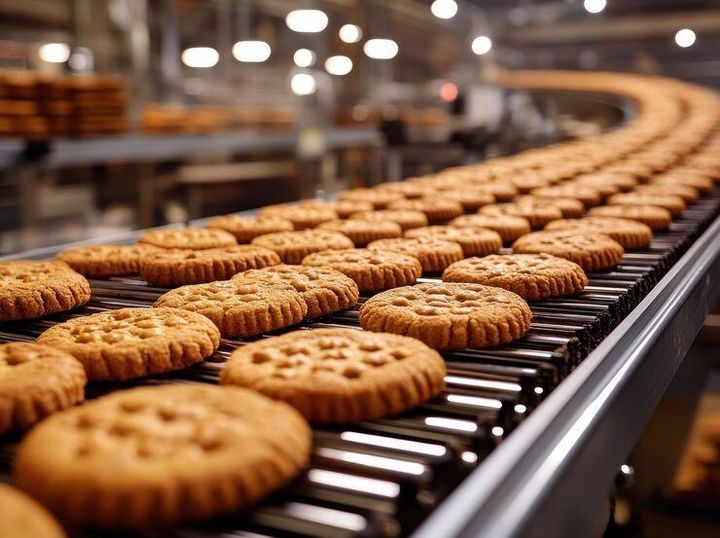
Industrial Biscuit Manufacturing Process: Equipment, Automation, Quality Control & Industry Trends
Industrial biscuit manufacturing refers to the large-scale production of biscuits using automated equipment, standardized production methods, and quality control procedures. Unlike traditional handmade baking, industrial manufacturing is designed to produce consistent products while maintaining food safety, efficiency, and uniform quality.
The industry has grown significantly over the past few decades because of increasing urbanization, changing lifestyles, and the demand for convenient packaged foods. Modern manufacturing facilities use advanced production systems that help ensure every biscuit maintains similar size, texture, taste, and appearance.
The manufacturing process combines food science, engineering, quality assurance, packaging technology, and supply chain management. Every stage is carefully monitored to reduce waste while maintaining product consistency.
Today, industrial biscuit manufacturing supports food processing industries, agricultural supply chains, packaging sectors, logistics networks, and retail distribution systems in many countries.
Why Industrial Biscuit Manufacturing Matters
Industrial biscuit manufacturing plays an important role in the modern food industry. It helps manufacturers produce large quantities while maintaining hygiene and standardized quality.
Some major benefits include:
- Consistent product quality
- Improved food safety standards
- Higher production efficiency
- Reduced production waste
- Better inventory management
- Longer product shelf stability
- Standardized packaging
- Reliable supply for domestic and international markets
The industry also encourages technological innovation in food engineering, automation, robotics, quality testing, and sustainable manufacturing practices.
Industries That Benefit
| Industry | Primary Benefit |
|---|---|
| Food Processing | Large-scale production |
| Packaging | Standardized packing methods |
| Agriculture | Demand for grains and ingredients |
| Logistics | Distribution efficiency |
| Retail | Continuous product availability |
| Food Technology | Innovation and automation |
Understanding the Industrial Biscuit Manufacturing Process
Although recipes vary, most industrial biscuit factories follow a structured production workflow.
Ingredient Preparation
Production begins with carefully measuring ingredients such as flour, sugar, edible fats, milk solids, cocoa, salt, flavors, and permitted food additives. Accurate measurement ensures product consistency.
Dough Mixing
Industrial mixers combine ingredients into a uniform dough. Mixing time, speed, and temperature are carefully controlled because they influence the final texture.
Dough Forming
Depending on the biscuit variety, the dough may be:
- Rolled into sheets
- Cut into shapes
- Wire-cut
- Rotary molded
- Deposited using automated systems
Modern production lines can create thousands of biscuits every minute.
Baking
The shaped dough enters long industrial ovens where controlled temperatures allow biscuits to develop the desired color, flavor, and crispness.
Cooling
Freshly baked biscuits pass through cooling conveyors. Proper cooling prevents moisture buildup before packaging.
Quality Inspection
Automated inspection systems monitor:
- Shape consistency
- Weight
- Size
- Color
- Surface defects
- Broken products
Quality checks help maintain production standards throughout the manufacturing process.
Packaging
Automated packaging systems protect biscuits from moisture, contamination, and physical damage during storage and transportation.
Production Flow
Ingredients
      │
      ▼
Mixing
      │
      ▼
Dough Forming
      │
      ▼
Baking
      │
      ▼
Cooling
      │
      ▼
Quality Inspection
      │
      ▼
Packaging
      │
      ▼
Distribution
Technology Used in Modern Biscuit Manufacturing
Automation has transformed industrial biscuit manufacturing over the past decade.
Modern facilities increasingly use:
- Automated ingredient dosing systems
- Programmable production controls
- Digital temperature monitoring
- Conveyor automation
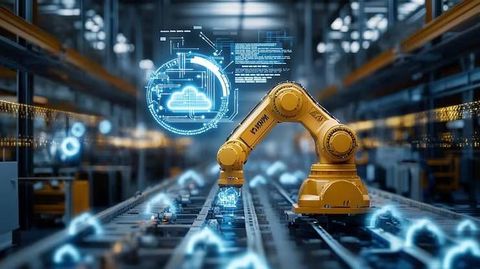
- Robotic material handling
- Machine vision inspection
- Production monitoring software
- Data analytics for quality improvement
Digital manufacturing allows operators to monitor production performance, reduce downtime, and improve operational efficiency.
Many facilities are also introducing energy-efficient equipment and improved heat recovery systems to reduce environmental impact.
Quality Standards in Biscuit Manufacturing
Quality standards help manufacturers maintain product consistency while protecting consumer health.
Important quality areas include:
- Raw material inspection
- Hygiene management
- Equipment sanitation
- Temperature control
- Moisture management
- Product traceability
- Packaging integrity
- Storage conditions
Typical Quality Checkpoints
| Production Stage | Quality Focus |
| Raw Materials | Ingredient quality |
| Mixing | Dough consistency |
| Baking | Temperature and color |
| Cooling | Moisture control |
| Packaging | Seal quality |
| Storage | Product stability |
Quality assurance teams regularly monitor production to identify deviations before products reach consumers.
Recent Industry Trends and Developments
Industrial biscuit manufacturing continues to evolve through technological innovation and changing consumer expectations.
Several developments have gained attention during the past year.
Increased Factory Automation (2025–2026)
Manufacturers have expanded the use of automated production equipment, digital monitoring systems, and artificial intelligence for quality inspection.
Greater Focus on Energy Efficiency
Production facilities are adopting improved oven technologies and energy management systems to reduce fuel consumption and improve operational sustainability.
Sustainable Packaging
Many manufacturers are exploring recyclable and lower-impact packaging materials while maintaining product protection and shelf stability.
Digital Quality Monitoring
Smart sensors and production analytics now provide real-time monitoring throughout manufacturing lines, helping identify quality issues earlier.
Improved Food Traceability
Digital documentation and batch tracking systems continue to improve traceability across ingredient sourcing, production, and distribution.
These trends reflect the industry's ongoing focus on efficiency, food safety, environmental responsibility, and technological advancement.
Laws and Policies Affecting Industrial Biscuit Manufacturing
Industrial biscuit manufacturing operates under food safety and manufacturing regulations established by national governments.
Although specific requirements vary by country, regulations generally focus on:
- Food safety
- Manufacturing hygiene
- Ingredient labeling
- Product traceability
- Worker safety
- Environmental compliance
- Packaging standards
- Quality management
Manufacturers are generally expected to maintain documented production procedures, sanitation programs, and quality control records.
Government inspections may verify compliance with food manufacturing standards, labeling requirements, and facility hygiene regulations.
Many countries also encourage food manufacturers to adopt internationally recognized food safety management systems that improve consumer confidence and support international trade.
Helpful Tools and Resources
Industrial biscuit manufacturing relies on various technical resources that support production planning and quality management.
Useful resources include:
- Production planning templates
- Quality inspection checklists
- Food safety documentation guides
- Manufacturing efficiency calculators
- Inventory management systems
- Production scheduling software
- Equipment maintenance logs
- Digital temperature monitoring tools
- Moisture measurement instruments
- Training materials for food safety practices
These resources help improve production efficiency, documentation accuracy, and operational consistency.
Frequently Asked Questions
What is industrial biscuit manufacturing?
Industrial biscuit manufacturing is the large-scale production of biscuits using automated machinery, standardized processes, and quality control systems to achieve consistent products.
Why is automation important in biscuit production?
Automation improves production speed, consistency, food safety, operational efficiency, and quality monitoring while reducing manual errors.
How is product quality maintained?
Manufacturers perform quality inspections throughout ingredient preparation, mixing, baking, cooling, packaging, and storage using standardized quality management procedures.
What technologies are commonly used today?
Modern facilities use automated mixers, conveyor systems, programmable production controls, digital sensors, inspection cameras, production monitoring software, and data analysis tools.
Why are food regulations important?
Food regulations help ensure products are manufactured under hygienic conditions, properly labeled, consistently produced, and safe for consumers.
Conclusion
Industrial biscuit manufacturing represents an advanced combination of food science, engineering, automation, and quality management. From ingredient preparation to final packaging, every stage of production is carefully controlled to maintain consistency, efficiency, and food safety.