Industrial Cutting Machines: A Complete Guide to Precision Manufacturing and Fabrication
Industrial cutting machines are specialized pieces of equipment used to cut, shape, and process various materials in manufacturing, construction, automotive production, aerospace engineering, metal fabrication, and many other industries.
These machines have evolved significantly from manual cutting tools into highly automated systems capable of producing precise and repeatable results.
The development of industrial cutting technology was driven by the growing need for faster production, improved accuracy, and reduced material waste. Early manufacturing relied heavily on manual operations, which often required extensive labor and produced inconsistent outcomes. As industrial production expanded, manufacturers sought more efficient methods for cutting metals, plastics, composites, textiles, wood, and other materials.
Today, industrial cutting machine manufacturers develop equipment that incorporates digital controls, automation, and advanced monitoring systems. CNC cutting machine suppliers provide computer-controlled equipment capable of performing complex cutting operations with minimal human intervention. Similarly, laser cutting machine manufacturers and plasma cutting machine suppliers continue to introduce new technologies that support modern manufacturing requirements.
Industrial cutting machines are now an essential component of production environments where precision, productivity, and consistency are critical.
Importance
Supporting Manufacturing Efficiency
Manufacturing operations depend on accurate cutting processes to create components that meet design specifications. Industrial cutting machines help achieve consistent dimensions while reducing production variability.
This consistency supports efficient assembly processes and minimizes material defects.
Improving Product Quality
Accurate cutting directly affects the quality of finished products. Poor cutting accuracy can lead to assembly issues, performance problems, and material waste.
Modern automated cutting systems help manufacturers maintain tighter tolerances and improve product reliability.
Reducing Material Waste
Material waste represents a significant challenge in many industries. Advanced cutting technologies use optimized cutting paths and computer-controlled processes to improve material utilization.
Efficient material use contributes to more sustainable manufacturing practices.
Enhancing Workplace Safety
Manual cutting operations can expose workers to various safety risks. Industrial cutting machines reduce direct interaction with cutting tools by incorporating automation and protective systems.
Safety improvements have become an important objective in modern equipment design.
Supporting Diverse Industries
Industrial cutting technology supports a wide range of sectors, including:
- Metal fabrication
- Automotive manufacturing
- Aerospace production
- Construction materials
- Shipbuilding
- Electronics manufacturing
- Furniture production
- Packaging industries
Each sector relies on specialized cutting methods to meet unique production requirements.
Types of Industrial Cutting Machines
CNC Cutting Machines
CNC stands for Computer Numerical Control. CNC cutting machine suppliers provide equipment that follows programmed instructions to perform cutting operations automatically.
These machines can process complex designs while maintaining high levels of accuracy.
Laser Cutting Machines
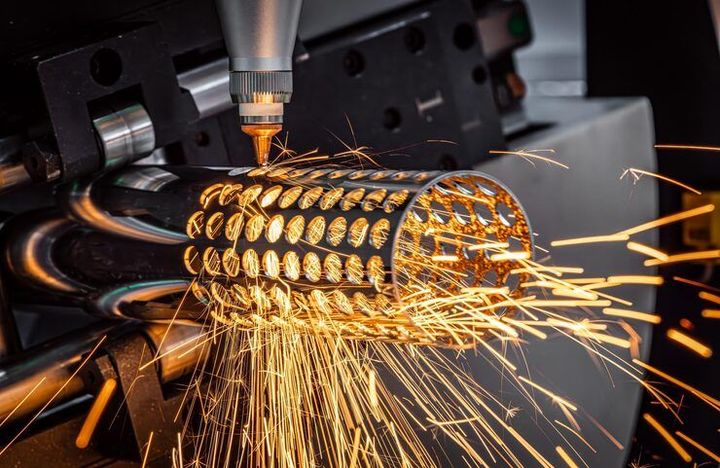
Laser cutting machine manufacturers develop equipment that uses concentrated laser beams to cut materials.
Laser cutting is commonly used for:
- Sheet metal fabrication
- Electronics components
- Medical devices
- Automotive parts
- Precision engineering
The process produces clean edges and supports detailed cutting patterns.
Plasma Cutting Machines
Plasma cutting machine suppliers provide equipment that uses electrically conductive gas to generate a high-temperature plasma arc.
Plasma cutting is particularly effective for cutting:
- Steel
- Stainless steel
- Aluminum
- Copper
- Brass
The technology is widely used in heavy industrial applications.
Waterjet Cutting Machines
Waterjet systems use high-pressure water streams, sometimes combined with abrasive materials, to cut various materials.
These machines are suitable for heat-sensitive materials because the process generates minimal thermal effects.
Mechanical Cutting Machines
Mechanical cutting equipment includes saws, shearing machines, punching systems, and other traditional cutting technologies.
These machines continue to play an important role in manufacturing environments.
Key Components of Industrial Cutting Machines
Control Systems
Modern industrial cutting machines rely on computerized control systems to manage cutting operations.
These systems regulate movement, speed, cutting parameters, and machine diagnostics.
Cutting Heads
The cutting head contains the primary cutting mechanism.
Depending on the technology, it may include:
- Laser optics
- Plasma torches
- Waterjet nozzles
- Mechanical blades
Motion Systems
Motion systems control the movement of cutting tools and workpieces.
High-precision motors and positioning systems help maintain cutting accuracy.
Material Handling Systems
Many automated cutting systems incorporate material loading and unloading mechanisms.
Automation improves production efficiency and reduces manual handling.
Monitoring Equipment
Sensors and monitoring devices collect information about machine performance and cutting conditions.
These systems support process control and quality management.
Common Applications
The versatility of industrial cutting technology enables its use across numerous sectors.
| Industry | Common Applications |
|---|---|
| Automotive | Vehicle components and structural parts |
| Aerospace | Precision aircraft components |
| Construction | Structural steel and building materials |
| Electronics | Circuit boards and enclosures |
| Shipbuilding | Hull sections and metal structures |
| Manufacturing | General component production |
| Energy | Equipment and infrastructure components |
Different industries require specialized cutting equipment based on material types and production requirements.
Importance of Automation
Improved Production Speed
Automated cutting systems can operate continuously with minimal interruptions.
This supports higher production volumes and improved workflow efficiency.
Greater Accuracy
Computer-controlled cutting equipment maintains consistent performance throughout production runs.
This reduces variation between individual components.
Reduced Human Error
Automation helps minimize errors associated with manual measurements and cutting operations.
Digital control systems improve repeatability and precision.
Data Collection
Modern cutting systems generate valuable operational information.
Examples include:
- Machine utilization
- Production output
- Material consumption
- Maintenance requirements
- Process efficiency
These insights support operational planning and continuous improvement efforts.
Recent Updates
Increased Use of Artificial Intelligence
Artificial intelligence is becoming more common in industrial cutting environments.
AI-assisted systems can analyze production data and help optimize cutting parameters.
Growth of Smart Manufacturing Integration
Industrial cutting machines are increasingly connected to broader manufacturing networks.
This integration supports data sharing between equipment, production systems, and management platforms.
Improved Energy Efficiency
Many industrial cutting machine manufacturers are focusing on reducing energy consumption.
More efficient power systems and optimized cutting technologies help support sustainability objectives.
Expansion of Digital Monitoring
Remote monitoring platforms allow operators to track equipment performance from centralized locations.
This trend continues to expand as digital manufacturing technologies mature.
Advanced Material Processing
New cutting technologies are improving the ability to process lightweight alloys, composites, and advanced engineering materials.
These developments support evolving manufacturing requirements.
Laws or Policies
Workplace Safety Regulations
Industrial cutting equipment must comply with occupational safety regulations.
These rules address machine guarding, operator protection, and emergency shutdown systems.
Equipment Certification Standards
Many countries require industrial equipment to meet technical and safety certification standards before deployment.
Compliance helps ensure safe operation within industrial facilities.
Environmental Requirements
Manufacturing facilities may be subject to environmental regulations governing emissions, waste management, and energy use.
Cutting equipment often forms part of broader environmental compliance strategies.
Electrical Safety Standards
Industrial machines must comply with electrical safety requirements designed to protect operators and equipment.
These standards apply to installation, operation, and maintenance activities.
Industrial Automation Guidelines
Governments and industry organizations increasingly support digital transformation initiatives that encourage the adoption of automated manufacturing technologies.
Tools and Resources
CAD Software
Computer-Aided Design software is commonly used to create digital models for cutting operations.
These designs can be transferred directly to CNC systems.
CAM Platforms
Computer-Aided Manufacturing software converts design data into machine instructions.
CAM systems play a central role in automated production workflows.
Nesting Software
Nesting tools optimize material layouts to improve material utilization and reduce waste.
These tools are commonly used in sheet metal fabrication.
Machine Monitoring Platforms
Digital monitoring systems track equipment performance and production metrics.
Operators use these tools to improve efficiency and maintenance planning.
Industry Standards Organizations
Technical standards organizations publish guidelines and specifications related to industrial cutting technologies and manufacturing practices.
FAQs
What do industrial cutting machine manufacturers produce?
Industrial cutting machine manufacturers develop equipment designed to cut, shape, and process materials such as metal, plastic, composites, wood, and textiles for industrial applications.
How do CNC cutting machine suppliers support manufacturing operations?
CNC cutting machine suppliers provide computer-controlled equipment capable of performing automated cutting tasks with high accuracy and repeatability.
What is the difference between laser and plasma cutting?
Laser cutting uses a focused beam of light to cut materials, while plasma cutting uses ionized gas at extremely high temperatures. Both technologies are widely used in industrial production environments.
Why are automated cutting systems becoming more common?
Automated cutting systems help improve productivity, maintain consistent quality, reduce material waste, and support data-driven manufacturing operations.
Which industries commonly use heavy duty cutting machine manufacturers' equipment?
Heavy duty cutting machine manufacturers supply equipment used in industries such as construction, mining, shipbuilding, infrastructure development, energy production, and large-scale metal fabrication.
Conclusion
Industrial cutting machines play a critical role in modern manufacturing by enabling precise, efficient, and repeatable material processing. Technologies developed by industrial cutting machine manufacturers, CNC cutting machine suppliers, laser cutting machine manufacturers, and plasma cutting machine suppliers support a wide range of industrial applications. Automation, digital monitoring, and advanced control systems continue to improve production capabilities across many sectors. As manufacturing evolves, industrial cutting technology remains an essential component of efficient and reliable production processes.