Industrial Shelving Overview: Storage Structures, Materials, and Warehouse Applications
Industrial shelving refers to structured storage systems designed to organize materials, tools, components, cartons, and other items in industrial environments.
These structures are commonly found in warehouses, manufacturing facilities, workshops, distribution buildings, archives, and storage areas.
The basic purpose of industrial shelving is to use available floor and vertical space in an organized manner. Instead of placing materials directly on the floor, shelves create defined storage levels that help separate items according to size, type, weight, or frequency of use.
Shelving systems developed alongside factories and large-scale storage operations. As industrial activity expanded, businesses needed practical methods to arrange growing quantities of raw materials and finished products. Metal shelving gradually became common because it could support heavier loads and adapt to changing storage layouts.
How Industrial Shelving Structures Work
A typical industrial shelving structure includes upright frames, shelves, beams, braces, and connection points. The exact design depends on the intended load and the dimensions of the stored materials.
Some shelving units are assembled with bolts, while others use clip-in or rivet-style connections. Adjustable shelf positions allow storage levels to be changed when item dimensions vary. Fixed structures may be used where storage requirements remain consistent.
Common industrial shelving structures include:
- Steel shelving for cartons, tools, and components
- Long-span shelving for larger or bulky items
- Boltless shelving with simplified assembly connections
- Mobile shelving mounted on movable bases
- Modular shelving that can be rearranged as storage needs change
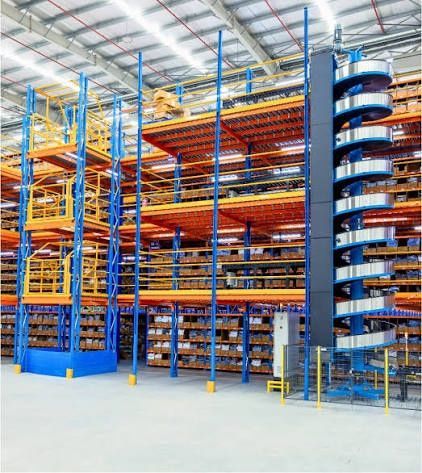
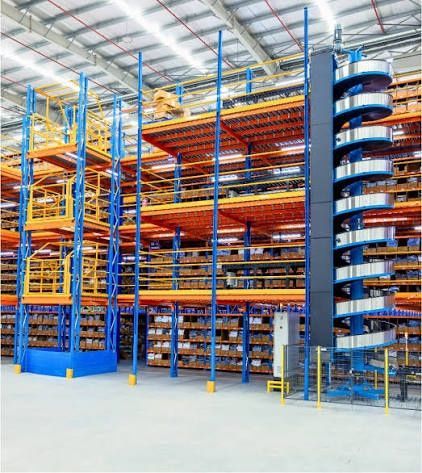
- Multi-tier shelving that creates several storage levels within a tall building
Each structure has different load, access, and space requirements. The selected arrangement usually depends on item dimensions, handling methods, available building height, and daily storage activity.
Industrial Shelving and Pallet Racking
Industrial shelving and pallet racking are related storage concepts, but they are not identical. Shelving is generally intended for items that workers can place or remove by hand. Pallet racking normally stores palletized loads handled by forklifts or other lifting equipment.
| Storage Structure | Typical Items | Common Handling Method | General Application |
|---|---|---|---|
| Steel shelving | Tools and small cartons | Manual handling | Workshops and stockrooms |
| Long-span shelving | Medium and bulky goods | Manual or assisted handling | Warehouses |
| Mobile shelving | Records and small items | Manual handling | Archives and controlled storage |
| Multi-tier shelving | Mixed small goods | Manual handling | High storage buildings |
| Pallet racking | Palletized materials | Mechanical lifting | Distribution warehouses |
Understanding this difference helps explain why warehouse layouts may contain several storage structures rather than one single system.
Why Industrial Shelving Matters
Organizing Modern Storage Areas
Warehouses often contain hundreds or thousands of different items. Without defined storage locations, workers may spend additional time identifying and retrieving materials. Industrial shelving creates visible storage positions and supports systematic item classification.
Labels, shelf numbers, aisle codes, and inventory records can be linked to specific shelf locations. This makes it easier to understand where an item belongs and how it moves through a storage facility.
Organization also affects receiving and dispatch activities. Incoming materials can be assigned to planned locations, while outgoing items can be collected according to warehouse records.
Using Vertical Building Space
Industrial buildings frequently have high ceilings. Storing all materials at floor level may leave a large part of the building volume unused. Shelving structures create additional storage levels and make vertical space more practical.
The height of a shelving system must match the building, handling method, and stored materials. Taller structures may require access equipment or multi-tier arrangements. Load limits and structural stability remain important when storage levels increase.
Efficient use of vertical space can also help maintain clearer movement areas. Defined aisles allow people and material-handling equipment to travel through the facility with fewer storage obstructions.
Supporting Material Identification
Modern warehouses depend on accurate information about stored materials. Industrial shelving provides physical locations that can be connected with digital inventory systems.
A shelf location may have a code such as A-03-04. The letters and numbers can identify an aisle, shelving bay, and storage level. Warehouse software can record this code alongside item information.
Common identification methods include:
- Printed shelf labels
- Barcodes
- QR codes
- Radio-frequency identification tags
- Digital location records
- Color-based category markers
These methods help connect physical storage with inventory information. The result is a clearer picture of where materials are located within a facility.
Addressing Workplace Storage Challenges
Poorly arranged materials can create blocked walkways, unstable stacks, and difficult access points. Shelving provides defined areas for items and can reduce random floor storage when correctly planned and used.
Workers also need to understand shelf load limits. Heavy materials placed on structures that are not designed for the weight can affect stability. Load information, inspection routines, and correct placement practices are important parts of warehouse management.
Frequently used items are often positioned at accessible heights. Less frequently handled materials may be placed on higher or lower levels, depending on the storage plan and handling equipment.
Current Developments in Industrial Shelving
Greater Use of Modular Structures
A major current trend is the use of modular industrial shelving. Warehouses increasingly manage changing product ranges, carton sizes, and inventory patterns. Fixed layouts may not always match these changes.
Modular structures use components that can be adjusted, extended, or rearranged. Shelf levels may be repositioned, and additional bays can sometimes be integrated into an existing layout when structural compatibility allows.
This approach reflects a wider shift toward flexible warehouse planning. Storage layouts are increasingly reviewed as inventory patterns and handling processes change.
Integration With Digital Warehouse Systems
Digital inventory platforms are becoming more closely connected with physical shelf locations. Barcode scanning, handheld devices, and warehouse management systems can record when items enter or leave a shelving position.
Some facilities use digital mapping tools to represent aisles and storage zones. Workers can view location information on terminals or handheld devices rather than relying only on paper records.
Sensors and connected equipment are also being explored for storage monitoring. Depending on the application, digital tools may track environmental conditions, equipment movement, or inventory activity.
Focus on Space Planning
Warehouse space planning has gained greater attention as distribution networks handle wider product ranges. Storage planners examine item movement, shelf dimensions, aisle width, and access requirements before arranging structures.
Data from inventory systems can help identify fast-moving and slow-moving items. Frequently handled materials may be positioned closer to receiving, packing, or dispatch areas. This type of layout planning aims to reduce unnecessary movement within the building.
Materials and Surface Protection
Steel remains a widely used material for industrial shelving because of its structural properties and suitability for many warehouse environments. Manufacturers continue to develop forming, connection, and surface treatment methods for storage structures.
Powder-coated surfaces are common in indoor environments. Galvanized steel may be considered where moisture exposure is a concern. Stainless steel can appear in environments with particular hygiene or corrosion-control requirements.
Material selection depends on the storage environment, expected load, cleaning practices, and exposure conditions. No single shelving material is suitable for every industrial application.
Rules and Policies Affecting Industrial Shelving
Workplace Safety Requirements
Industrial shelving is influenced by workplace safety and building requirements. Exact rules vary by country and local authority, but employers and facility operators generally have responsibilities related to safe workplaces, access routes, and material storage.
Storage structures should not create uncontrolled hazards in normal operating areas. Walkways, emergency routes, electrical areas, and fire protection equipment may need clear access according to applicable local requirements.
Warehouse operators may also maintain inspection procedures for shelving structures. These checks can identify bent components, loose connections, damaged shelves, or changes in structural alignment.
Load Capacity and Structural Information
Shelving structures have defined load capacities based on their design and components. The weight placed on a shelf can affect beams, uprights, connections, and the overall structure.
Load information should be understood before materials are placed on the structure. Uneven loading may also influence shelf performance, particularly when heavy items are concentrated in a small area.
Important storage controls commonly include:
- Understanding shelf load limits
- Distributing materials according to the structure's design
- Keeping heavy items in planned positions
- Checking damaged structural components
- Recording significant layout changes
- Following applicable building and workplace rules
Technical load questions may require review by qualified personnel familiar with the specific shelving structure and local requirements.
Fire and Emergency Access
Warehouse storage arrangements can affect fire protection planning. Shelving position, storage height, aisle layout, and the type of stored material may influence how fire safety systems are arranged.
Sprinklers, alarms, emergency exits, and access paths must be considered according to applicable building and fire rules. Storage should not interfere with emergency equipment or required escape routes.
Local authorities and national standards may have different requirements for industrial buildings. Facility-specific conditions are therefore important when interpreting general storage guidance.
Tools and Resources for Industrial Shelving Planning
Layout and Measurement Tools
Basic measurement tools are important when planning industrial shelving. Building dimensions, ceiling height, column positions, doors, and fixed equipment can influence the available storage area.
Digital floor-planning platforms can create two-dimensional or three-dimensional warehouse layouts. These tools allow users to represent shelving rows, aisles, work areas, and movement paths before physical structures are positioned.
Spreadsheet templates can also record shelf dimensions, item categories, and location codes. A structured worksheet may contain columns for aisle number, bay number, shelf level, item type, and expected load.
Load and Capacity Calculations
Load calculators can help organize basic weight information, although calculations must match the technical data for the specific shelving structure. Users can record individual item weights and estimate the combined load placed on a storage level.
A simple storage record may include:
- Weight of each stored item
- Number of units per shelf
- Combined shelf load
- Shelf dimensions
- Item dimensions
- Storage location code
General calculations are useful for planning, but they do not replace structural specifications or applicable technical requirements.
Inventory and Warehouse Platforms
Warehouse management systems help connect inventory records with shelving locations. These platforms may track receiving, storage, movement, picking, and dispatch activities.
Barcode and QR code applications can also support location identification. A code attached to a shelving bay may connect to digital records containing item or location information.
Government workplace safety websites, building authorities, fire authorities, and recognized standards organizations are useful information sources. Their published materials can help readers understand general storage, access, inspection, and workplace requirements in their region.
Frequently Asked Questions
What is industrial shelving used for?
Industrial shelving is used to organize tools, cartons, components, materials, records, and other stored items. It creates defined storage levels and helps facilities use floor and vertical space in a structured way.
What materials are commonly used for industrial shelving?
Steel is widely used because it can support many industrial storage applications. Galvanized steel and stainless steel may be used in environments where moisture, cleaning, or corrosion conditions require different material properties.
How is industrial shelving different from pallet racking?
Industrial shelving generally stores items that can be handled manually. Pallet racking is typically designed for palletized loads moved with forklifts or other mechanical handling equipment.
How are industrial shelving load limits determined?
Load limits depend on the design, material, shelf dimensions, connections, and structural configuration. Technical information for the specific shelving structure should be used when determining acceptable loading conditions.
Why are shelf labels important in warehouses?
Shelf labels create clear location references for stored materials. Barcodes, QR codes, and location numbers can connect physical shelving positions with digital inventory records and warehouse management systems.
Conclusion
Industrial shelving is a structured method of organizing materials and using available warehouse space. Different shelving structures, materials, and layouts support different item sizes, weights, and handling methods. Current developments focus on modular layouts, digital inventory connections, and detailed space planning. Safety rules, load information, emergency access, and regular structural checks remain important parts of industrial storage management.