Industrial Spray Dryers: From Liquid Feed to Dry Powder
Many industries need to transform liquid, slurry, or emulsion feeds into stable, free-flowing powders.
Industrial Spray Dryers perform this transformation by atomizing a liquid feed into fine droplets and exposing those droplets to a controlled stream of heated air.
The process combines atomization, heat transfer, moisture evaporation, powder separation, and collection in a continuous operation. Spray drying is widely used for food ingredients, pharmaceuticals, chemicals, ceramics, detergents, and other materials where controlled powder characteristics are important.
What Are Industrial Spray Dryers?
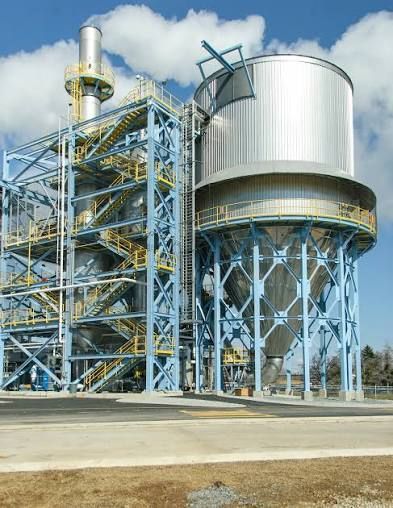
Industrial Spray Dryers are drying systems designed to convert liquid or semi-liquid materials into dry powders or particles.
A typical spray drying system includes:
- Feed preparation equipment
- Feed pumps
- Atomization equipment
- Drying chamber
- Heated-air system
- Air distribution system
- Cyclone or filtration equipment
- Powder collection equipment
- Exhaust system
- Process control system
The liquid feed is introduced into the drying chamber through an atomizer. The atomizer creates small droplets, increasing the surface area available for moisture evaporation. Heated air then removes moisture as the droplets travel through the chamber.
From Liquid Feed to Dry Powder
The spray drying process generally follows several controlled stages.
1. Feed Preparation
The first stage is preparation of the liquid material.
Depending on the application, the feed may be a solution, suspension, emulsion, slurry, or concentrated liquid. Mixing systems can maintain uniform composition before the material enters the dryer.
Important feed properties include:
- Solids concentration
- Viscosity
- Temperature
- Density
- Particle characteristics
- Moisture content
- Heat sensitivity
Consistent feed properties help maintain stable spray drying conditions.
2. Feed Pumping
A feed pump transfers the prepared material toward the atomization system.
Flow rate influences droplet formation, residence time, drying performance, and final powder moisture. Industrial systems therefore use pumps and flow-control equipment capable of maintaining the required feed conditions.
3. Atomization
Atomization is one of the most important stages of spray drying.
The liquid is divided into fine droplets using an atomization device. Common approaches include:
- Rotary atomizers
- Pressure nozzles
- Two-fluid nozzles
- Ultrasonic atomizers in specialized applications
Droplet size has a major influence on drying behavior and final particle characteristics.
Smaller droplets generally have greater surface area relative to their volume and can dry more rapidly. Larger droplets may require longer residence times.
4. Hot-Air Introduction
Heated air enters the drying chamber under controlled conditions.
The air temperature, flow rate, humidity, and distribution pattern influence the evaporation rate and product characteristics.
Airflow can be configured as co-current, counter-current, or mixed-flow depending on the material and process objectives.
5. Moisture Evaporation
As atomized droplets interact with heated air, moisture begins to evaporate.
The liquid droplets gradually become solid or partially solid particles as moisture leaves the material.
Heat and mass transfer occur simultaneously during this stage.
6. Particle Formation
As moisture continues to evaporate, the droplets develop into particles.
Particle morphology depends on factors such as:
- Feed composition
- Droplet size
- Drying temperature
- Residence time
- Solids concentration
- Atomization method
- Airflow pattern
These parameters can influence bulk density, particle size, flow characteristics, and residual moisture.
7. Powder Separation
After drying, the powder must be separated from the drying air.
Cyclone separators are commonly used to recover larger particles. Fine particles may require additional filtration or specialized powder recovery equipment.
Industrial systems can use combinations of:
- Cyclone separators
- Bag filters
- Cartridge filters
- Wet scrubbers
- Secondary separators
8. Powder Collection
Recovered powder is transferred to collection vessels, intermediate containers, or downstream processing equipment.
Depending on the application, the powder may then undergo additional operations such as sieving, blending, agglomeration, cooling, or packaging.
Major Types of Industrial Spray Dryers
Different spray dryer configurations are designed for different processing requirements.
| Spray Dryer Type | Atomization Method | Typical Characteristics |
|---|---|---|
| Rotary spray dryer | Rotary wheel/disc | High-throughput processing |
| Pressure nozzle dryer | Pressure nozzle | Controlled droplet formation |
| Two-fluid nozzle dryer | Air/gas-assisted nozzle | Flexible atomization |
| Fluidized spray dryer | Fluidized-bed integration | Drying and particle conditioning |
| Closed-loop spray dryer | Recirculated drying gas | Controlled atmosphere |
| Multi-stage spray dryer | Multiple drying stages | Improved powder conditioning |
Rotary Atomizer Spray Dryers
Rotary atomizers use a rapidly rotating disc or wheel to distribute liquid into droplets.
The high rotational speed produces a controlled spray pattern. Rotary systems are commonly considered for large-scale processing because they can handle significant feed volumes.
Key variables include:
- Atomizer speed
- Feed rate
- Feed viscosity
- Disc design
- Drying-air temperature
- Airflow rate
Pressure Nozzle Spray Dryers
Pressure nozzle systems force liquid through a small nozzle opening at elevated pressure.
The resulting pressure drop creates a spray of droplets.
Nozzle-based systems can provide controlled spray patterns and are suitable for many industrial applications. Nozzle design, feed pressure, viscosity, and solids concentration all affect atomization performance.
Two-Fluid Nozzle Spray Dryers
Two-fluid nozzles use a liquid stream and a compressed gas stream to produce fine droplets.
These systems can provide flexibility over droplet size and spray characteristics, making them useful for certain specialty applications and smaller production systems.
Multi-Stage Spray Drying
Some industrial systems combine spray drying with additional particle-conditioning stages.
A fluidized-bed section may be integrated with the spray dryer to provide additional drying, cooling, or agglomeration.
This configuration can improve powder handling characteristics for applications where particle structure and flow behavior are important.
Key Operating Parameters
Successful spray drying depends on controlling several process variables.
Inlet Air Temperature
The inlet temperature determines the thermal energy entering the drying chamber.
Higher temperatures can increase evaporation rates, but heat-sensitive materials may require carefully controlled conditions.
Outlet Air Temperature
Outlet temperature provides information about the drying state of the product and can be an important process-control parameter.
Feed Rate
Increasing feed rate changes the thermal and moisture load placed on the dryer.
Atomization Conditions
Atomizer speed, nozzle pressure, or gas flow influences droplet size and therefore drying behavior.
Airflow
Drying-air flow affects residence time, heat transfer, particle movement, and separation performance.
Feed Solids Concentration
Higher solids concentrations can reduce the amount of moisture that must be removed per unit of final powder while also affecting viscosity and atomization.
Industrial Spray Dryer Applications
Spray drying is used across a wide range of industries.
Food Processing
Applications include powdered dairy ingredients, flavors, starches, proteins, nutritional ingredients, and other food materials.
The process can create stable powders that are easier to handle and incorporate into downstream formulations.
Pharmaceutical Manufacturing
Spray drying can be used for selected pharmaceutical formulations, active ingredients, excipients, and specialized delivery systems.
Process conditions must be carefully controlled to protect material characteristics.
Chemical Processing
Chemical manufacturers use spray drying for pigments, catalysts, detergents, polymers, salts, and other chemical products.
Ceramic Processing
Ceramic slurries can be spray dried to create powders with controlled particle characteristics suitable for subsequent forming operations.
Detergent Production
Spray drying has historically been used to produce detergent powders by converting liquid or slurry formulations into dry particulate products.
How to Select Industrial Spray Dryers
Selecting an industrial spray dryer requires analysis of the feed material and desired powder properties.
Feed Characteristics
Evaluate:
- Viscosity
- Solids concentration
- Thermal sensitivity
- Density
- Moisture content
- Corrosiveness
- Particle characteristics
Desired Powder Properties
The final powder may need specific characteristics related to:
- Particle size
- Bulk density
- Residual moisture
- Flowability
- Solubility
- Morphology
- Agglomeration
Production Capacity
Dryer capacity should correspond to the expected feed rate and required moisture removal.
Energy Requirements
Drying is an energy-intensive operation because large quantities of water or solvent may need to be evaporated.
Heat recovery, airflow optimization, insulation, and efficient thermal systems can influence overall energy performance.
Industrial Spray Dryers Comparison
| Factor | Rotary Atomizer | Pressure Nozzle | Two-Fluid Nozzle |
|---|---|---|---|
| Feed capacity | High | Medium to high | Low to medium |
| Atomization control | High | High | Very high |
| Droplet adjustment | Atomizer speed | Pressure/nozzle design | Gas and liquid flow |
| Typical scale | Industrial | Industrial | Specialty/smaller systems |
| Maintenance focus | Atomizer assembly | Nozzle condition | Gas and nozzle systems |
| Application flexibility | Broad | Broad | Specialized |
Automation and Process Control
Modern Industrial Spray Dryers can integrate automated control systems for monitoring and adjusting operating conditions.
Sensors may measure:
- Inlet temperature
- Outlet temperature
- Feed pressure
- Feed flow
- Airflow
- Chamber pressure
- Product moisture
- Filter pressure differential
Automated controls can adjust feed pumps, heaters, dampers, atomizer speed, and other equipment based on defined process parameters.
Maintenance Best Practices
Regular maintenance helps maintain consistent dryer performance.
Inspect Atomization Equipment
Rotary atomizers and nozzles should be inspected for wear, deposits, and mechanical issues.
Clean the Drying Chamber
Product buildup can affect heat transfer and create contamination or operational concerns.
Check Air Filters
Blocked filters can restrict airflow and increase pressure drop.
Inspect Powder Collection Systems
Cyclones, filters, ducts, and collection vessels should be checked for buildup and leakage.
Monitor Thermal Equipment
Heaters, heat exchangers, temperature sensors, and control components should be maintained according to established procedures.
Frequently Asked Questions
What are Industrial Spray Dryers?
Industrial Spray Dryers are processing systems that convert liquid, slurry, or emulsion feeds into dry powders by atomizing the feed and evaporating moisture with heated air.
How does an industrial spray dryer work?
A liquid feed is pumped into an atomizer, converted into droplets, contacted with heated air, dried through moisture evaporation, separated from the air, and collected as powder.
What affects spray dryer particle size?
Particle size is influenced by atomization method, feed properties, atomizer speed or nozzle conditions, drying airflow, solids concentration, and other operating parameters.
What industries use spray drying?
Food, pharmaceutical, chemical, ceramic, detergent, nutritional, and specialty-material industries use spray drying for various powder-production applications.
How do you choose an industrial spray dryer?
Selection depends on feed characteristics, required powder properties, production capacity, thermal sensitivity, atomization method, energy requirements, and downstream processing needs.
Conclusion
Industrial Spray Dryers provide a continuous method for transforming liquid feeds into controlled dry powders. The process combines feed preparation, precision pumping, atomization, hot-air drying, particle formation, separation, and powder collection.
Rotary atomizers, pressure nozzles, two-fluid nozzles, multi-stage systems, and specialized spray dryer configurations provide different approaches to controlling particle characteristics and drying performance.
Selecting the right system requires careful consideration of feed properties, desired powder characteristics, production capacity, thermal sensitivity, energy requirements, and downstream processing. With appropriate process control and maintenance, spray drying can provide consistent powder production across food, pharmaceutical, chemical, ceramic, and other industrial applications.